Bellevue Chimney Pros logo
Dryer Vent Cleaning Cost in Bellevue, WA: $105–$295

Dryer Vent Cleaning

Dryer Vent Cleaning Cost in Bellevue, WA: $105–$295

August 13, 2026 · 6 min read

  • Licensed & insured
  • $49 inspection, credited to repairs
  • Every job documented
By the Bellevue Chimney Pros teamAugust 13, 20266 min read

Dryer vent cleaning in Bellevue, WA costs $105–$295 for a standard single-family run, with most Eastside homeowners paying $145–$195. The spread comes down to three things: how long the duct run is, whether it exits through the roof or a side wall, and how much compacted lint has accumulated since the last service. A ground-floor laundry venting three feet through a side wall sits at the bottom of that range; a second-floor laundry pushing twenty-plus feet up through the roofline sits at the top.

What dryer vent cleaning actually costs on the Eastside

Pricing for dryer vent work is driven by access and duct length far more than by the dryer itself. A technician cleaning a short, straight, side-wall run is doing a twenty-minute job with a rotary brush and a vacuum. A technician working a long vertical run that terminates above a two-story roofline is setting up ladders, working from height, and cleaning from both ends — that is a different job, and it is priced accordingly.

The figures below are what this work is typically quoted at in Bellevue and the surrounding Eastside. Our own published rate for dryer vent cleaning is $105–$295, which covers the range from a simple ground-floor run to a long rooftop-terminated one.

JobTypical costWhat drives it
Standard side-wall run, ground floor$105 – $145Under 10 ft, direct exterior access, single elbow
Upper-floor laundry, roof termination$185 – $29515–25 ft vertical run, roof access, cleaned from both ends
Heavily compacted vent (no service in 3+ yrs)$195 – $295Lint hardened into the duct wall; extra passes required
Condo or townhome shared-wall run$145 – $245Restricted access, longer horizontal runs, often no roof access
Bird or rodent nest removal in the vent$75 – $150 add-onCommon on unscreened roof and gable terminations
Vent hood or damper replacement$65 – $180 add-onBroken flapper, missing screen, crushed exterior hood

Why Eastside homes clog faster than the national average

Two things work against dryer vents around Bellevue specifically. The first is house design. A large share of the Eastside housing stock — Somerset, Bridle Trails, Lakemont, Newport Hills, and most of the newer construction east of I-405 — puts the laundry room on the second floor, near the bedrooms. That is convenient to live with and hard on a dryer vent: the exhaust has to travel up and out, often twenty feet or more with two or three elbows, and every elbow is a place lint drops out of the airstream and stays.

The second is the climate. Puget Sound air carries moisture most of the year, and damp lint behaves differently from dry lint — it packs into a felt-like layer against the duct wall instead of blowing clear. That is why a Bellevue vent on a five-year cleaning interval often looks materially worse than a vent on the same interval in a dry climate.

Downtown Bellevue condos and Eastside townhomes have a third issue: long horizontal runs through interior walls with no roof access, so the vent can only be serviced from the dryer end. Those runs need attention more often, not less.

The signs that mean you are overdue

The clearest symptom is drying time. If a normal load has gone from one cycle to two, the vent is restricted — the dryer is running fine, it just cannot push moist air out. That single symptom accounts for most of the calls we take.

Others worth acting on: the top of the dryer is hot to the touch at the end of a cycle; clothes come out hot but still damp; there is a burnt or musty smell during operation; the laundry room feels humid while the dryer runs; or the exterior vent flapper no longer opens when the dryer is on. Lint visible around the outside hood means lint is also sitting inside the duct.

The safety case is straightforward. The U.S. Fire Administration attributes roughly 2,900 residential clothes dryer fires a year, and failure to clean is the leading contributing factor. A restricted vent also forces the appliance to run hotter and longer, which shortens the life of a machine that costs considerably more to replace than to maintain.

How often it actually needs doing

Once a year is the right default for a typical household, and that matches what most dryer manufacturers specify in their installation instructions. It is a floor, not a ceiling.

Move to every six to nine months if any of these apply: a household of four or more, a second-floor laundry with a long vertical run, a vent run over fifteen feet, flexible foil or vinyl transition ducting rather than rigid metal, or a household that dries pet bedding and heavy towels regularly. Homes that have never had the vent serviced should assume it needs doing now regardless of age.

SituationRecommended interval
1–2 people, short ground-floor runEvery 12–18 months
Typical family, standard runEvery 12 months
4+ people, or upper-floor laundryEvery 6–9 months
Run over 15 ft, or 3+ elbowsEvery 6–9 months
Foil or vinyl transition ductEvery 6 months, and replace the duct

Dryer vent cleaning and air duct cleaning are not the same job

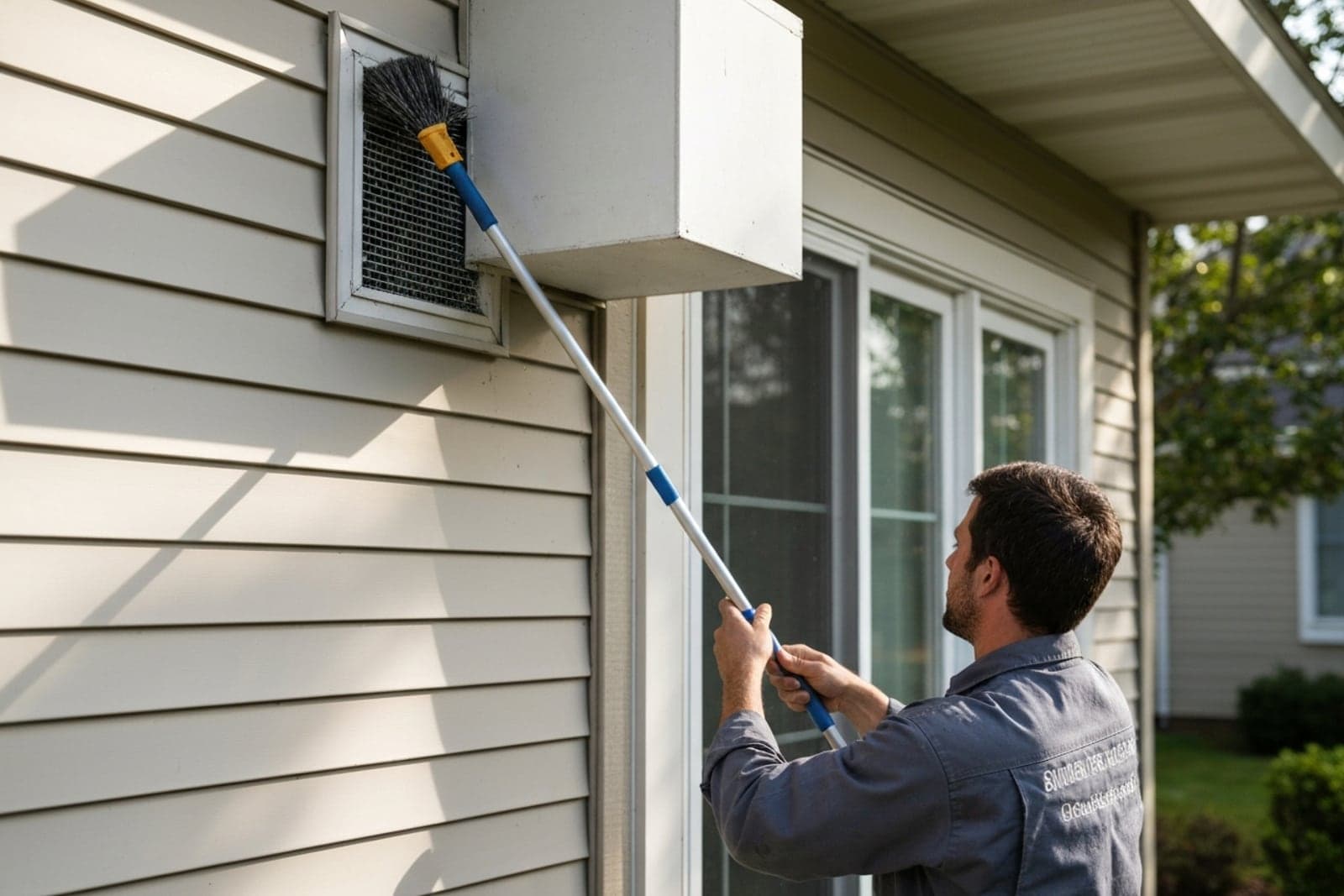
These get conflated constantly, and the distinction matters because the price gap is large. A dryer vent is a single dedicated exhaust duct running from one appliance to the outside. Cleaning it is a contained job — that is the $105–$295 work described above.

Air duct cleaning is your home's HVAC system: the supply and return trunks, every branch, and the registers in each room. On a typical Bellevue single-family home that is a multi-hour job across dozens of openings, which is why our air duct cleaning starts at $525. It is genuinely useful after a renovation, following water intrusion or visible mold, when a previous owner smoked, or when registers are visibly furred. It is not an annual maintenance item for most homes.

If your complaint is that laundry takes two cycles, you need the dryer vent. If your complaint is dust settling on surfaces within a day of cleaning, or a persistent smell when the furnace runs, that points at the air ducts. They are separate diagnoses, and paying for the wrong one solves nothing.

What this looks like in practice

Here is a typical situation, offered as an illustration rather than a specific customer job. A 1990s two-storey house in Somerset, laundry on the upper floor, vent running about twenty feet up and out through the roof. The owner had noticed nothing wrong beyond towels needing a second cycle — which had crept up so gradually over four winters that it read as normal.

The run had never been serviced. Damp Puget Sound lint had packed into a felt layer at the two elbows, leaving perhaps a third of the duct's cross-section open. The dryer was working exactly as designed; it simply could not push moist air out, so it ran the load twice.

That job sits at $185–$295 — an upper-floor run cleaned from both ends with roof access, the exterior hood pulled and cleaned, and airflow measured at the termination afterwards to prove the run was clear. Drying went back to a single cycle. The point of the example is the symptom: doubled drying time is the signal, and it arrives years before anything looks wrong.

Who to call, and what a proper job includes

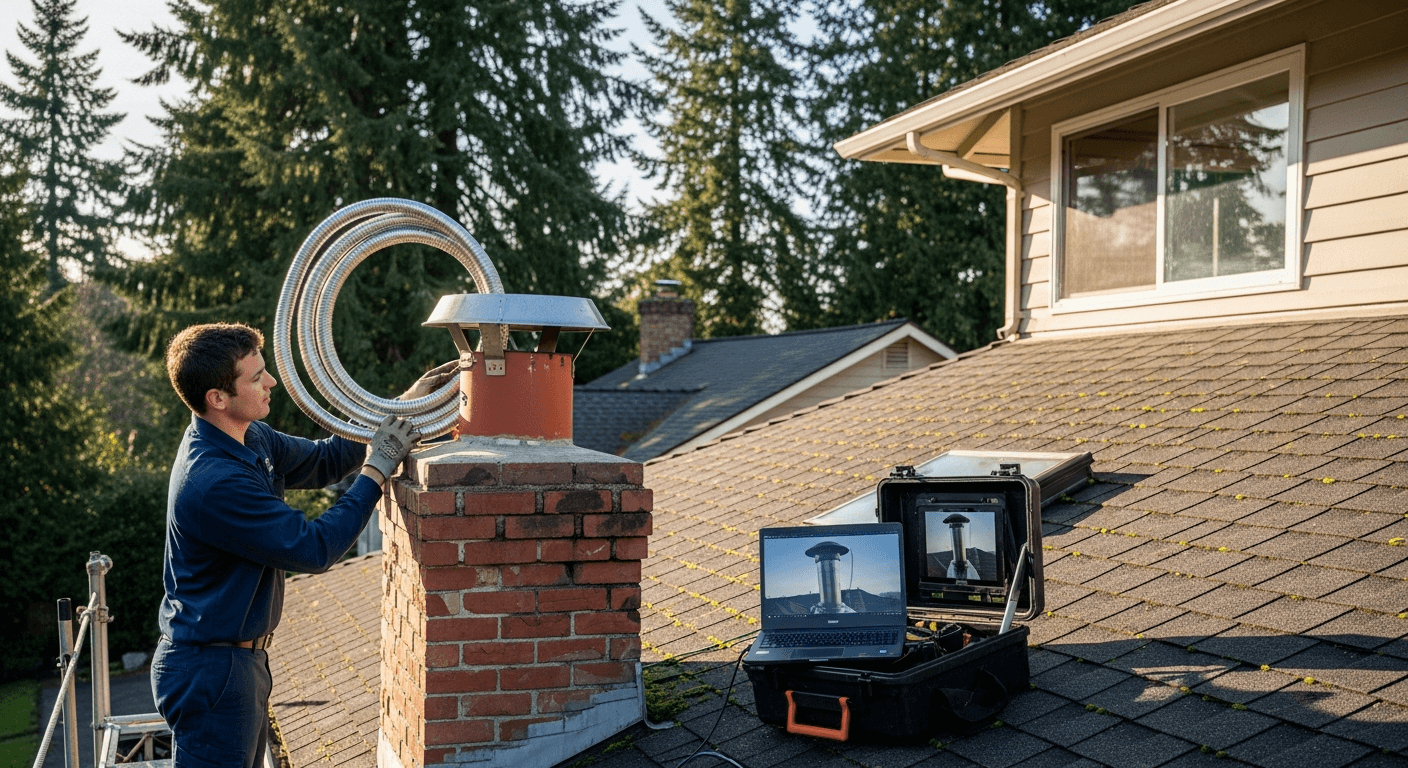
Dryer exhaust work is a certifiable trade — the Chimney Safety Institute of America runs a Certified Dryer Exhaust Technician credential — and the same rotary-brush and negative-air equipment used for chimney work applies directly to dryer ducts. That is why chimney companies commonly do this work, and why a company that only vacuums the visible six inches behind the dryer is not doing the job.

A complete service cleans the full run from the dryer connection to the exterior termination, cleans from both ends where the vent is roof-terminated, removes and cleans the exterior hood, checks the flapper and screen, inspects the transition duct behind the appliance and flags foil or vinyl for replacement with rigid metal, and confirms airflow at the termination afterward. Ask for that last step specifically — measured airflow at the end is the only proof the run is actually clear.

Frequently asked questions

What is the average cost of cleaning a dryer vent in Bellevue?

Most Bellevue homeowners pay $145–$195, within an overall range of $105–$295. A short ground-floor side-wall run sits at the low end; a second-floor laundry venting through the roof sits at the high end because it requires roof access and cleaning from both ends.

How often should dryer vents be professionally cleaned?

Once a year for a typical household, which matches most dryer manufacturers' instructions. Move to every six to nine months for households of four or more, vent runs over fifteen feet, upper-floor laundry rooms, or any vent still using flexible foil or vinyl transition duct.

Who should I call to clean out my dryer vent?

A company with rotary-brush and negative-air equipment and, ideally, a CSIA Certified Dryer Exhaust Technician on staff. Chimney companies typically do this work because the equipment and the confined-duct skill set are the same. Avoid anyone who only vacuums behind the appliance without accessing the full run.

Is dryer vent cleaning worth the cost?

For most households, yes. A restricted vent doubles drying times, which shows up on the power bill and shortens the life of the appliance. The U.S. Fire Administration attributes roughly 2,900 residential dryer fires a year, with failure to clean the leading contributing factor. At $105–$295 against the cost of a replacement dryer, the maintenance case is straightforward.

What is the difference between dryer vent cleaning and air duct cleaning?

A dryer vent is one dedicated exhaust duct from a single appliance to the outside, and cleaning it costs $105–$295. Air duct cleaning covers the whole HVAC system — supply and return trunks, branches, and every register — which is a multi-hour job starting at $525. Slow drying points to the dryer vent; persistent dust or furnace odors point to the air ducts.

How long does dryer vent cleaning take?

Thirty to forty-five minutes for a standard ground-floor run. An upper-floor laundry with a roof termination typically takes sixty to ninety minutes because the technician sets up roof access and cleans the run from both ends.

Related services

Keep reading

Call (425) 380-8866Book