Chimney safety
A chimney is a working appliance that stands outdoors through nine months of rain and damp lake air. This guide covers what genuinely keeps it safe — calmly, and with the standards named.
Lighting a fire feels effortless. What makes it safe is the system behind it: a chimney whose job is to move flammable creosote deposits and toxic combustion gases up and out of the house, burn after burn. Break any link in that chain — a cracked liner, a choked flue, a missing cap — and two hazards remain: a chimney fire, and carbon monoxide drifting back indoors.
Around Bellevue and the lake communities, the chain weakens faster than owners expect. Masonry here sits damp for most of the year — the long wet season plus moist air off Lake Washington — and each cold snap freezes that absorbed water and pries brick and crown apart from within. Established homes with decades-old chimneys feel it first. The reassuring part: nearly every chimney hazard is predictable, and a documented yearly check plus a few sound repairs prevents almost all of them. What follows is what to watch for, and when to hand it to a professional.
Start here
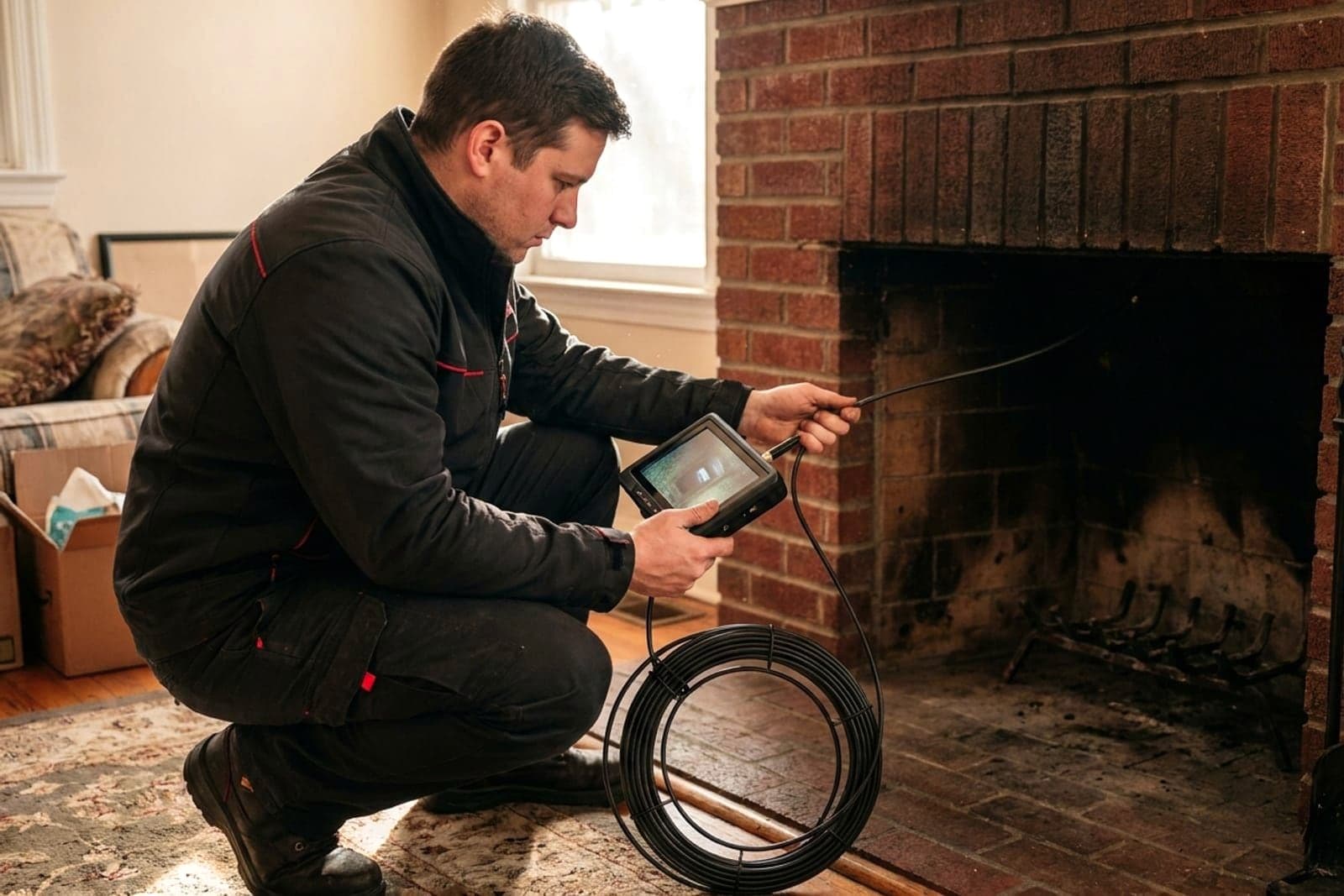
NFPA 211, the national fire-safety standard for chimneys, calls for every chimney, fireplace and vent to be inspected at least once a year. There is a practical reason: the failures that matter hide where a floor-level glance cannot reach — up the flue, on the crown, behind the flashing. A thorough chimney inspection runs a camera through the system and finds the small defects while they are still small.
On established Eastside homes, where a chimney may have weathered forty wet seasons, that annual look is the least expensive protection available — confirmation, before the first fire, that the flue is clear and the structure sound.
The #1 fire risk
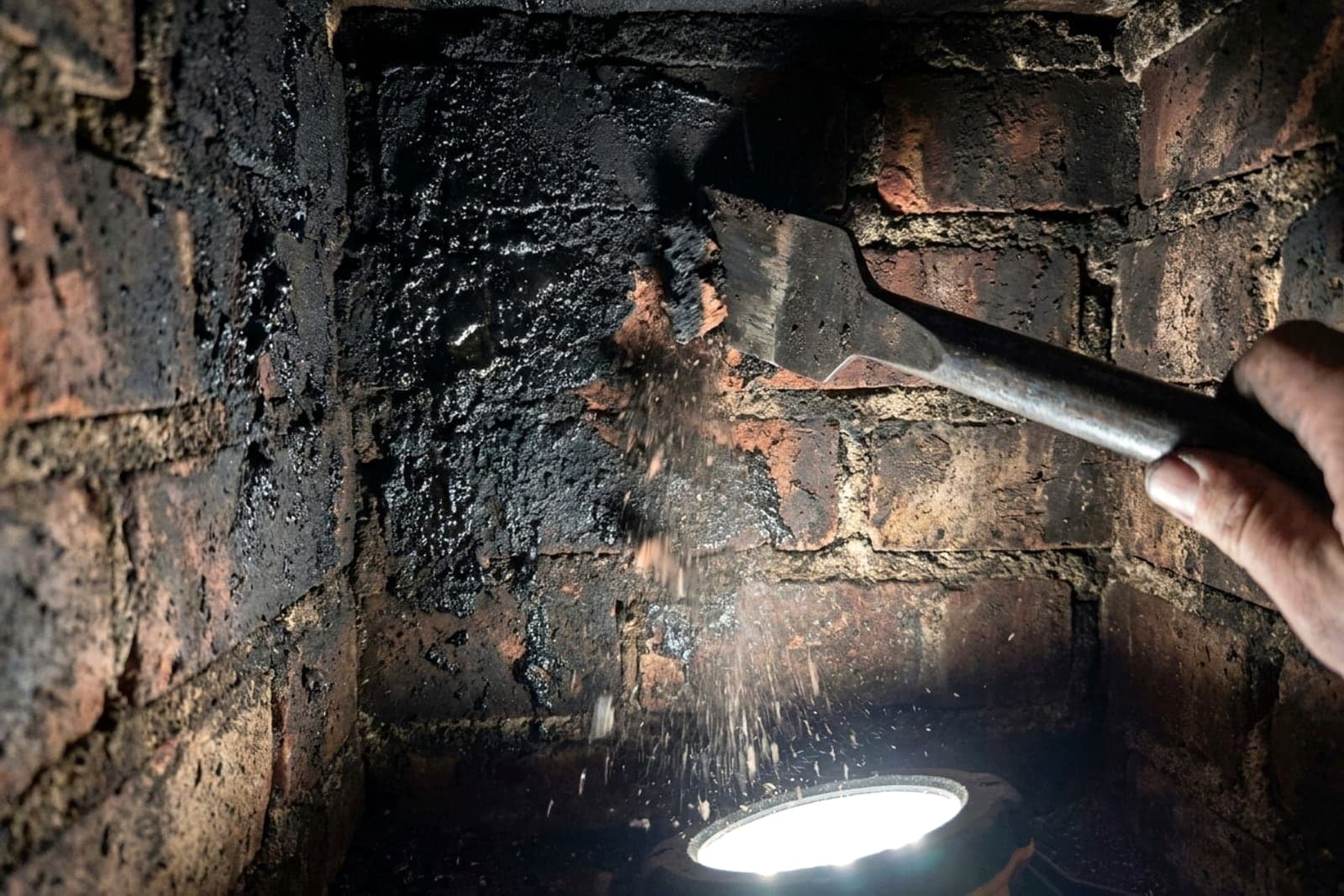
Each time wood smoke cools on its way up a flue, it deposits creosote — a highly flammable, tar-like residue. The buildup progresses through three stages, hardening as it goes, and the risk climbs with it. Once Stage 3 glaze ignites, the resulting chimney fire burns hot enough to crack a liner within minutes.
Seasoned, dry firewood slows the accumulation — it never stops it. What keeps a wood-burning flue safe is routine sweeping and, when the deposit has hardened, proper creosote removal: together they take away the fuel a chimney fire would need.
Carbon monoxide gives no warning — no color, no odor. Its only safe route is up a clear flue with a sound liner, which is why that path, plus a working CO alarm on each level, deserves the same attention as the fire itself.
Carbon monoxide, in detail
Every appliance that burns fuel and vents through the chimney — wood stove, gas fireplace, furnace, water heater — produces carbon monoxide as a byproduct. In a healthy system the gas rises and leaves. Trouble starts when the flue is obstructed by a bird's nest, narrowed by creosote, or cracked so that gases seep into a wall cavity — any of which can turn CO back toward the living space. Since human senses cannot detect it, the defense has to be layered: a clear and correctly sized flue, an intact liner, and a functioning CO alarm on each floor and near the bedrooms. Test the alarms twice a year — clock-change weekends are an easy habit — and never run a fuel-burning appliance over a flue you suspect is blocked.
Lake-climate wear
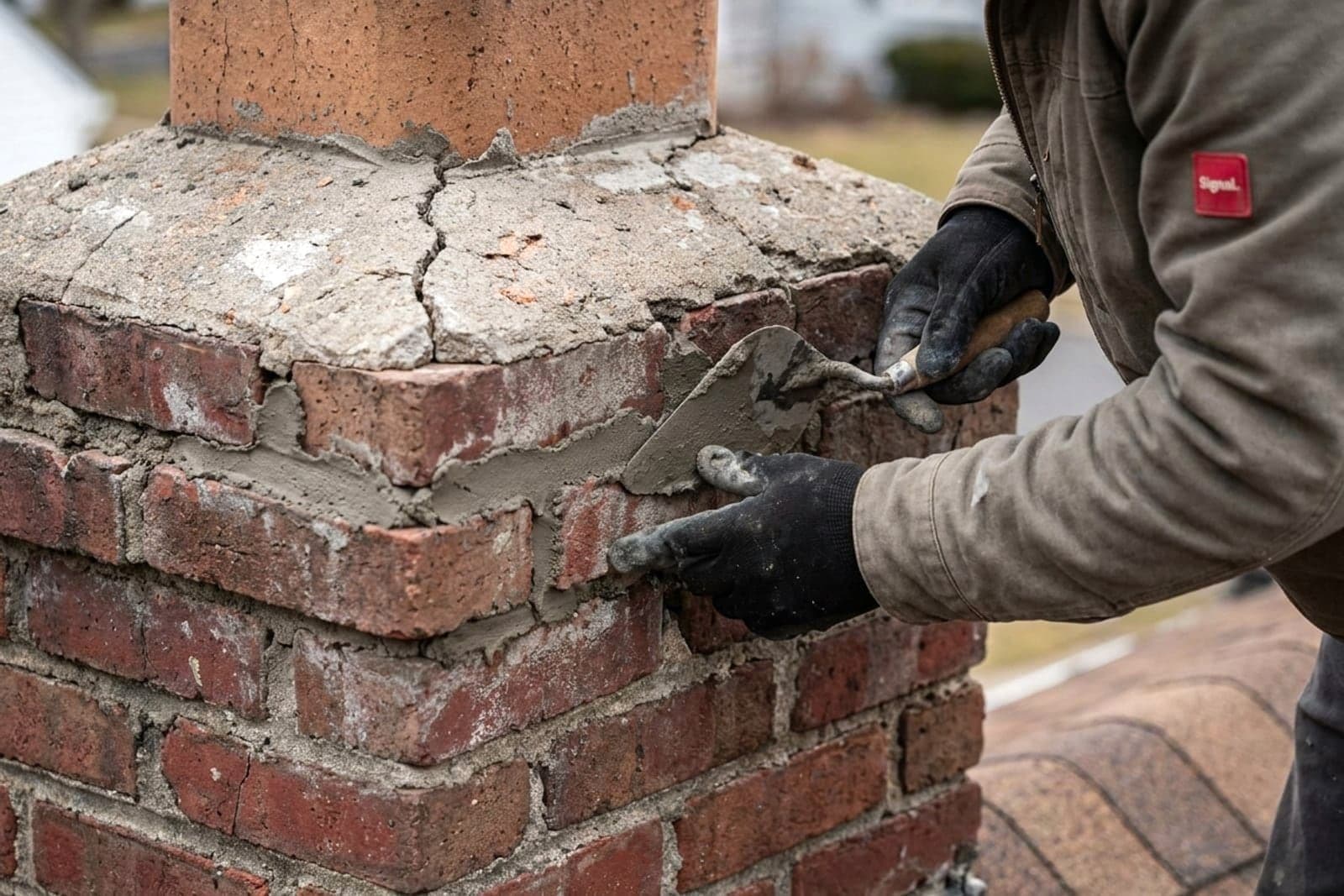
Brick and mortar drink water — they are porous by nature. In our climate they get plenty to drink: months of Pacific Northwest rain, plus the damp air that hangs over the lake communities and keeps established masonry from ever drying fully. Then a cold snap arrives, the absorbed water freezes and expands, and the freeze-thaw cycle breaks the masonry apart from the inside.
Found early, the remedy is modest masonry repair — joints repointed, a crown recast. Ignored, the water keeps working inward until it reaches the flue. A breathable waterproofing treatment remains the most economical way to slow the whole cycle.
The flue's last defense
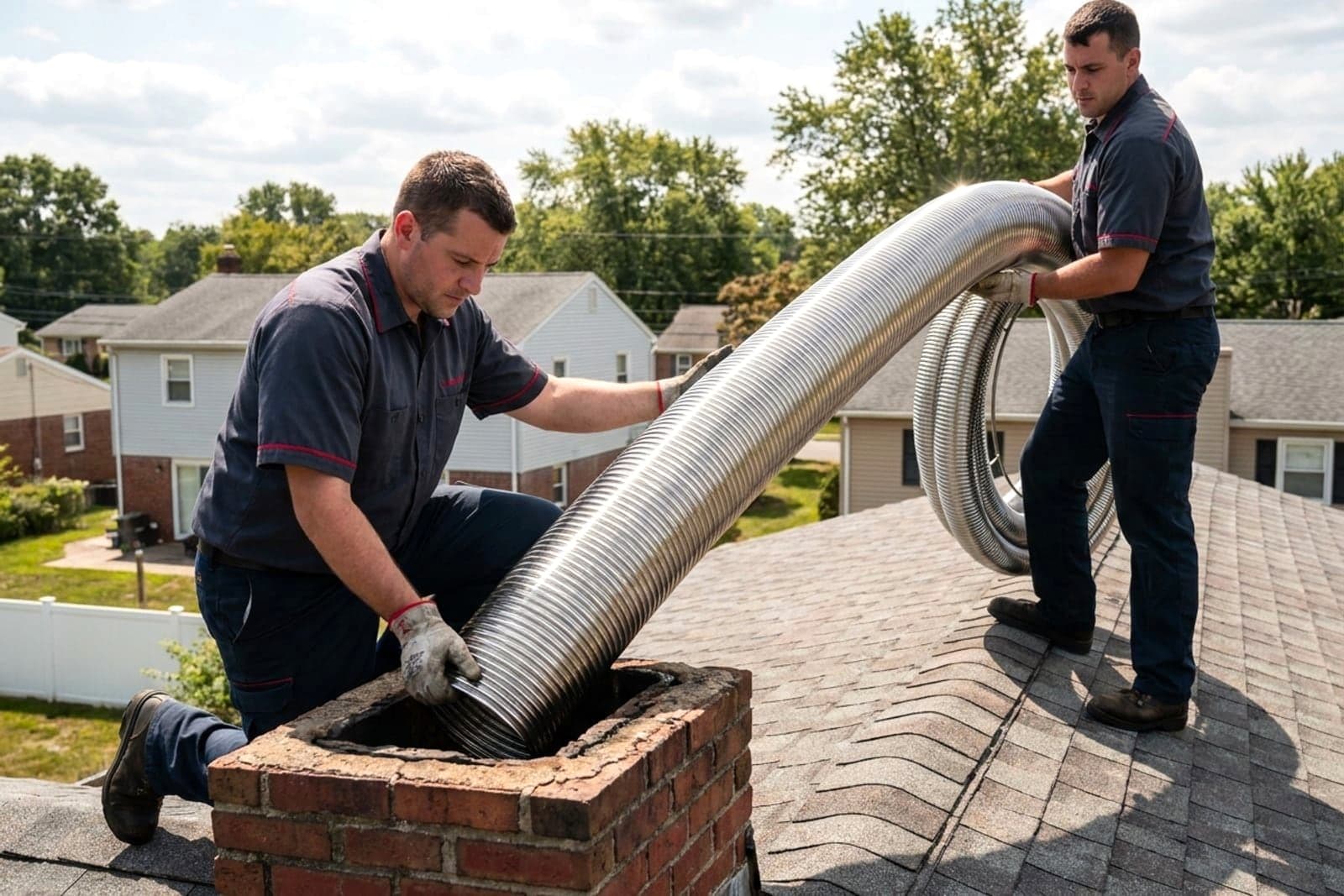
Think of the liner as the chimney's inner sleeve — the component that actually contains the heat and gases. On the older established homes common across our area, clay tile liners have often been in service for decades; they crack with age, and a single chimney fire can finish the job. A deteriorated or undersized liner may pass heat toward framing or let combustion gases migrate into the house.
That makes a damaged liner a safety matter, never a cosmetic one. When inspection turns up liner damage, chimney relining with a correctly sized stainless liner restores both the barrier and the draft.
Keep the weather out
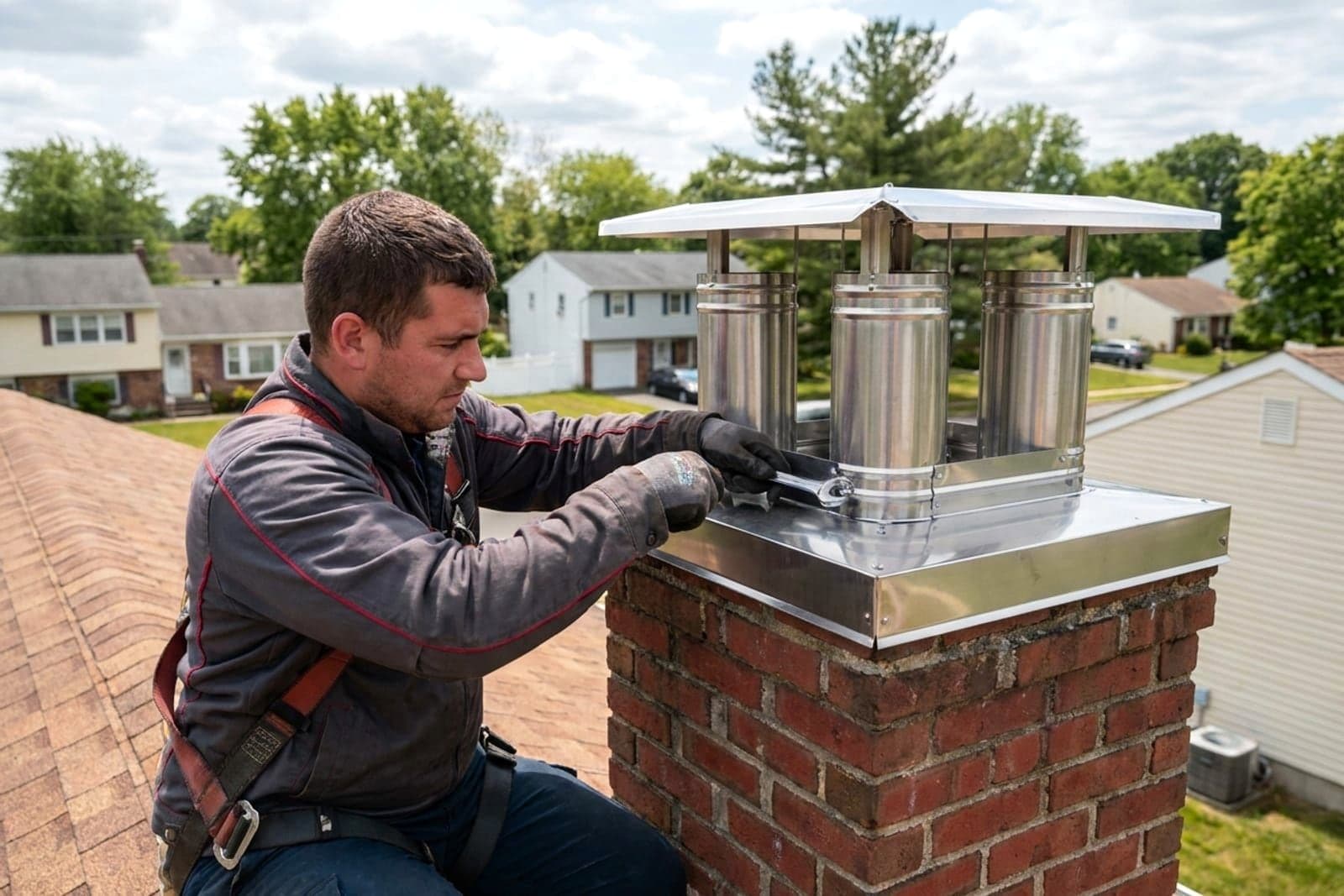
No single force damages chimneys here like water — and in a region where it rains for most of the year, an unprotected flue takes it straight down onto the liner and damper. Failed flashing sends the same water sideways, into the ceiling and walls that surround the chimney. A stainless chimney cap earns its keep twice over: it sheds the rain, and its mesh works as a spark arrestor while keeping birds and squirrels from nesting in the flue — a blockage we find often, and one that is genuinely dangerous.
Know the boundary
Good habits between visits genuinely reduce risk. But the flue interior, the roof and fuel connections are professional territory — the tools and the training both matter.
Before the first fire
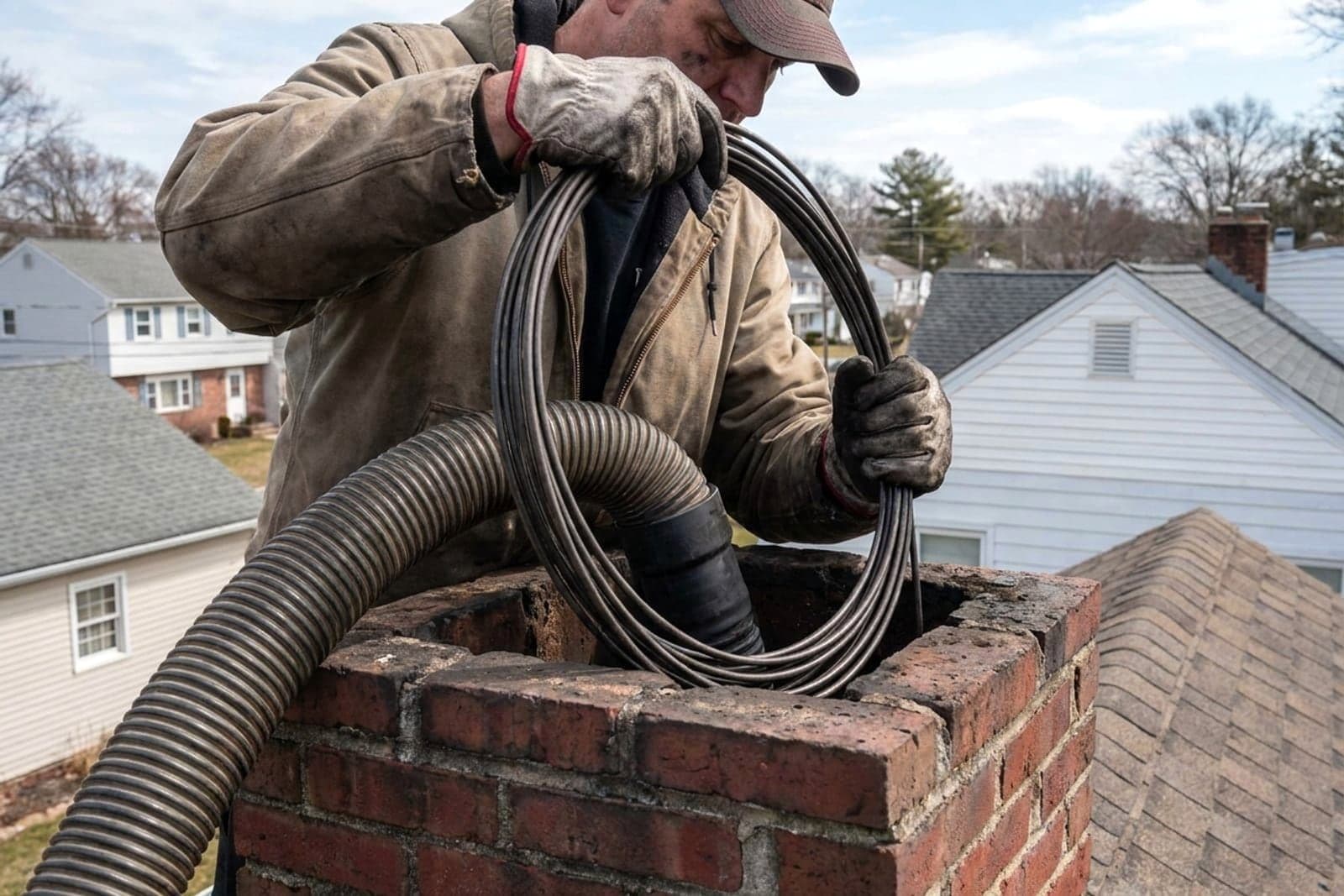
Late summer or early fall is the window — ahead of the seasonal rush, with time for any repair to be finished before you need the fireplace.
Start winter with last season's deposits gone. A clean flue drafts strongly and gives a chimney fire nothing to feed on.
These three details are what stand between nine months of rain and your masonry. Verify the cap is sound, the crown uncracked and the flashing sealed.
Fresh batteries, then a test of each smoke and carbon-monoxide alarm — every level of the house, and near the bedrooms.
Lay in seasoned, dry hardwood. Green or rain-wet wood smolders, cools the flue and coats it with creosote far faster than a clean, hot burn.
Keep reading
Measured, practical reading on keeping a chimney safe, efficient and watertight through the long wet season — written for the homes we actually work on.
Common questions
Choose a genuine opening on the crew's calendar. Bellevue Chimney Pros photographs every finding, booking asks for no card, and the $99 inspection is credited toward the quote you approve.