For most Bellevue homeowners, a gas fireplace insert is the more practical choice: annual maintenance runs $100–$200 versus $250–$450 for wood, and gas units are exempt from Puget Sound Clean Air Agency burn bans that lock out wood-burning fireplaces on the coldest stagnant-air nights of the year. A properly maintained masonry wood-burning chimney still delivers heat output and authenticity that gas cannot fully replicate, and the right answer depends on how often you burn, what condition your existing chimney is in, and how much burn-ban flexibility matters to your household. This guide gives you the real numbers and local regulatory facts to make that call.
Why Bellevue's Climate Makes This Decision More Consequential Than Elsewhere
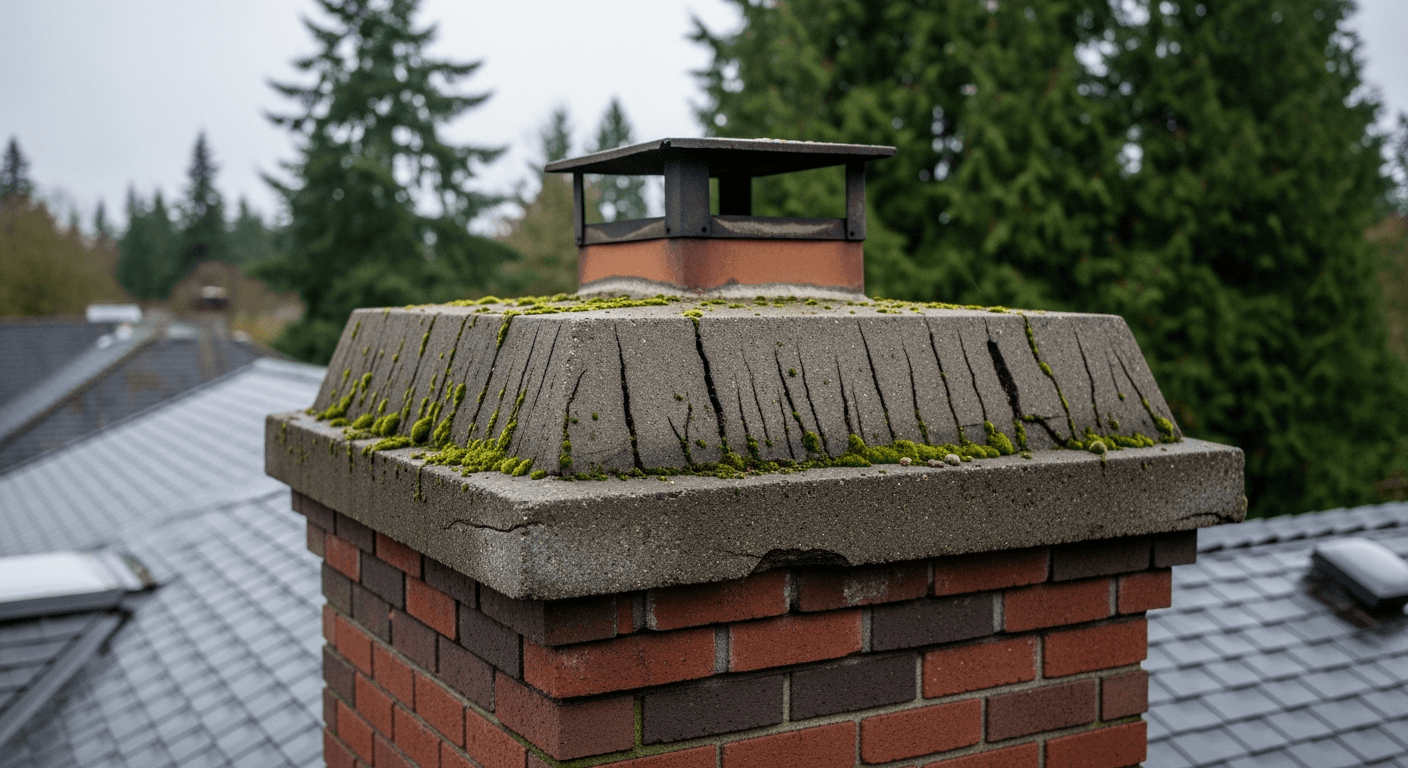
Bellevue averages 37 to 40 inches of rainfall annually, the bulk of it arriving between October and March — the exact months you want a fire. That sustained moisture is the primary enemy of a masonry chimney. Water infiltrates porous mortar joints, hairline crown cracks, and gaps around flashing; it then freezes, expands, and accelerates spalling. A chimney that looked sound in September can have measurable crown and mortar damage by April, and north-facing chimney faces on Bellevue's tree-shaded lots develop moss and algae growth that hold moisture against the masonry surface all winter, compounding the deterioration.
Wood-burning systems add a second local complication. Bellevue's cool, damp air encourages incomplete combustion, which produces glazed third-degree creosote — the dense, tar-like deposit that is both a serious fire hazard and expensive to remove. Short fires lit on shoulder-season evenings before the flue has reached operating temperature are a particularly fast path to glazed buildup. Gas inserts produce no creosote whatsoever. They also sidestep a hard regulatory reality: the Puget Sound Clean Air Agency declares burn bans on high-pollution stagnant-air days each winter, prohibiting wood burning in most residential fireplaces. A gas insert that meets PSCA clean-air exemption standards means you are never locked out of your fireplace on the coldest evening of the year.
Side-by-Side Cost and Maintenance Comparison for Eastside Homeowners
The figures below reflect current Bellevue and broader Eastside market conditions as of 2024. Wood-burning chimneys carry higher recurring costs because annual sweeping and inspection are non-negotiable for safe operation, and moisture-driven masonry repairs accumulate faster here than in drier inland climates. Gas inserts have lower annual costs but do require periodic professional servicing — burner port cleaning, thermocouple and valve inspection, and a visual liner check — on a one-to-three-year cycle depending on usage.
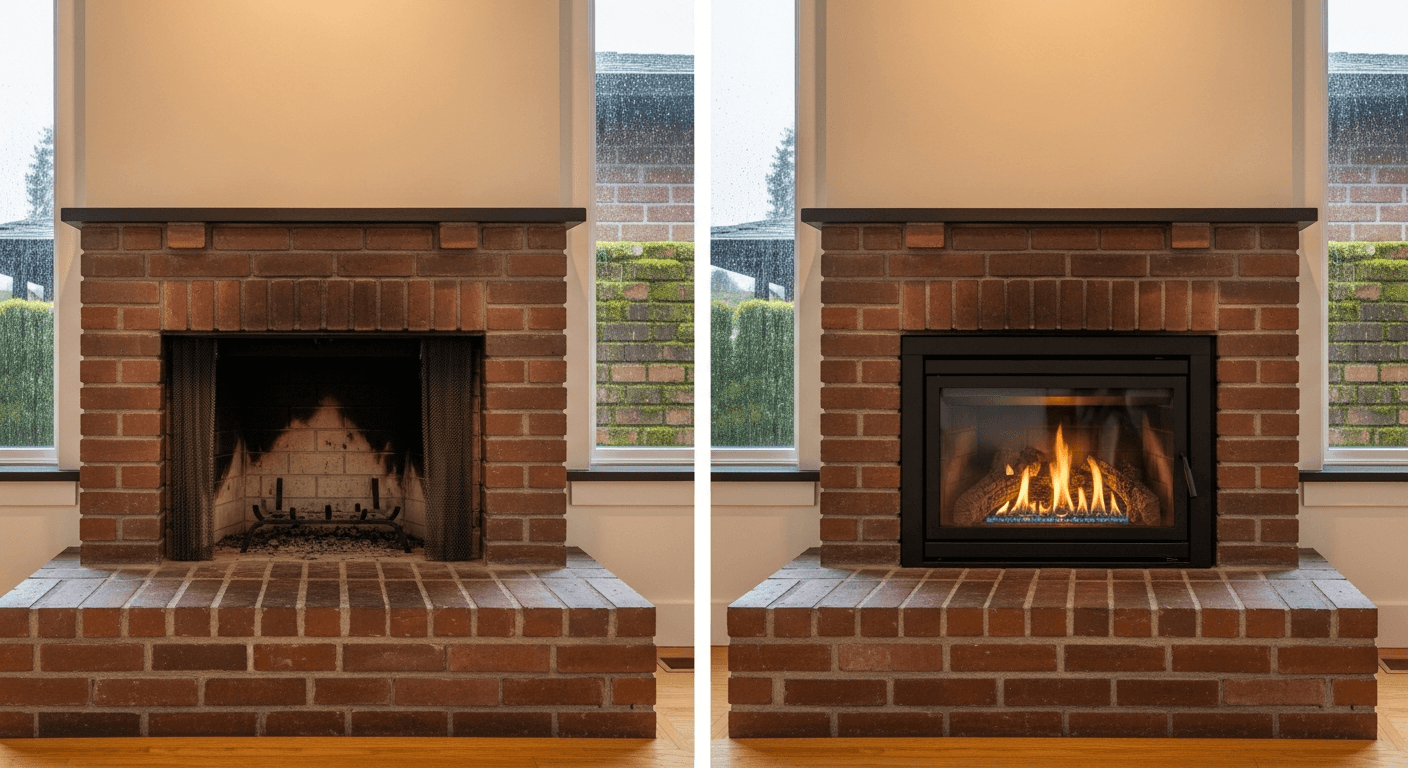
Installation figures assume converting an existing masonry fireplace opening. A gas insert drops into the firebox and connects via a flexible stainless liner run inside the existing flue; it does not require demolishing the masonry chimney. A full masonry wood-burning system rebuild is a significant capital project justified primarily when restoring a historic Eastside property or when structural damage already requires full reconstruction.
| Factor | Wood-Burning Masonry Chimney | Gas Fireplace Insert |
|---|---|---|
| Annual sweep / service cost | $250 – $450 (sweep + Level 1 inspection) | $100 – $200 (burner service, every 1–3 yrs) |
| Creosote removal (if needed) | $400 – $900+ for glazed third-degree buildup | Not applicable — no creosote produced |
| Moisture / masonry repairs (avg. Bellevue home) | $300 – $1,500+ every 3–5 yrs | Minimal — liner is stainless steel |
| Burn-ban compliance | Restricted on PSCA Stage 1 & Stage 2 ban days | Exempt from most Stage 1 & Stage 2 bans |
| Installation (convert existing opening) | N/A — masonry system already in place | $3,500 – $7,500 installed with liner |
| New construction / full rebuild | $15,000 – $35,000+ | $8,000 – $14,000 (insert + surround) |
| Heat output (BTU range) | 25,000 – 100,000+ BTU (varies by burn) | 20,000 – 60,000 BTU (thermostat-adjustable) |
| Ambiance / authenticity | High — real flame, crackling, wood aroma | Moderate — realistic glass-front flame, no aroma |
| Carbon monoxide / air-quality risk | Moderate without diligent annual maintenance | Low with periodic professional servicing |
| Useful service life | 50–100 yrs (masonry structure) | 15–25 yrs (insert unit) |
Recommended Service and Inspection Frequency by Situation in Bellevue
How often you should schedule professional chimney or fireplace service in Bellevue depends on your system type, usage level, and the specific Pacific Northwest conditions your chimney faces. The table below summarizes the recommended inspection and maintenance intervals for common homeowner situations on the Eastside. These are minimum guidelines; chimneys on shaded, north-facing lots or in neighborhoods with heavy tree canopy — conditions common in Bellevue neighborhoods such as Bridle Trails, Somerset, and Woodridge — should default to the more frequent end of any range.
Note that 'service visit' for a gas insert includes burner port cleaning, ignition and thermocouple testing, liner inspection for condensation-related corrosion, and glass gasket verification. For a wood-burning chimney, the annual visit is a full Level 1 sweep and inspection; a Level 2 camera inspection is warranted any time unusual odor, sluggish draft, or visible liner damage is observed regardless of the calendar interval.
| Situation | System Type | Recommended Service Frequency | Key Bellevue Risk Factor |
|---|---|---|---|
| Light use (fewer than 10 fires per season) | Wood-burning masonry chimney | Annual sweep + Level 1 inspection | Glazed creosote from cool, short burns; moisture accumulation in unused flue |
| Moderate use (10–40 fires per season) | Wood-burning masonry chimney | Annual sweep + Level 1 inspection; Level 2 if odor or draft issues arise | Creosote buildup rate; mortar and crown moisture damage over winter |
| Heavy use (40+ fires per season, 3+ cords/yr) | Wood-burning masonry chimney | Annual sweep + Level 1 inspection; consider mid-season check | Sustained high temps protect against creosote but accelerate clay liner wear |
| Light to moderate use (fewer than 30 fires per season) | Gas fireplace insert | Annual visual check; full service every 2–3 years | Liner condensation if chase cover is compromised; ignition component wear |
| Frequent use (30+ fires per season) | Gas fireplace insert | Annual full service visit | Burner port fouling; thermocouple fatigue; gasket seal degradation |
| Any chimney on north-facing or heavily shaded lot | Either system | Annual inspection; exterior masonry check every 2–3 years | Moss and algae growth hold moisture against mortar year-round in Bellevue |
| Chimney not used for 2+ years | Either system | Level 2 inspection with camera scan before first use | Wildlife nesting, hidden liner cracks, and flashing failures common after extended disuse |
A Bellevue Homeowner's Real Decision: When Converting to Gas Made Sense
To illustrate how this decision plays out in practice, consider a hypothetical homeowner in the Bridle Trails neighborhood who contacts a chimney professional in early November after receiving quotes for creosote removal and crown repair on a 1990s masonry chimney. The fireplace had been used only two or three times a year — brief burns that never fully heated the flue to the 250°F minimum needed to prevent condensation — which is one of the fastest ways to accumulate glazed creosote in a Pacific Northwest climate. The combined quote for chemical creosote treatment, a partial crown rebuild, and waterproofing comes to just over $1,800.
In a scenario like this, a five-year cost projection is instructive. At that usage pattern, a homeowner would be averaging close to $600 per season in maintenance and repairs, yet lighting the fireplace fewer than a dozen times. They may also have missed two ban-day evenings the previous winter when they had guests and wanted a fire. A mid-grade direct-vent gas insert with a new stainless liner and a tile surround that matched existing brick — installed at $5,200 total — would drop ongoing costs to a $150 annual service visit and allow the fireplace to run two or three nights a week from November through February with no ban-day interruptions and no creosote concerns.
This is not a blanket recommendation. A homeowner who burns three to five cords of seasoned wood per season, keeps the flue consistently hot, and deeply values the sensory experience of a wood fire has every reason to maintain their masonry system properly. The economics favor gas most clearly when usage is light to moderate, when burn-ban evenings are a recurring frustration, or when an aging chimney already faces significant repair costs that could partially fund a conversion.
What Proper Maintenance Actually Looks Like for Each System in the Pacific Northwest
Wood-burning chimney: Schedule a Level 1 sweep and inspection every year before the burn season — in Bellevue that means August or September, before the autumn rains arrive and before you light the first fire. If you have burned more than a cord or noticed unusual odors, sluggish draft, or any visible liner damage, request a Level 2 inspection, which includes camera scanning of the full flue interior. Every three to five years, have the crown examined for hairline cracks, mortar joints checked for softening or moss infiltration (especially common on north-facing chimney faces in Bellevue's tree-canopy neighborhoods), and a penetrating waterproofer reapplied to the masonry. Confirm cap and flashing integrity every year — flashing failures are the single most common source of chimney moisture damage we find on Eastside homes.
Gas fireplace insert: The National Fireplace Institute recommends annual inspection for gas appliances. A lightly used insert can safely extend to two to three years between full service visits, but annual inspection is the safer default in Bellevue because moisture can migrate down the flue chase and degrade the stainless liner over time if the chase cover or cap is compromised — even when the appliance itself runs perfectly. The service visit should include cleaning burner ports, testing the ignition system and thermocouple, inspecting the flexible liner for condensation-related corrosion, and verifying the glass gasket seal. Never skip liner inspection on the assumption that gas burns clean: the liner is exposed to the same wet flue environment as any other system.
One maintenance item applies to both: if you see moss, algae, or dark biological staining on the exterior crown or brick, address it before winter. Bellevue's damp, shaded lots allow organic growth to establish quickly, and moss root networks hold moisture against masonry surfaces continuously, accelerating mortar deterioration through the freeze-thaw cycles we see every January and February.
Three Questions That Point to the Right Answer for Your Home
First, how often do you actually burn? If the honest answer is fewer than ten fires per season, the annual maintenance cost of a wood-burning system is hard to justify on economics alone. Gas becomes the practical choice at that usage level. If you burn two or three times a week through a full Pacific Northwest winter — roughly 40 to 60 fires per season — the per-use cost of maintaining a masonry system is reasonable, and you get the full authentic experience in return.
Second, what is the current condition of your chimney? If you are already facing crown repair, mortar tuckpointing, a deteriorated clay tile liner, or significant flashing work, the cost of bringing the wood-burning system up to safe operating standard can often fund a gas conversion with money remaining. We provide a written side-by-side cost comparison of both paths after a thorough inspection, so your decision is based on documented findings rather than estimates.
Third, how much does burn-ban flexibility matter to your household? The PSCA's stagnant-air ban days are declared with 24 to 48 hours' notice, typically on the coldest, most overcast winter evenings — precisely when you most want a fire. Gas inserts that meet PSCA clean-air exemption criteria eliminate that variable entirely. For Eastside homeowners who invested in a fireplace specifically for winter entertaining and ambiance, that reliability has real value that does not show up in any maintenance cost spreadsheet.
Frequently asked questions
How often does a gas fireplace insert need to be serviced in Bellevue?
Annual inspection is the safest interval for a gas fireplace insert in Bellevue's damp climate. Even when the appliance runs normally, moisture can affect the stainless liner and chase cover over time. Lightly used inserts can extend to every two to three years between full service visits, but an annual visual check by a certified technician is still recommended.
Are wood-burning fireplaces banned in Bellevue?
No permanent ban exists in Bellevue, but the Puget Sound Clean Air Agency declares Stage 1 and Stage 2 burn bans on stagnant winter air days that restrict or prohibit residential wood burning. Gas inserts meeting PSCA clean-air exemption standards are generally permitted to operate during both Stage 1 and Stage 2 bans.
What does it cost to convert a wood-burning fireplace to a gas insert in Bellevue?
A gas insert with a new flexible stainless liner sized to the existing flue typically costs $3,500 to $7,500 installed in the Bellevue market, depending on the insert model, flue height, and any surround or framing work. Custom tile or stone surrounds can push the total higher.
How often should a wood-burning chimney be swept in the Pacific Northwest?
Every year before the burn season — ideally August or September in Bellevue — is the recommended interval for sweeping a wood-burning chimney in the Pacific Northwest. Cool shoulder-season burns, damp combustion air, and the Pacific Northwest habit of lighting fires before the flue is fully warmed all accelerate creosote buildup. The Chimney Safety Institute of America recommends cleaning whenever deposits reach 1/8 inch, which can occur in a single Bellevue winter season.
Will homeowners insurance cover a chimney conversion or gas insert installation?
Standard homeowners insurance does not cover elective upgrades like converting a wood-burning fireplace to a gas insert in Bellevue. It may cover chimney damage caused by a covered peril such as a chimney fire, windstorm, or sudden structural collapse, but routine maintenance and system upgrades are the homeowner's responsibility. Document any sudden damage with photos before calling for repairs.
Related services