Chimney crown repair in Bellevue, WA costs $150–$350 for elastomeric sealing, $300–$600 for patching moderate cracks, and $500–$2,000 or more for a full concrete rebuild — with the final number driven by chimney height, roof pitch, and how far water has already penetrated the masonry. Bellevue's climate does more damage to chimney crowns than most homeowners expect: the city receives roughly 37 inches of rain annually, the majority falling between October and March, followed by overnight freeze-thaw cycles on the Eastside plateau that widen hairline cracks into full through-cracks within a single season. Catching crown damage at the surface-crazing stage typically costs under $350; waiting until water has reached the firebox routinely pushes the bill past $1,400.
What a Chimney Crown Is and Why Bellevue's Climate Destroys Them
The chimney crown is the sloped concrete slab that covers the full width of the chimney's masonry shell, surrounding the flue liner opening and directing rainwater away from the brick below. It is not the same as a chimney cap — the cap is the metal cover positioned directly over the flue opening; the crown is the wider concrete platform beneath it that protects the entire masonry structure.
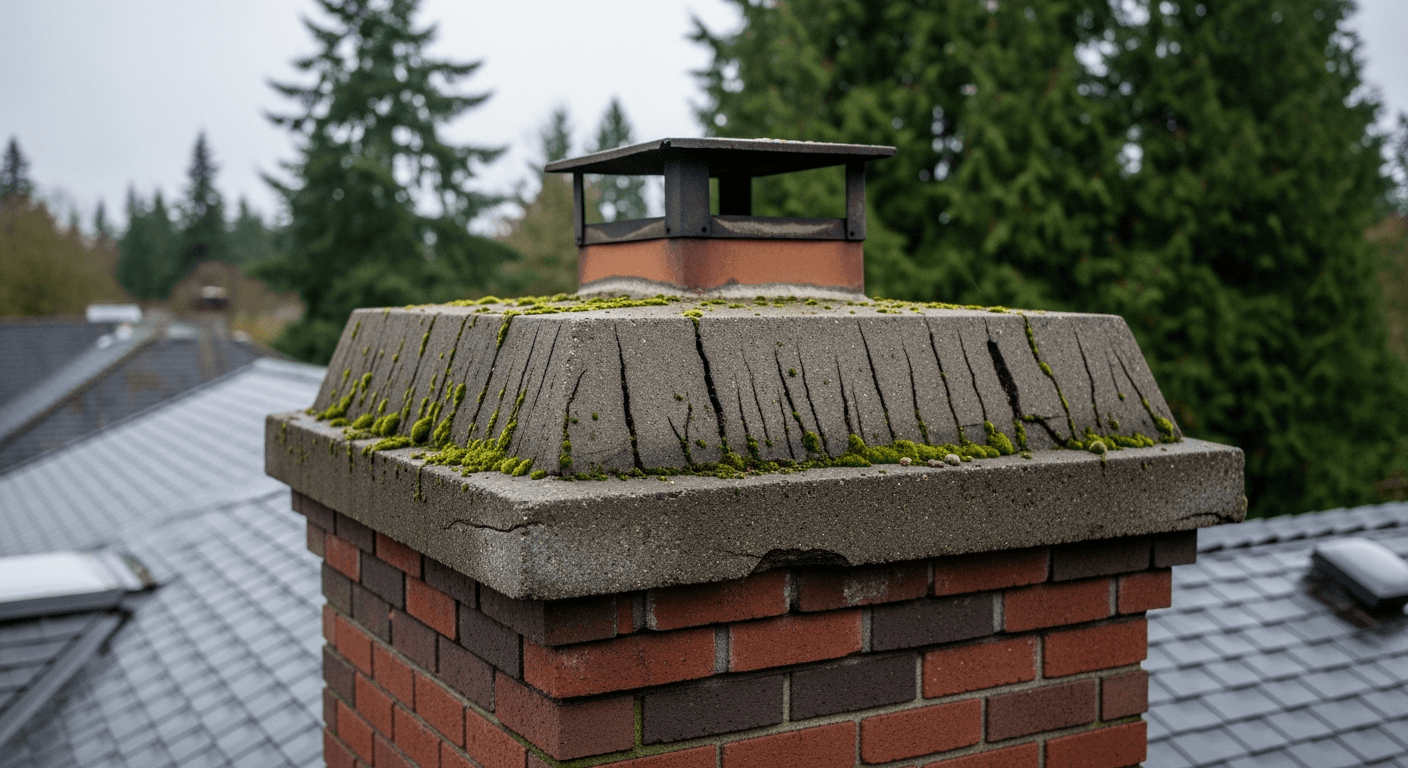
Bellevue's maritime-influenced climate is unusually hard on crowns for two compounding reasons. First, the city's October-through-March rainy season saturates concrete continuously, driving moisture into any crack, no matter how fine. Second, temperatures on the Eastside plateau dip below freezing on 30 to 50 nights per winter — enough freeze-thaw cycles to measurably widen a hairline crack each season. A crown that shows only surface crazing in October can have full through-cracks by March.
Moss and lichen accelerate the process. Many homeowners in Bridle Trails, Enatai, and Newport Hills — neighborhoods dominated by mid-1980s to mid-1990s brick construction — call us in spring after noticing green growth on the crown, assuming it is cosmetic. Moss root systems hold moisture against concrete year-round and chemically attack the surface. Worse, many of those older chimneys were originally finished with a thin mortar wash rather than properly proportioned concrete, giving moss an easier foothold and giving water a faster path through.
Chimney Crown Repair and Replacement Costs in Bellevue, WA (2025–2026)
The table below reflects current Bellevue market pricing, which incorporates Eastside labor rates and the practical realities of working above single-story, two-story, and occasionally three-story rooflines. These are not national averages — they are the ranges our crews encounter on actual Bellevue jobs.
Access is the most frequently overlooked cost driver. A chimney centered on a low-pitch single-story roof is a straightforward ladder job. The same rebuild on a steep-pitch two-story home in the Lakemont or Somerset areas may require a pump-jack or scaffolding setup that adds $200–$500 before a single scoop of concrete is mixed. Always confirm that your quote specifies the access method and includes it in the total.
Elastomeric crown sealants — CrownCoat and comparable products — are the right tool when the crown body is structurally sound but showing surface crazing or cracks under 1/16 inch wide. Applied correctly after thorough surface prep, they form a flexible waterproof membrane that moves with freeze-thaw cycles and extends crown life by five to ten years. They are not appropriate over through-cracks or crumbling edges; using them in those situations traps moisture and accelerates the failure they are meant to prevent.
| Service | Typical Bellevue Cost Range | Notes |
|---|---|---|
| Crown sealant / elastomeric coating | $150 – $350 | Surface crazing and cracks under 1/16"; 1–2 hour job on accessible chimney |
| Crown patch and seal (moderate cracks) | $300 – $600 | Crack filling, surface prep, and full elastomeric coat; no structural rebuild |
| Full crown rebuild — single-story home | $500 – $900 | New concrete poured to 3–5" thickness with drip-edge overhang; low-pitch access |
| Full crown rebuild — two-story home | $700 – $1,400 | Pump-jack or extended ladder setup included; most common job type in Bellevue |
| Full crown rebuild with scaffolding | $1,200 – $2,000+ | Steep-pitch or tall structures; scaffolding rental and setup included in range |
| Crown rebuild combined with cap replacement | $800 – $1,600 | Stainless steel cap installed simultaneously; eliminates second mobilization cost |
| Level 2 inspection (prerequisite for crown assessment) | $250 – $450 | Camera flue scan plus full external inspection; required before insurance claims |
Recognizing Crown Damage: Symptoms, Likely Causes, and Urgency
Chimney crown problems in Bellevue rarely announce themselves loudly. More often, homeowners notice a secondary symptom — staining on brick, a musty smell near the fireplace, or moss creeping across the roofline — without connecting it to the crown. The table below maps the most common visible symptoms to their probable crown-related causes and indicates how urgently each warrants a professional inspection.
Understanding this symptom-to-cause relationship matters because it determines the correct repair scope. A homeowner who calls about efflorescence on the upper brick courses needs more than a surface cleaning — the source of water entry must be addressed first. Likewise, a chimney cap that is sitting crooked is often a sign that the crown edge beneath it has crumbled, not simply that the cap needs reseating.
Any single symptom in the table below is reason enough to schedule a Level 2 inspection in Bellevue before the October rainy season begins. Two or more symptoms appearing together strongly suggest that water has already moved past the crown and into the masonry — a situation where each additional month of delay expands the repair scope and the cost.
| Visible Symptom | Probable Crown-Related Cause | Inspection Urgency |
|---|---|---|
| White chalky deposits (efflorescence) on upper brick courses | Water tracking through crown cracks into the outer brick wythe | High — water intrusion already active |
| Spider-web surface crazing on the crown (no penetrating cracks) | Normal weathering; freeze-thaw micro-fracturing of surface layer | Moderate — seal before next rainy season |
| Dark streaks running down from crown line | Through-cracks allowing water to channel along masonry face | High — through-cracks likely present |
| Moss or lichen growth on crown surface | Sustained moisture retention; often indicates poor original crown mix | Moderate — accelerates cracking if left untreated |
| Visible gap between crown edge and chimney face | Crown perimeter crumbling or delaminating from masonry shell | High — rebuild typically required |
| Chimney cap sitting at an angle or loose | Crown edge has crumbled, removing the cap's flat seating surface | High — crown structural failure likely |
| Musty odor near firebox after rain | Water reaching smoke chamber or firebox through compromised crown | High — interior water damage possible |
| Spalling or flaking on top two to four brick courses | Freeze-thaw damage caused by sustained saturation from crown failure | High — masonry repair may also be needed |
A Bridle Trails Homeowner Found Crown Damage the Expensive Way
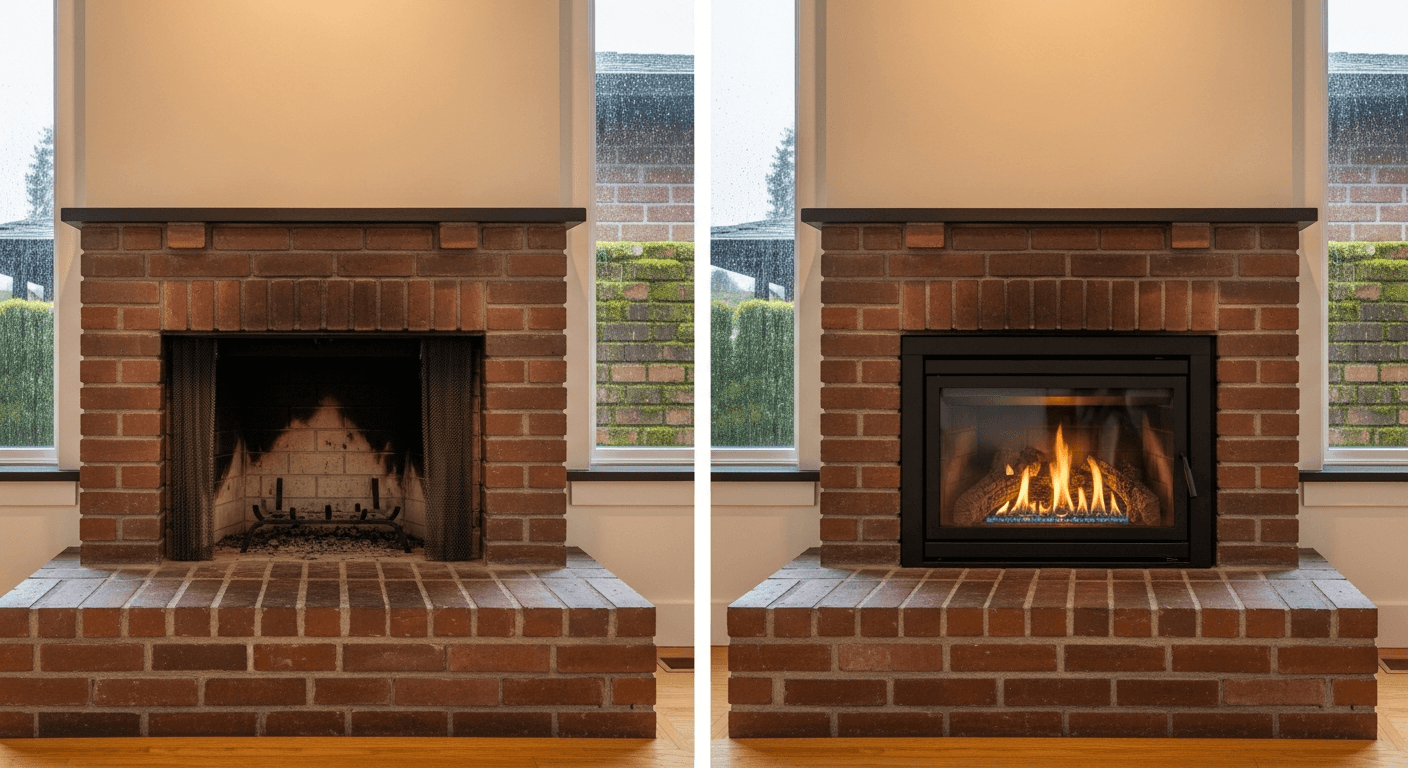
A homeowner in Bridle Trails contacted us in February after noticing white chalky deposits spreading down the upper third of their brick chimney exterior. The home was a 1994 build with a masonry wood-burning fireplace on the main floor and a gas insert added to a second fireplace roughly ten years prior. They were certain the staining was cosmetic and asked only for a cleaning quote.
When our technician reached the crown, he found a previous repair: someone had skim-coated the original deteriorated mortar wash with a thin layer of new mortar — a patch that had no mechanical bond to the structure beneath it. That skim coat had cracked through in three locations. Two of the gaps were wide enough to accept a credit card edge. Moisture had been tracking down through the outer brick wythe for at least one full rainy season, which is what produced the efflorescence. The flue liner was intact and the firebox showed no structural compromise — a fortunate finding given how long water had been moving through the crown.
We rebuilt the crown using properly proportioned concrete at 4-inch thickness with a formed drip edge, installed a stainless steel chimney cap, and applied a penetrating waterproofer to the top six brick courses where saturation had occurred. Final invoice: $1,380. A Level 2 inspection two or three years earlier — when the original mortar wash first began crazing — would have indicated a sealant treatment at roughly $275. The homeowner now schedules an annual visual check each September, before burn season begins and before fall rains make scheduling tight. This scenario is illustrative of a common pattern; outcomes vary depending on the specific condition of each chimney.
Patching vs. Sealing vs. Full Rebuild: How to Read the Signals
The decision is straightforward once you know what to look for. Surface crazing — a spider-web pattern of fine cracks that do not penetrate the full crown thickness — is appropriate for elastomeric sealing, provided the crown body is solid when tapped (a hollow sound indicates delamination beneath). Cracks wider than 1/16 inch, cracks that run edge to edge, crumbling at the crown perimeter, or any gap at the crown-to-flue-liner interface all indicate a rebuild. Patching over a structurally failing crown delays the inevitable by one season at most and can trap moisture in the interim.
Several signs are visible from the ground and warrant a professional inspection even if you cannot see the crown directly: efflorescence on the upper two to four brick courses, dark staining streaking below the crown line, visible daylight between the crown edge and the chimney face, and moss or lichen growth anywhere on the crown surface. None of these signs are individually conclusive, but each one raises the probability that water is moving where it should not be.
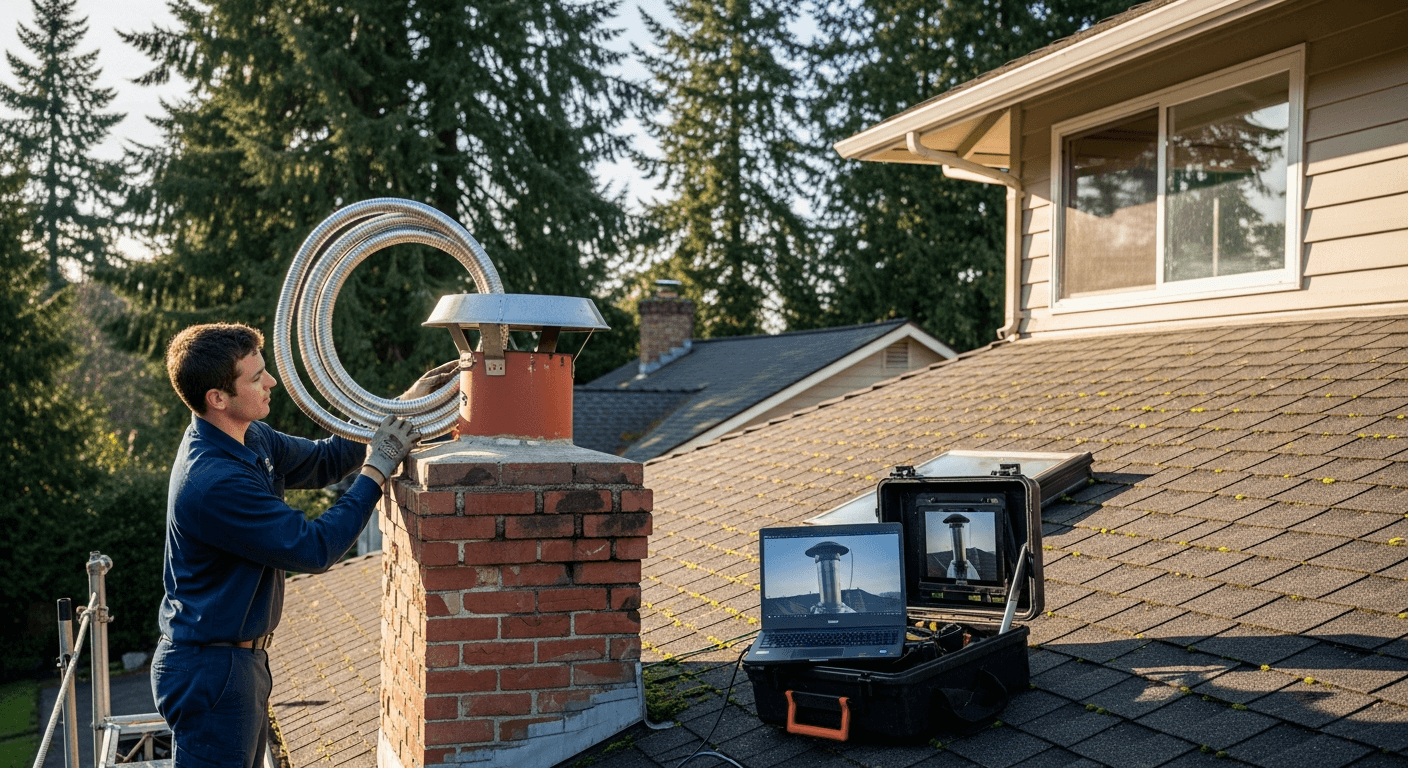
A Level 1 inspection covers what is accessible; a Level 2 adds a camera scan of the flue liner and is the standard required before any significant repair, any real estate transaction involving a fireplace, or any insurance claim. At $250–$450 in Bellevue, it is the lowest-cost way to know exactly what you are dealing with before committing to a repair scope.
Best Timing for Crown Work in Bellevue and Why September Matters
The optimal windows for chimney crown repair on the Eastside are late April through June and mid-August through mid-September. Concrete requires sustained overnight temperatures above 40°F to cure correctly — below that threshold, hydration stalls and the fresh pour can crack before it has developed meaningful strength. Bellevue's extended rainy season means repairs done in November through February face both low overnight temperatures and the near-certainty of rain within the cure window.
If your crown is actively damaged and winter is approaching, a correctly applied elastomeric sealant — not a mortar patch — can serve as a protective bridge coat that limits additional water intrusion until a rebuild becomes practical in spring. This is a deliberate temporary measure, not a permanent fix, and it only works if the crown body still has structural integrity.
September is the single most valuable month on the Eastside inspection calendar. The Puget Sound Clean Air Agency begins issuing episodic burn bans — typically November through February on stagnant-air days — so any fireplace deficiency discovered after October may ground your system right at the start of heating season. Scheduling an inspection in September means crown issues, flue problems, and damper faults are identified while repair weather is still good, contractor schedules are open, and you have weeks before you need to light the first fire of the season.
Frequently asked questions
How long does a rebuilt chimney crown last in Bellevue's climate?
A properly poured concrete chimney crown in Bellevue, WA — built to a minimum 3-inch thickness with a drip-edge overhang and an elastomeric sealant coat applied at completion — typically lasts 15 to 25 years through Eastside winters. A thin mortar wash without sealant often begins cracking within 3 to 5 years under Bellevue's freeze-thaw cycle. Reapplying elastomeric sealant every 5 to 7 years and keeping the chimney cap in good condition extends that lifespan toward the upper end.
Can I seal my chimney crown myself?
Elastomeric crown sealants are commercially available, but effective application on a Bellevue chimney requires correct surface preparation, the ability to distinguish surface crazing from through-cracks, and safe roof access. If the crown has through-cracks or is delaminating, DIY sealing traps moisture and delays a necessary rebuild — often making the eventual repair more expensive. A professional assessment first is the lower-risk and frequently lower-cost path.
Does homeowners insurance cover chimney crown damage in Washington State?
Standard Washington homeowners policies exclude gradual deterioration and deferred maintenance, which describes the vast majority of chimney crown cracking in Bellevue. Coverage may apply when damage is tied to a specific sudden event — a tree strike, a documented windstorm, or hail — rather than seasonal wear. A Level 2 inspection report documenting the cause and the condition of the flue is typically required before an insurer will evaluate a crown-related claim.
What is the difference between a chimney crown and a chimney cap?
On a Bellevue chimney, the crown is the wide concrete slab that covers the entire top of the chimney's masonry shell, sloping outward so water runs off the brick rather than into it. The cap is the smaller metal cover — usually stainless steel — positioned directly over the flue opening to block rain, debris, and animals. Both components are necessary; a cap does not protect the masonry below it, and a crown does not keep rain out of the flue itself.
How much does a Level 2 chimney inspection cost in Bellevue?
A Level 2 chimney inspection in Bellevue, WA runs $250 to $450. It includes a camera scan of the full flue liner plus a thorough external inspection of the crown, cap, flashing, and visible masonry — the standard required before significant repair work, a real estate transaction involving a fireplace, or an insurance claim. Most reputable Bellevue contractors credit the inspection fee toward any repair work that follows.
Related services