Mortar is meant to wear out before the brick does. When joints on a chimney start crumbling or open up, the choice is between replacing the mortar, known as tuckpointing or repointing, and taking the stack down and rebuilding it. On the Eastside a third factor sits in the background: the Seattle fault, and what earthquakes do to old masonry chimneys.
Repointing and rebuilding are different jobs
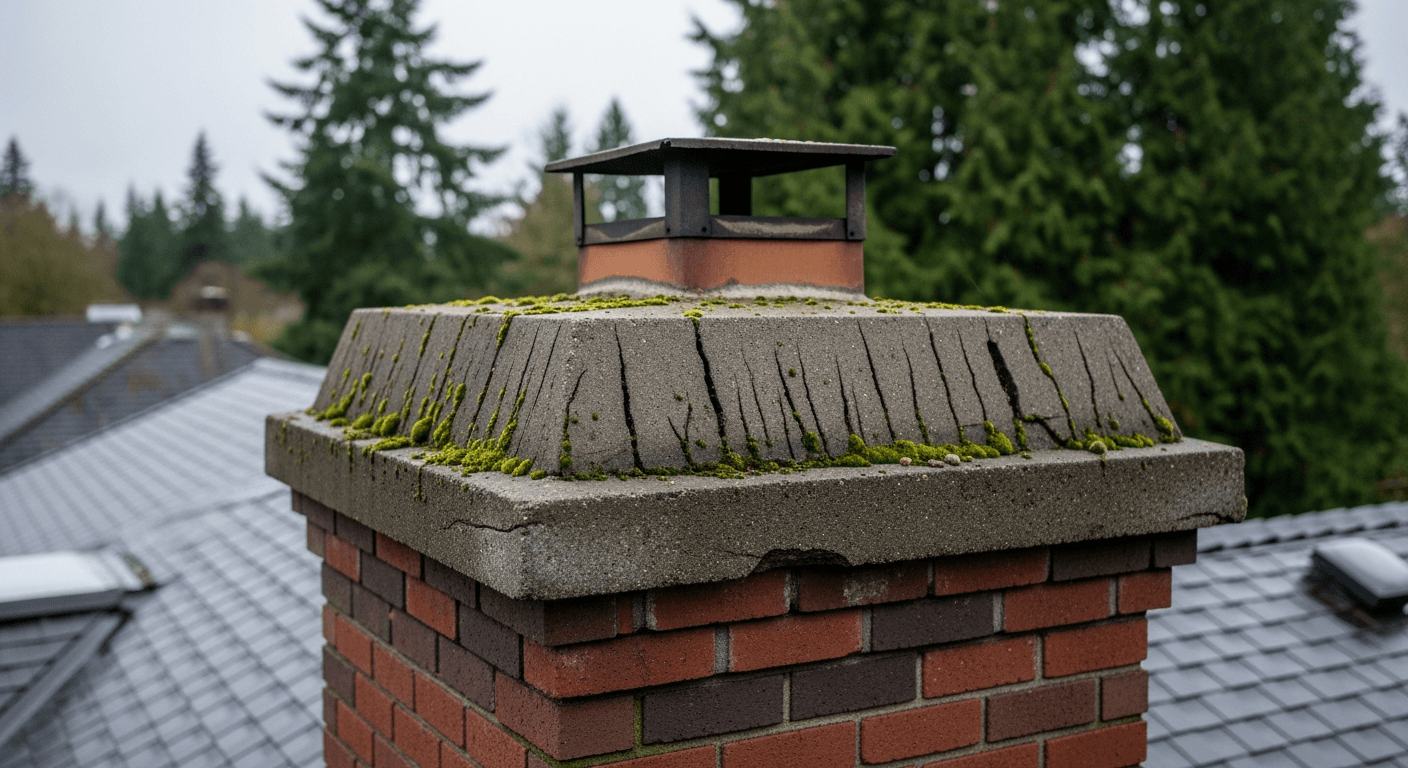
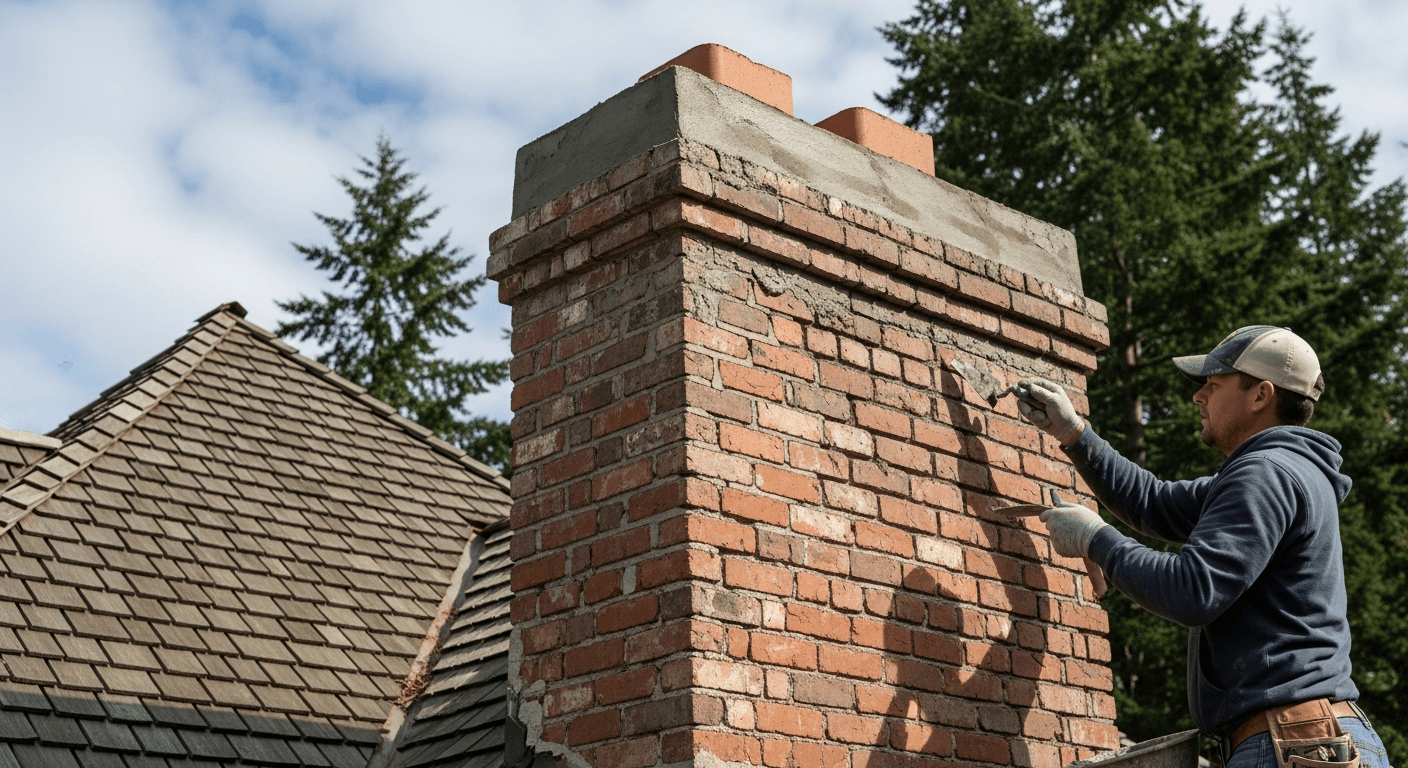
Repointing grinds out the worn outer part of each mortar joint and packs in new mortar. The bricks stay where they are. It is the right answer when the brick itself is sound and the damage is in the joints.
A rebuild takes the chimney down to a sound course, often the roof line or below, and lays it up again with a new crown. It is the answer when bricks are cracked or spalling across large areas, when the stack leans, or when a quake has loosened it.
| What you see | Points toward | Why |
|---|---|---|
| Crumbling or recessed mortar, bricks intact | Repointing | The joints failed, the brick did not |
| A few cracked or flaking bricks | Brick replacement plus repointing | Localized damage |
| Spalling across much of the stack | Partial or full rebuild | Too much of the brick has failed |
| Leaning or loose upper courses | Rebuild | The structure is no longer bonded |
| Damage after strong shaking | Level 2 inspection, then usually a rebuild | Repointing does not restore seismic performance |
The earthquake question
FEMA's recovery advisory describes masonry chimneys in wood-frame houses as extremely vulnerable to earthquake shaking, with older unreinforced chimneys and degraded mortar the most at risk. When researchers went through roughly 60,000 chimneys after the 2001 Nisqually quake, from Bremerton to Mercer Island, they counted 1,556 damaged ones, concentrated along the Seattle fault zone that Washington DNR maps beneath Bellevue.
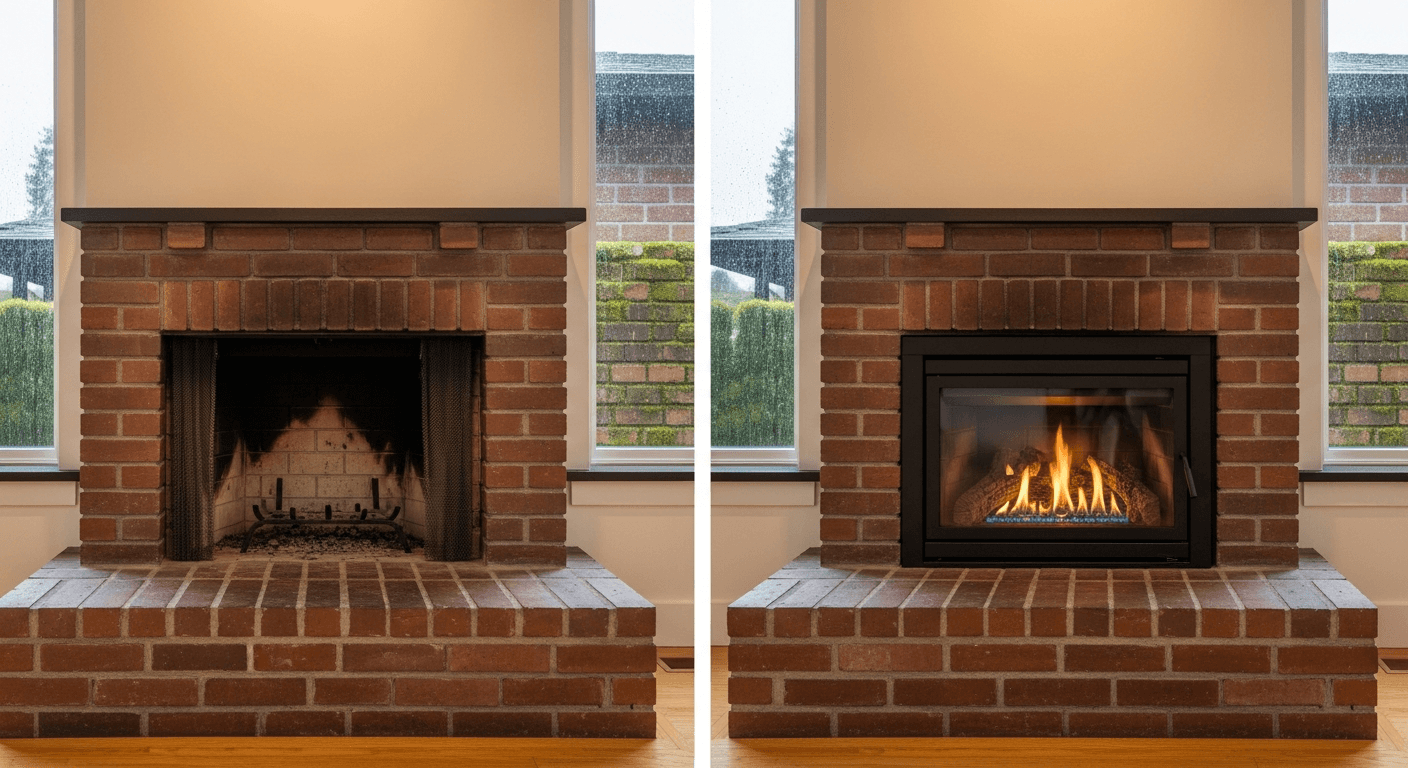
The same FEMA document is explicit that repointing alone does not improve a chimney's seismic performance. For quake-damaged masonry, the advisory favors taking part or all of the chimney down and replacing it with a metal flue or an insert framed in light construction. That changes the math on an old, already-worn chimney: money spent on joints does not buy earthquake resilience.
Why joints wear faster here
Mortar erodes from the outside in, and the Eastside keeps it wet for much of the year; by WeatherSpark's count, Bellevue's wet stretch lasts roughly six to seven months. CSIA ranks water ahead of fire as the bigger threat to masonry, and the joints feel it first because they are softer than the brick around them.
A cracked crown or failed flashing sends water into the stack from above, so any repointing job should include a look at both. New joints under an old leak wear out in a few seasons.
Permits and code on a rebuild
FEMA notes that building permits are always required for the chimney reconstruction work its advisory describes. A rebuilt chimney also has to meet the current height rule: its top must clear anything on the house within a 10-foot radius by 2 feet or more, and rise at least 3 feet above its roof penetration. In King County, the 2021 Washington State Building Code applies to applications complete on or after March 15, 2024.
Permit portals differ by city. Issaquah and Mercer Island take mechanical permit applications online through MyBuildingPermit.com, and Medina requires mechanical permits for work on systems such as vents.
What it runs, and what others publish
Repointing and crown work fall under our masonry repair, priced from $475 to $3,195 depending on the surface; larger structural work is quoted as chimney repair, from $425. The written quote follows the inspection.
For comparison, Mad Hatter Chimney Sweep publishes $1,500 to $3,000 for mortar repointing in Seattle, and Fixr gives a national range of $500 to $2,500 to tuckpoint a chimney. These are market figures, not our quote.
Frequently asked questions
How long does tuckpointing last on a chimney?
It depends on how wet the chimney stays. Joints under a sound crown, cap and flashing last far longer than joints on a stack that is still taking water from above.
Can I repoint my chimney instead of rebuilding it after an earthquake?
FEMA says new mortar alone does not make a chimney safer in the next quake. After damage, it recommends taking the masonry down in part or in full and rebuilding around a metal flue or insert.
Do I need a permit to rebuild a chimney?
FEMA notes that permits are always required for the reconstruction work in its advisory. Check with your city before work starts.
What is the difference between tuckpointing and repointing?
In everyday use both mean replacing worn mortar. Strictly, tuckpointing adds a thin contrasting line to make joints look crisp; on chimneys the work that matters is the repointing underneath.
Sources
- FEMA — Repair of Quake-Damaged Masonry Chimneys — accessed September 23, 2026
- USGS — Nisqually earthquake chimney damage — accessed September 23, 2026
- WeatherSpark — Bellevue climate — accessed September 23, 2026
- Washington DNR — Earthquakes and Faults — accessed September 23, 2026
- King County — Building and fire codes — accessed September 23, 2026
- City of Issaquah — Mechanical Permits — accessed September 23, 2026
- City of Mercer Island — Mechanical Permits — accessed September 23, 2026
- City of Medina — Development Services FAQ — accessed September 23, 2026
- Mad Hatter Chimney Sweep — Chimney Repair Seattle — accessed September 23, 2026
- Fixr — Brick tuckpointing cost — accessed September 23, 2026
Related services