Chimney inspections come in three levels, defined by NFPA 211 and taught by the Chimney Safety Institute of America. The level is not a sales tier: it describes how far the inspector has to look, and the situation decides it. A house changing hands in Bellevue, a new insert going into a 1950s Clyde Hill fireplace, or a chimney that rode out an earthquake near the Seattle fault each call for a different depth of look.
The three levels at a glance
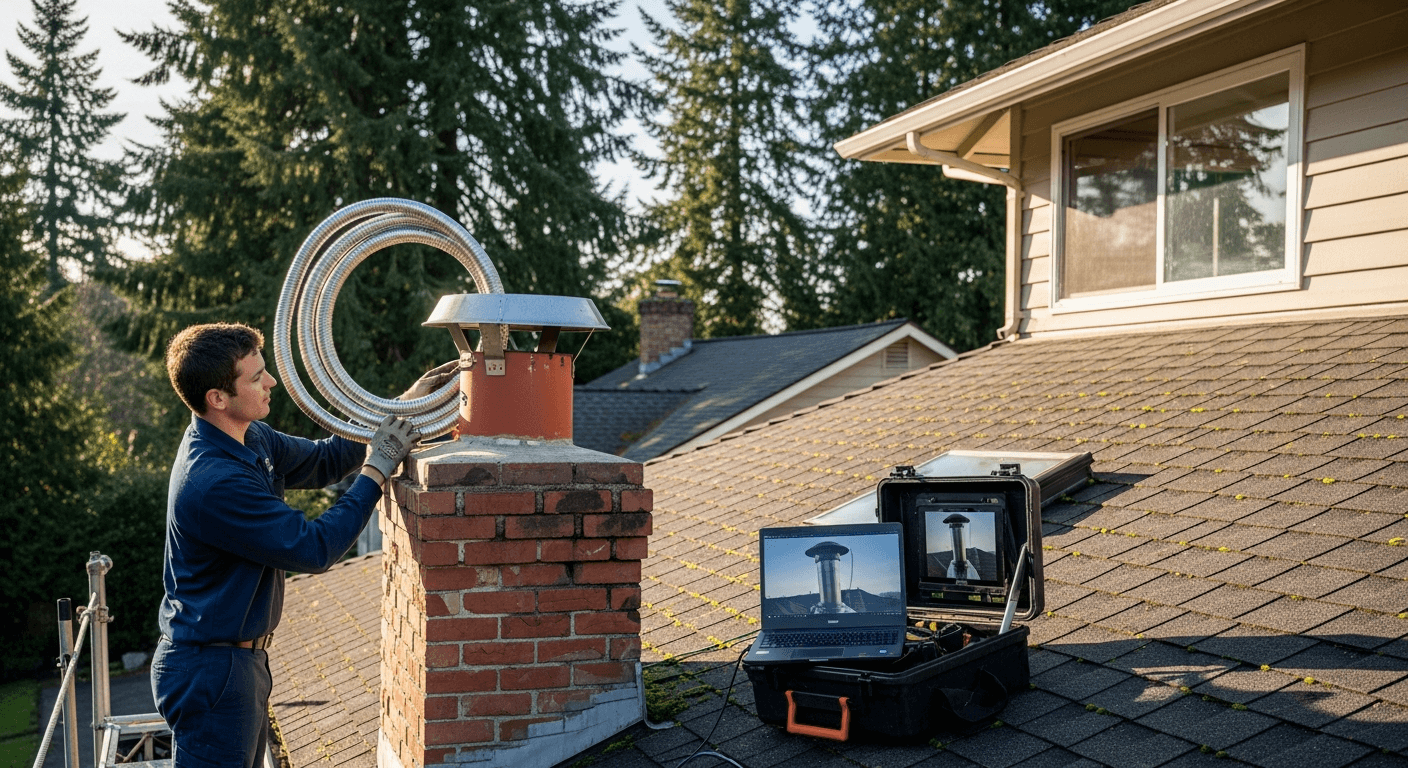
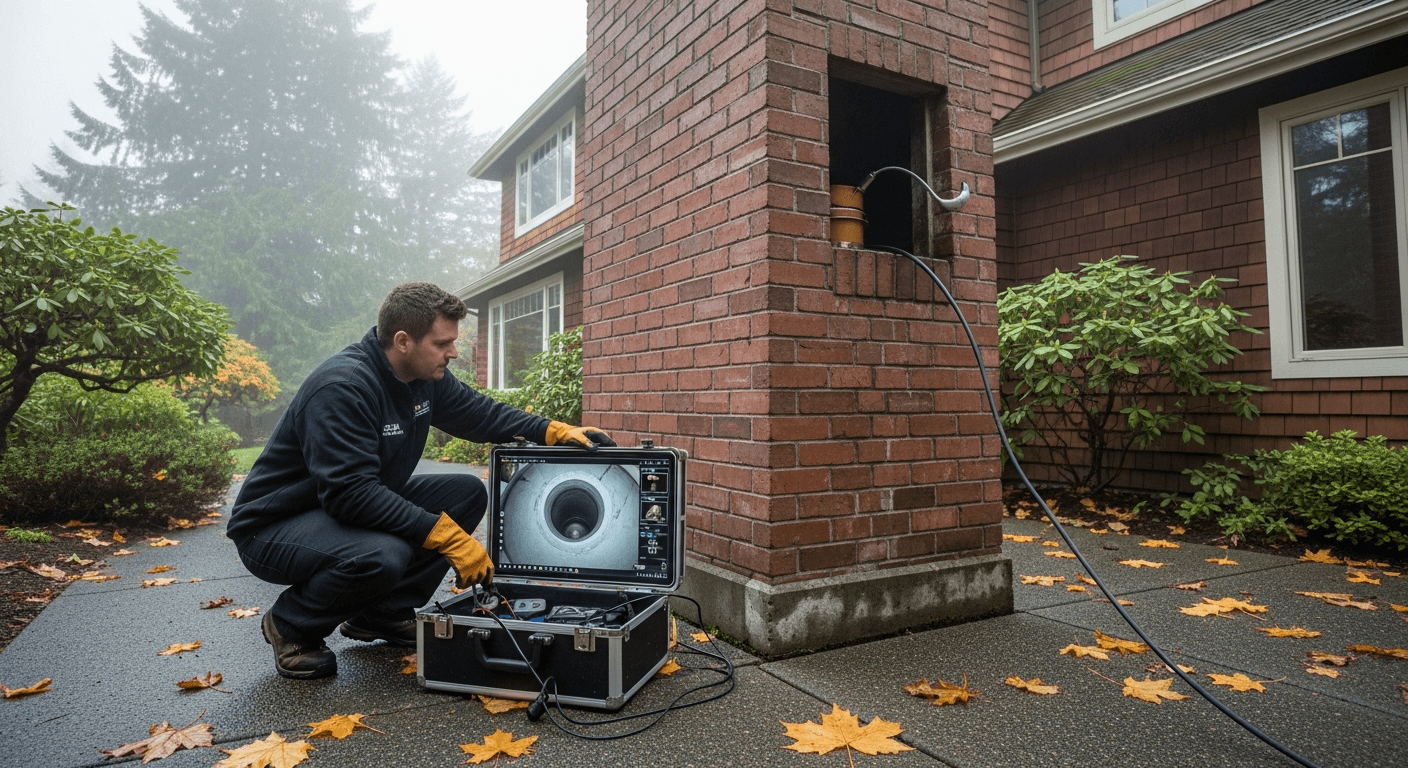
NFPA 211 sets out three levels. Level 1 is for routine annual service when nothing about the system is changing. Level 2 adds accessible attics, crawl spaces and roofs, plus a video scan of the flue. Level 3 goes further and removes parts of the building or chimney where that is the only way to reach a concealed problem.
Each level includes everything in the one below it. The table shows where each one looks and what typically triggers it.
| Level | Where the inspector looks | Typical trigger |
|---|---|---|
| Level 1 | Readily accessible chimney interior and exterior, appliance and connection | Annual service, no change in use |
| Level 2 | Level 1 plus attic, crawl space, roof and a video scan of the whole flue | Home sale, new or different appliance, relining, after a chimney fire or earthquake |
| Level 3 | Level 2 plus removal of components to reach concealed areas | A serious hazard suspected behind finished surfaces |
When a Level 2 is the right call
The CSIA's Level 2 procedure lists the moments that call for it: when a property is sold, when an appliance is added or replaced with a dissimilar one, when the fuel changes, when lining or relining is planned, and after a building or chimney fire, a weather event or a seismic event. Its guidance also says a Level 2 covers every flue in the chimney and its connected appliances.
That last point matters on large Medina and Clyde Hill homes, where a single masonry stack can carry a living-room flue, a family-room flue and a basement stove flue. A camera scan of one of them says nothing about the other two.
Why earthquakes belong in this conversation
Washington DNR describes the Seattle fault as running beneath urban areas including Bellevue, and the City of Mercer Island says at least two strands of the fault cross the island. After the 2001 Nisqually earthquake, researchers surveyed about 60,000 chimneys between Bremerton and Mercer Island and counted 1,556 damaged ones, with the worst damage along strands of the Seattle fault zone.
Much of that damage is not visible from the living room. A cracked flue tile or a joint that opened at the roofline hides inside the stack, which is exactly why CSIA puts a seismic event on its list of Level 2 triggers.
Buying or selling on the Eastside
CSIA recommends a Level 2 inspection when a property is sold. That is an industry recommendation: our research did not find a Washington State law that requires a chimney inspection at the time of sale. Buyers still ask for one, and a general home inspector rarely scans the flue.
If you are selling, having the report in hand before listing avoids a late surprise in negotiations. If you are buying, ask the seller for past sweep and inspection records and schedule your own look before the first fire.
What an inspection costs with us, and what others publish
Our on-site inspection is $99 plus tax, and it is credited toward the work when you approve the written quote. The level is decided on site by what the chimney needs, and you receive photos and a written account of what was found.
Other Eastside companies publish their own figures, listed below with the date we read them. They package the visit differently, some with a sweep included, so compare the scope rather than the headline. These are market figures, not our quote.
| Published by | Figure | Scope as published |
|---|---|---|
| Emerald City Chimney (Kirkland) | $99.95 plus tax | Inspection only |
| Mad Hatter Chimney Sweep (Seattle) | $299–$450 | Sweep plus Level 2 camera inspection |
| Fixr (US national) | $100–$500 | National range, cleaning included |
How to prepare for a Level 2
Clear access to the attic hatch and any crawl-space entry near the chimney, and let the fireplace cool fully the day before. The camera goes down the flue from the top or up from the smoke chamber, so the firebox should be empty of ash and logs.
Gather what you know about the system: the insert or stove model, the year of any relining, and the dates of past repairs. An inspector reading a flue with its history in hand draws firmer conclusions than one working blind.
Frequently asked questions
Which chimney inspection level do I need every year?
A Level 1 is the routine yearly check when nothing about the fireplace, stove or fuel is changing. NFPA 211 calls for chimneys, fireplaces and vents to be inspected at least once a year.
Is a chimney inspection required to sell a house in Washington?
We found no Washington State law that requires one. CSIA recommends a Level 2 inspection when a property is sold, and many buyers ask for it.
Should I get my chimney inspected after an earthquake?
Yes. CSIA lists a seismic event among the triggers for a Level 2 inspection, and the Nisqually survey showed that chimney damage concentrated along the Seattle fault zone, which runs under Bellevue and crosses Mercer Island.
What does a Level 2 camera scan show that I cannot see?
Cracked or missing flue tiles, gaps in mortar joints, deposits and blockages along the full length of the flue, including the parts that pass through the attic and roof.
Sources
- CSIA — Level 1 inspection SOP (masonry chimney) — accessed September 23, 2026
- CSIA — Level 2 inspection SOP (masonry fireplace) — accessed September 23, 2026
- High's Chimney Service — Level 1 and Level 2 — accessed September 23, 2026
- Washington DNR — Earthquakes and Faults — accessed September 23, 2026
- City of Mercer Island — Earthquakes — accessed September 23, 2026
- USGS — Nisqually earthquake chimney damage — accessed September 23, 2026
- Emerald City Chimney (Kirkland) — Prices — accessed September 23, 2026
- Mad Hatter Chimney Sweep — Sweep Cost Seattle — accessed September 23, 2026
- Fixr — Chimney inspection cost — accessed September 23, 2026
Related services