Clyde Hill, King County
Booking a chimney sweep in Clyde Hill means one visit, one flue, $189–$449 depending on how much buildup we find and how easy the roof is to reach. The crew brushes the flue from the top down, clears the smoke chamber and firebox, runs a Level 1 check while the flue is open, and leaves you with photos of what it looked like before and after.
Typical investment
$189–$449
Book an inspection
Book your $99 inspection
$99 plus tax, deducted when you approve the repair
Not sure where to start
Pick what you're seeing at your Clyde Hill home — we'll point you to the right fix.
What we do
The same crew, the same written quote — for Clyde Hill homes.
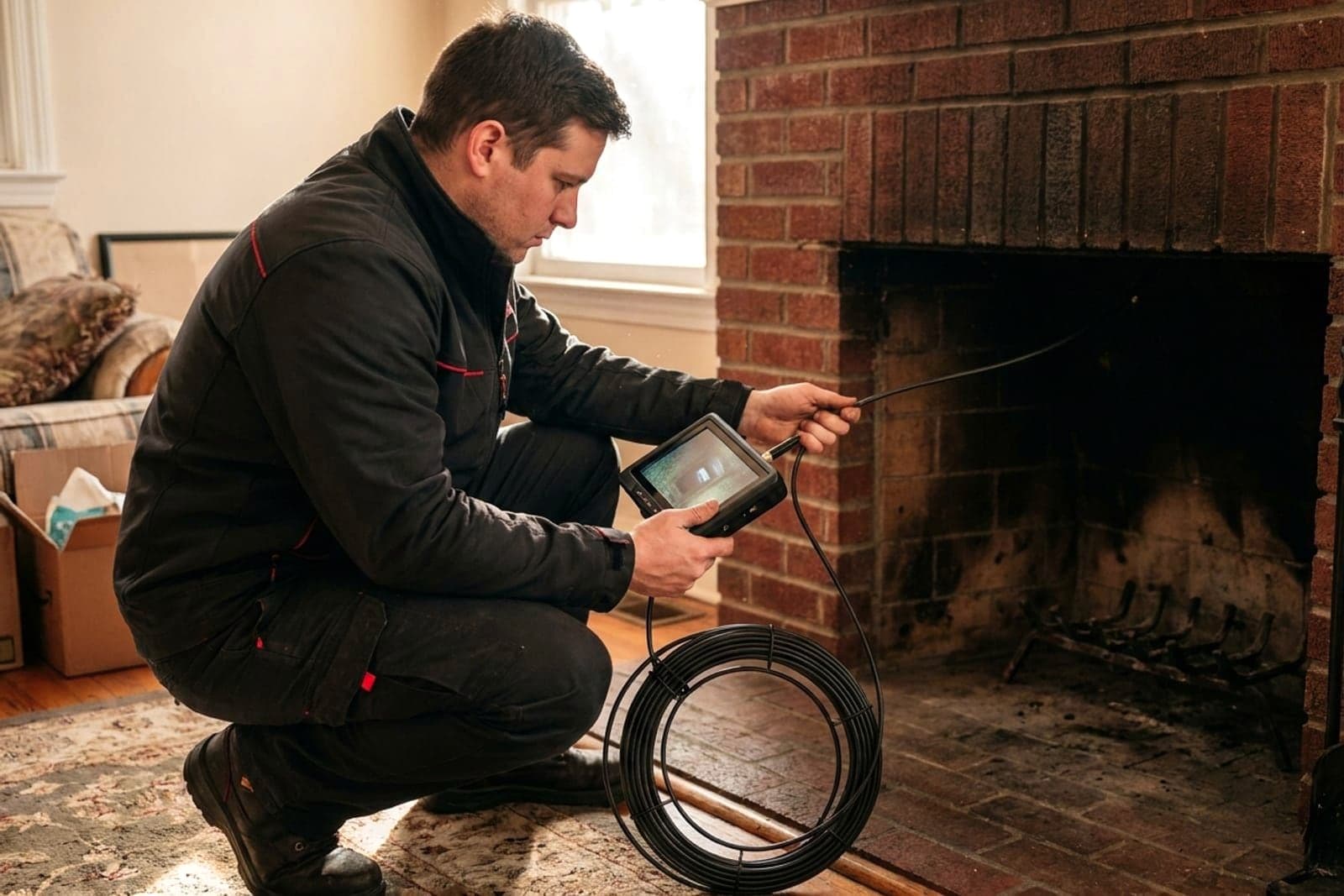
Level 1 or Level 2 inspection, with a camera scan where warranted
Learn more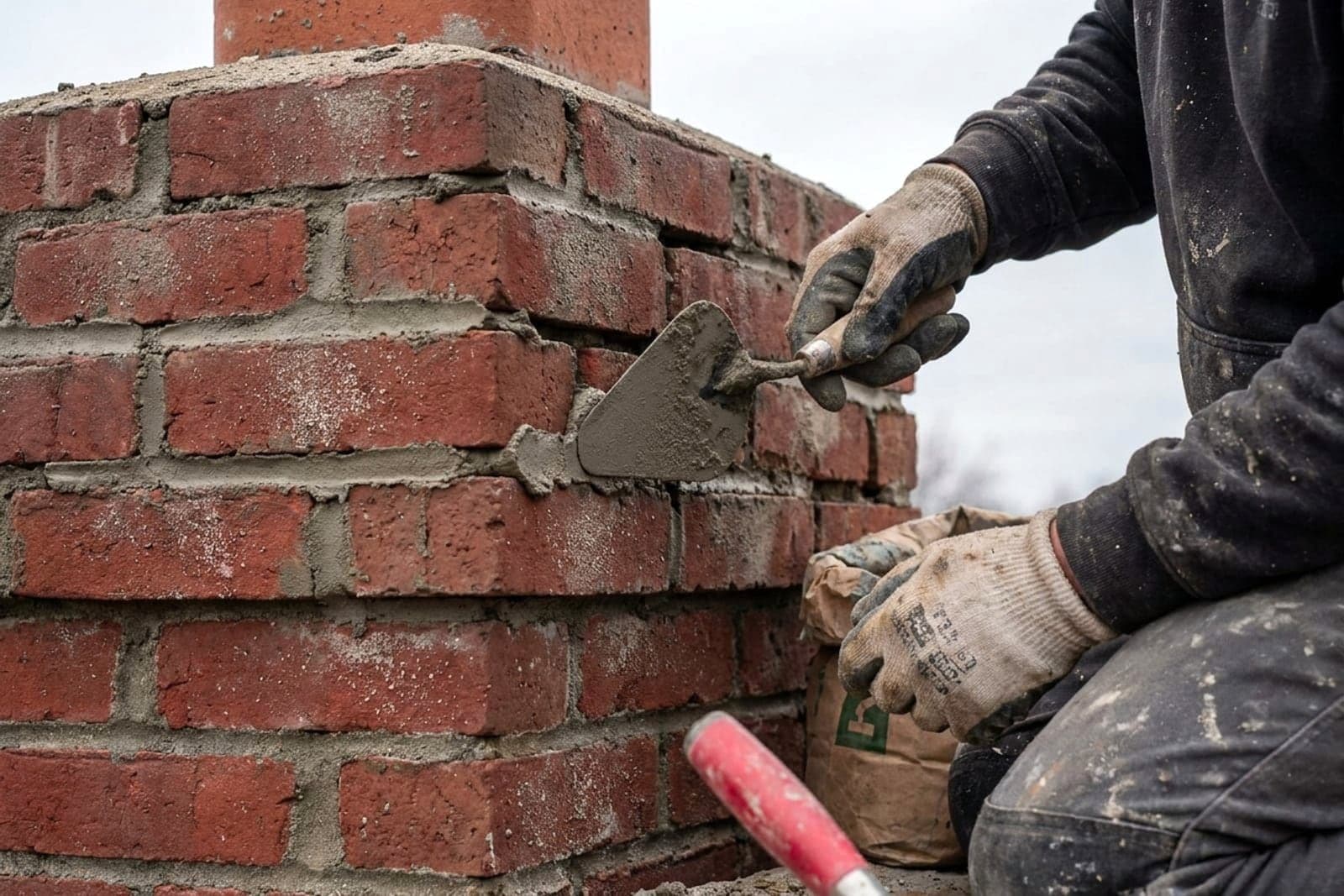
Restoration of brick, mortar joints and firebox
Learn more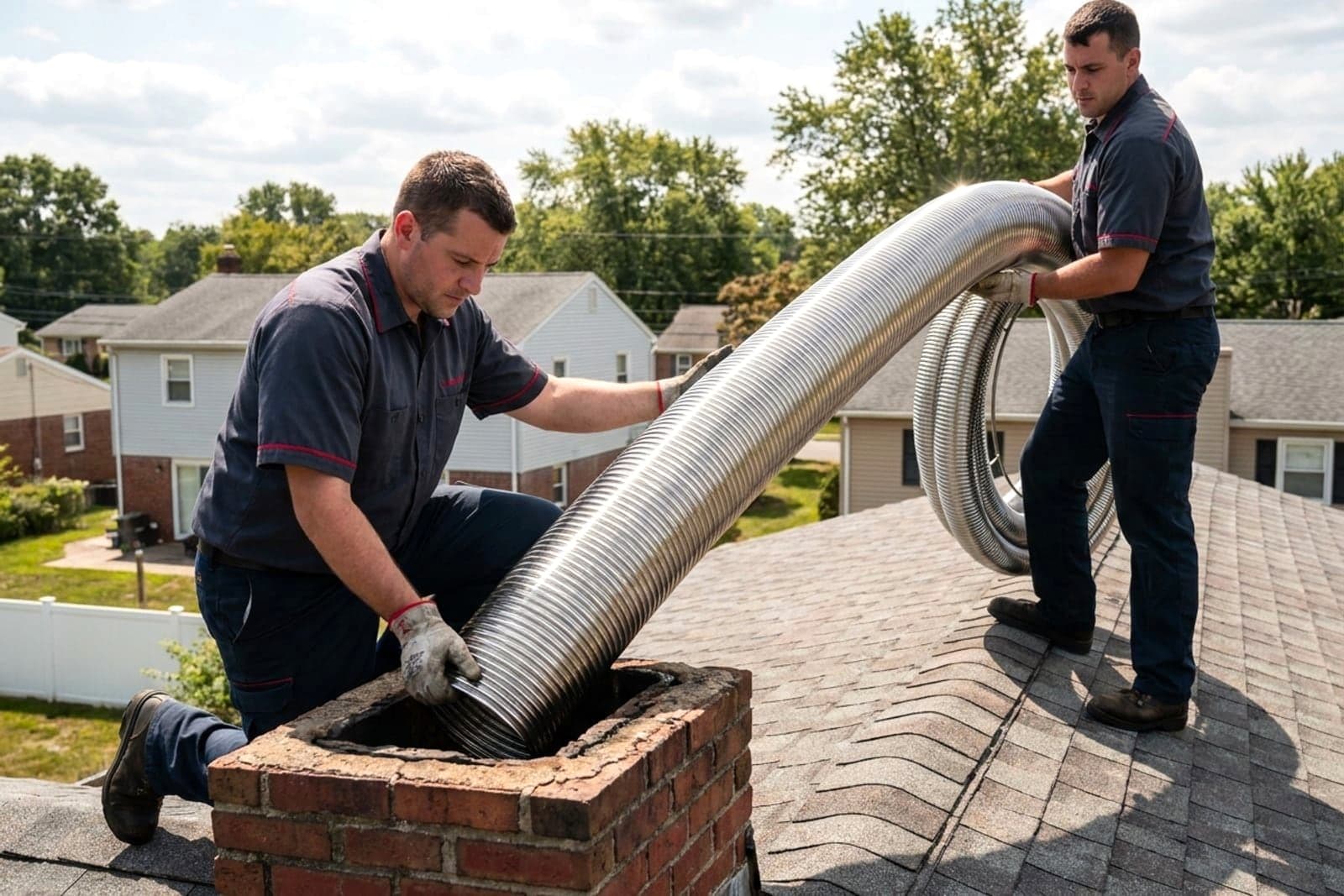
A stainless-steel or ceramic liner run the full height of the flue
Learn more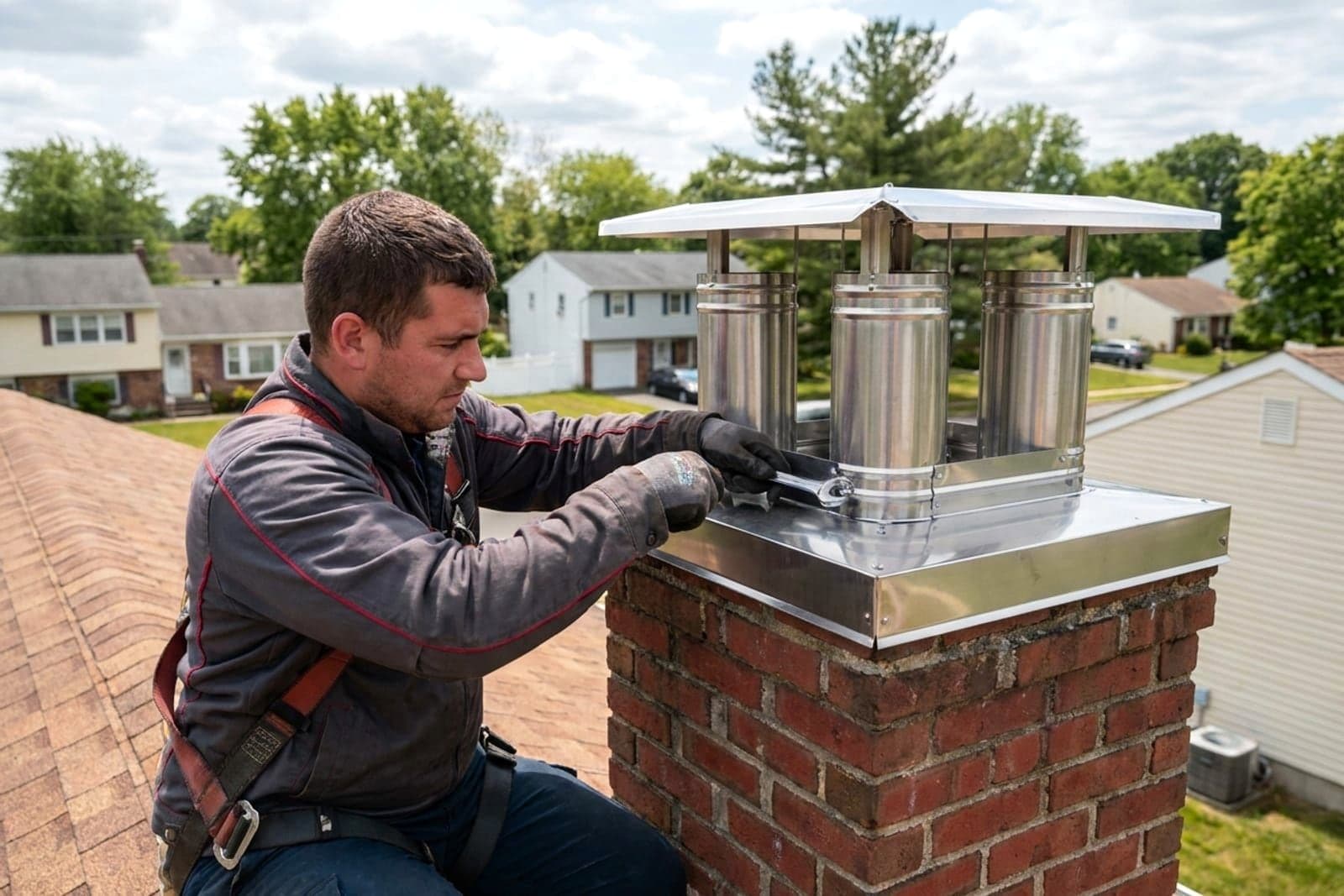
A stainless cap fitted to your flue's exact dimensions
Learn more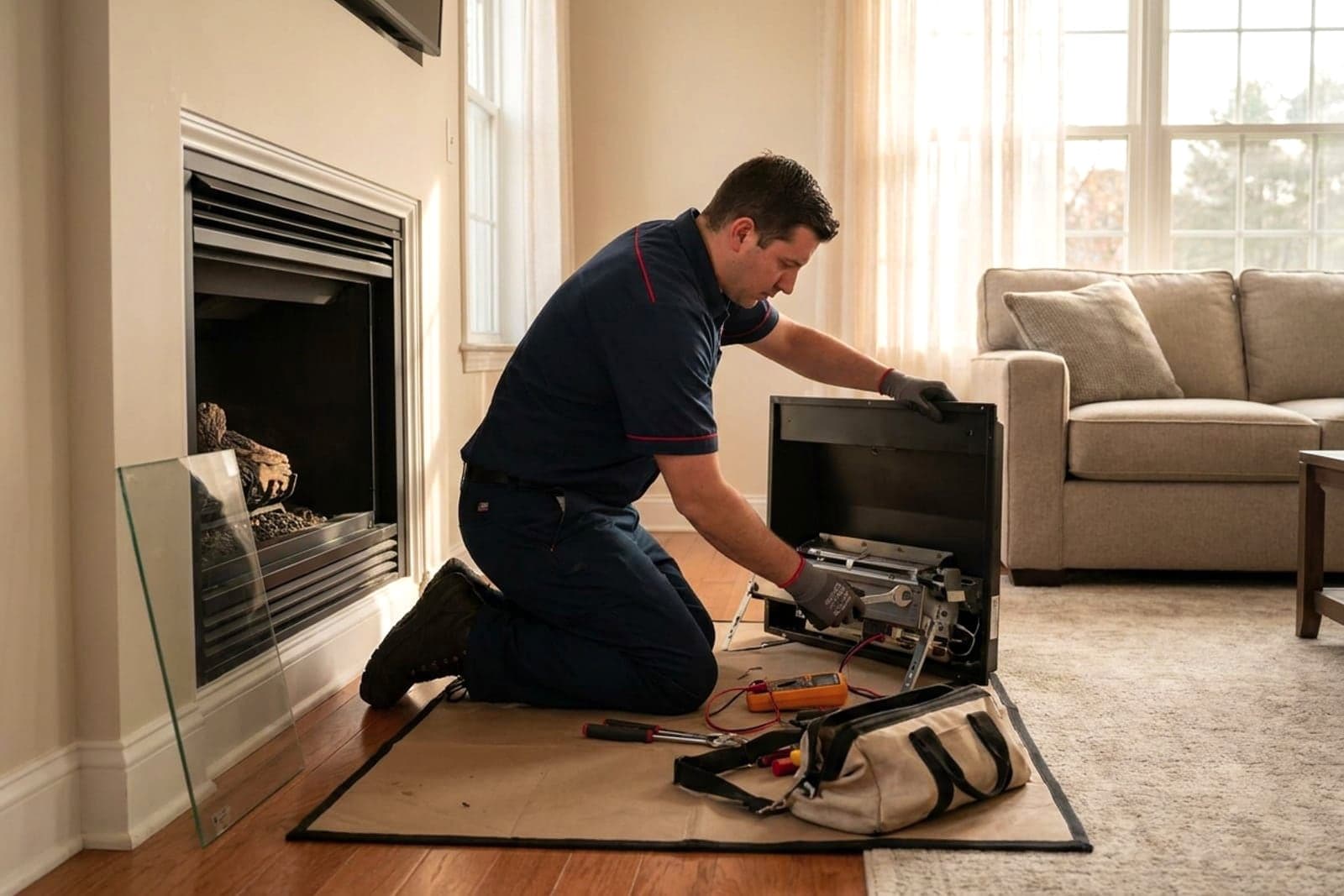
Cleaning of the burner, pilot and valve assembly
Learn more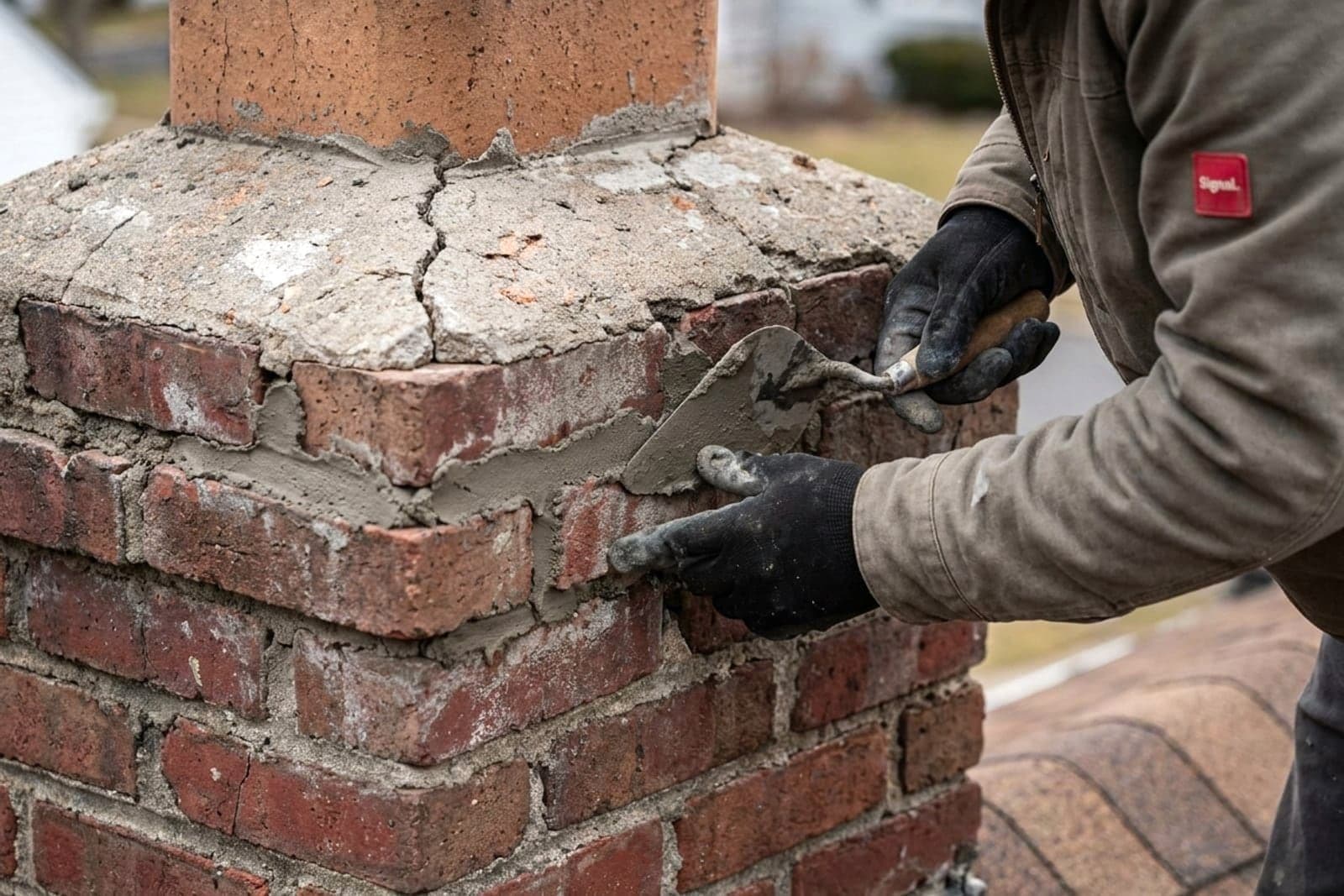
Crown recast — or rebuilt outright where the damage demands it
Learn moreRanges shown for orientation — the exact figure is written up on-site, after the inspection.
Clyde Hill is a small city of single-family houses: the state's Office of Financial Management counts 1,098 housing units, and 1,086 of them are single-unit homes. There are no condo towers or shared stacks to schedule around here. Each house has its own chimney, its own roofline and its own history of remodels, so a sweep is always scoped to the one flue in front of us rather than to a building.
Clyde Hill's neighborhoods took shape in the early 1950s, when farmland on the hill was turning into suburban lots, and the town incorporated in 1953. A chimney that has served a house that long has often been asked to do something new along the way, most commonly to vent an insert that replaced the open fire.
That matters during a sweep. The residential code requires a masonry chimney to be lined with material suited to the appliance it serves, and CSIA recommends a Level 2 inspection whenever the appliance changes. If the brush tells us the liner and the insert do not match, you hear about it that day, with photos.
Every chimney sweep we do in Clyde Hill includes:
Smoke coming back into the room, or a smell that won't go? Book the inspection first.
Book nowMost of what a Clyde Hill sweep turns up comes from use and weather rather than neglect. A fireplace burned through the winter leaves soot and glazed deposits in the smoke chamber, where the brush struggles most. Months of rain between October and spring can soften the mortar at the top of the stack. And a flue that was converted for an insert during a remodel sometimes has a liner that does not match the new appliance. We note every one of these in the photo report instead of just sweeping past it.
State geologists at Washington DNR rate a deep Puget Sound earthquake of 6.5 or greater as 85 percent likely within the coming 50 years. In FEMA's assessment, a brick chimney attached to a wood-framed house is among the parts most exposed to that shaking, and worn mortar makes it worse.
A sweep is not a seismic assessment, but it puts a light and a camera where cracked flue tiles and loose joints show up. If we see them, we say so and suggest the Level 2 inspection that looks further.
Choose an open time online or by phone. We confirm the address, the number of fireplaces and whether anything has been burned in the last day.
Drop cloths go down from the door to the hearth, and a sealed vacuum runs at the firebox so the soot stays inside the flue while we work.
Rotary brushes work the full height of the flue; the smoke chamber is scraped by hand where deposits cling to the corbelled brick.
You get the before-and-after images and a short list of anything worth watching, with prices from our grid if a repair is needed.
What this work is quoted at for Clyde Hill homes — the exact figure comes from the $99 on-site inspection, credited toward the work.
| Service | Price in Clyde Hill | What that covers |
|---|---|---|
| Chimney Sweep | $189–$449 | Full flue swept, Level 1 inspection included |
| Chimney Inspection | $99 plus tax | Level 1 visual; Level 2 adds a full camera scan |
| Chimney Relining | From $1,895 | Full-length stainless liner, sized to the appliance |
| Chimney Repair | From $425 | Masonry repair — brick and mortar, scoped after diagnosis |
| Chimney Cap Installation | $235–$845 | Stainless cap fitted; multi-flue and custom at the top |
Ranges are what these jobs are quoted at in Clyde Hill. The exact figure is set on site after a $99 inspection (credited toward the job if you go ahead), and you approve it before any work starts.
Western Washington's rainy stretch opens in October; by December and January, most months bring rain on 20 to 25 days or more. Soot that sits in a flue through those months absorbs moisture, and damp deposits are the source of the sour smell many owners notice on a wet afternoon.
Masonry chimneys suffer more from water than from fire, according to the Chimney Safety Institute of America. Sweeping before the rains removes the deposits that hold it, and the look at the cap and crown during the visit shows whether rain is getting in from above.
Clyde Hill is a small, affluent residential city on the high ground just north of downtown Bellevue, with large single-family estate homes.
Clyde HillKing County, WA · 47.632, -122.218
Before and after
Illustrations of what each repair changes on a typical chimney — not photos of a specific job.
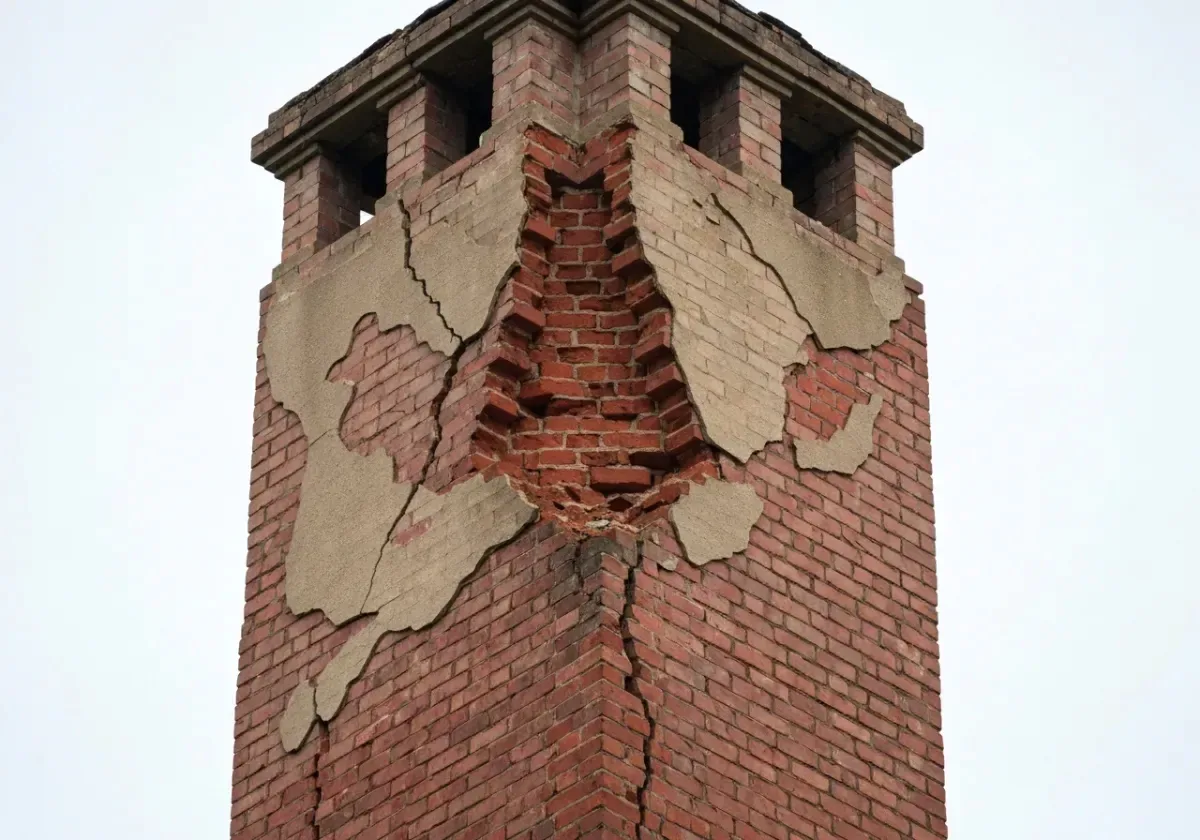 Before
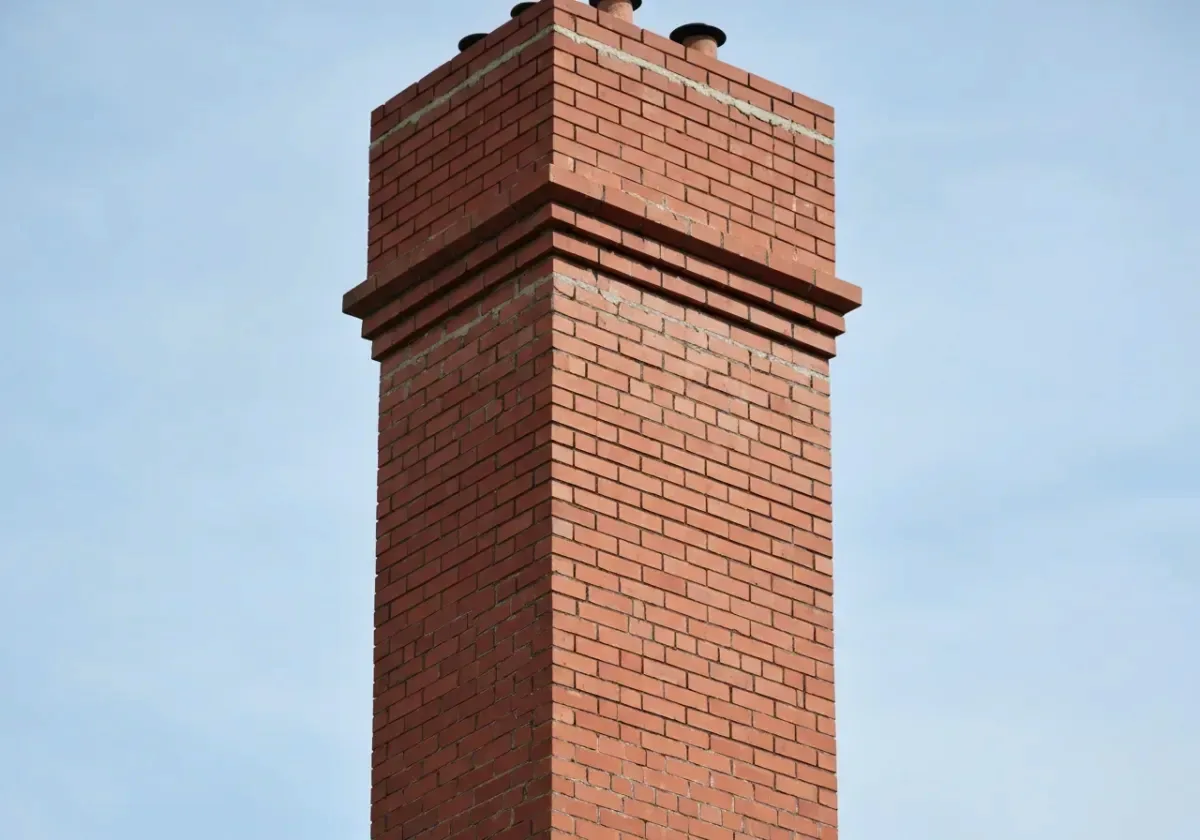 After
After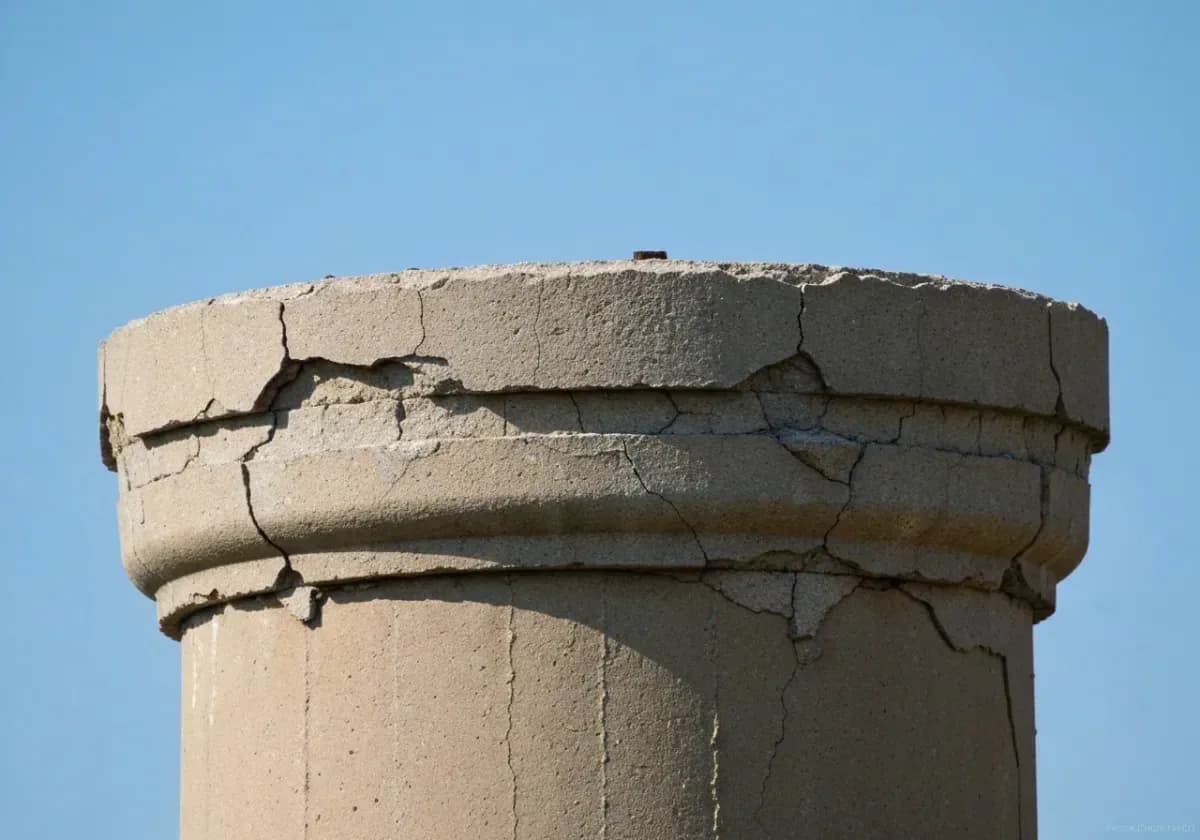 Before
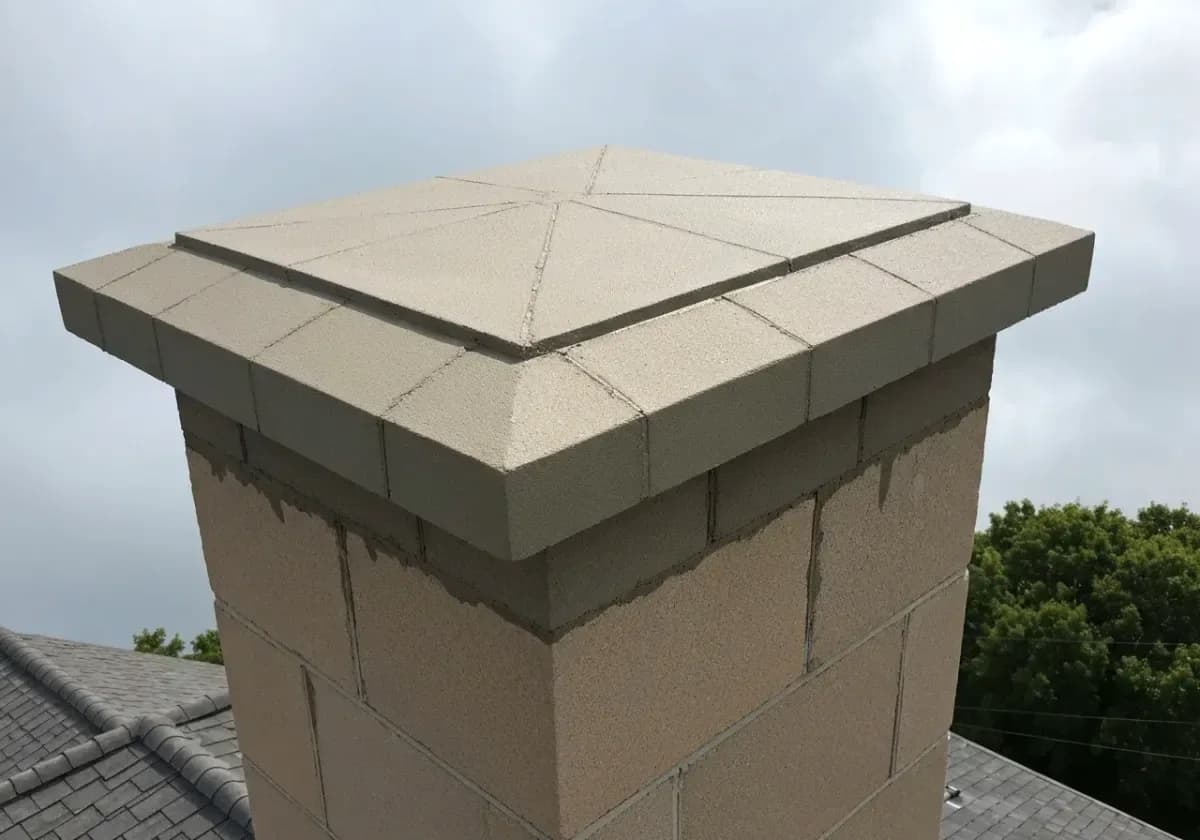 After
After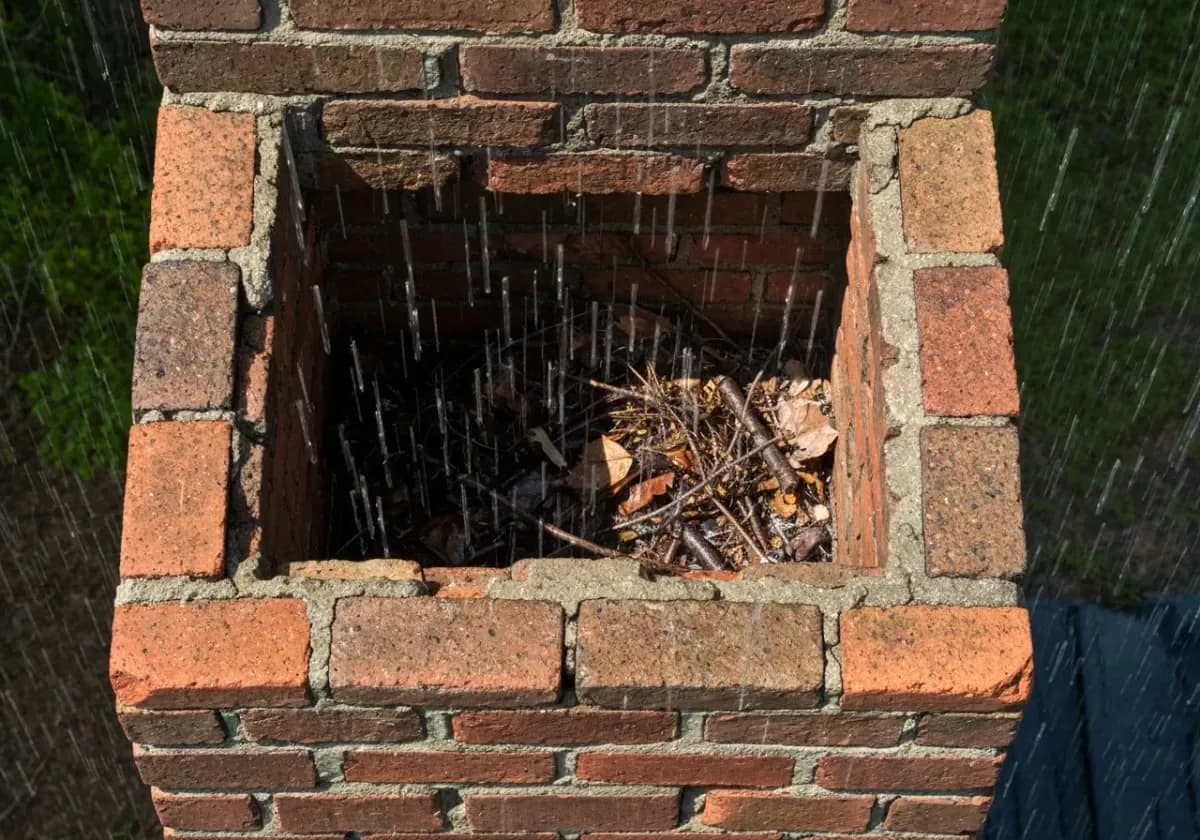 Before
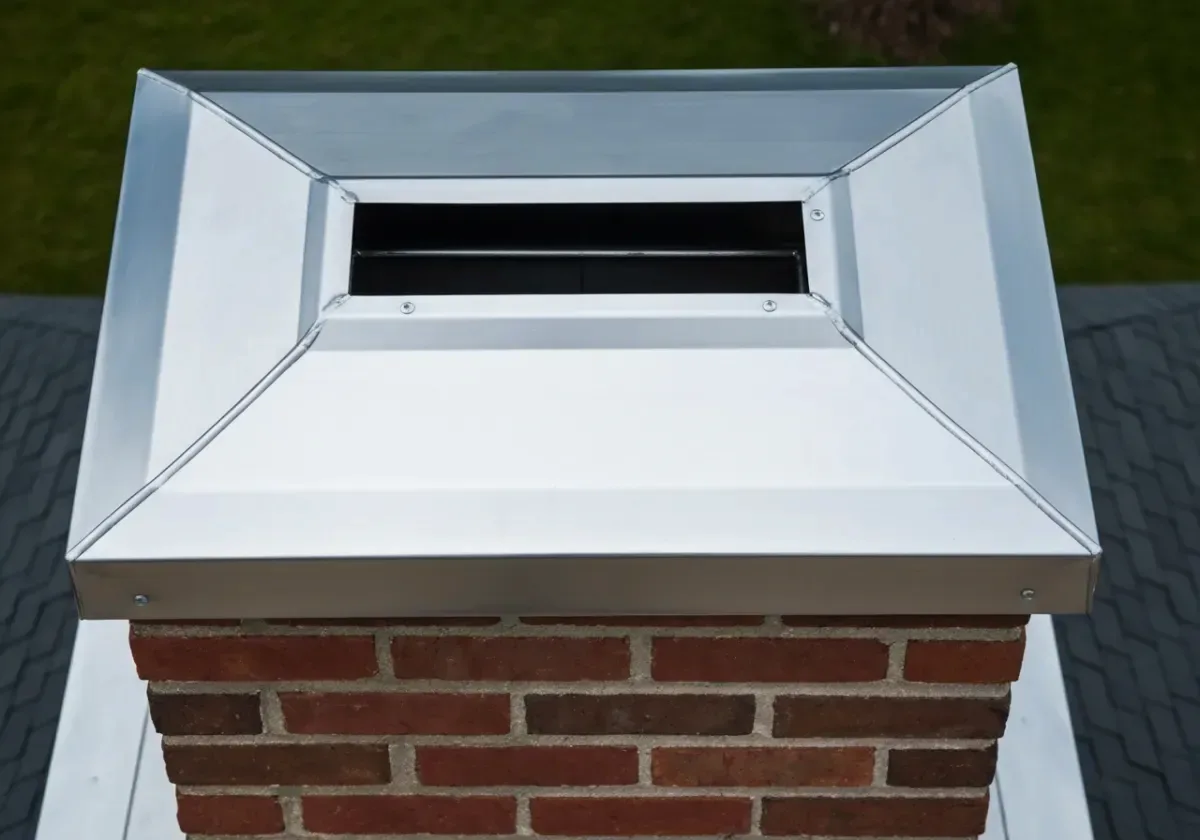 After
After
Four steps, each one on paper — so you always know what happens next.
Choose a genuine opening on the crew's calendar. Confirmation is immediate.
Liner, crown, cap, flashing and masonry examined in order — each finding photographed.
One document, plain numbers, covering only the work your chimney genuinely needs.
The repair is completed, then handed over with before-and-after photos of every item.
$189–$449 for one flue. The low end is a lightly used fireplace with easy roof access; the high end covers heavy buildup or a steep, hard-to-reach roof. You get the number before we start.
Once a year for the inspection, under NFPA 211, the standard most U.S. chimney work follows. Whether the flue also needs brushing depends on how much you burn, and the yearly check tells you.
Light use builds less soot, but the flue still takes rain, nests and debris all year. A lightly used chimney often needs less brushing and the same look at the cap, crown and damper.
When it is safe, yes. The top of the stack is where water gets in, and the only way to see the crown and cap properly is from above.
A $99 on-site inspection, a written quote before any work, and photos of every item we touch.