Homeowners insurance will pay for chimney repair in Bellevue only when damage is sudden and caused by a named peril—a windstorm funneling through the Cascade foothills, a lightning strike, or a house fire that scorches the firebox. Damage from gradual deterioration, deferred maintenance, moss colonizing your crown, or creosote built up from years of wood burning will almost certainly be denied. That distinction matters enormously here on the Eastside, where Bellevue's 37-plus inches of annual rainfall quietly spalls mortar joints, saturates brick, and infiltrates flue liners for years before a homeowner notices a single crack.
What chimney damage does homeowners insurance actually cover?
Standard HO-3 policies—the most common policy type among Bellevue homeowners—cover chimney damage under dwelling coverage, but only when a named peril causes the loss. In Washington State, the named perils that most frequently apply to chimneys are windstorm, lightning, fire, hail, and falling objects. A Douglas fir limb driven through your chimney crown during a November atmospheric-river event, or a windstorm rolling off the Cascades that sends your cap tumbling off a Somerset Tudor, would typically qualify.
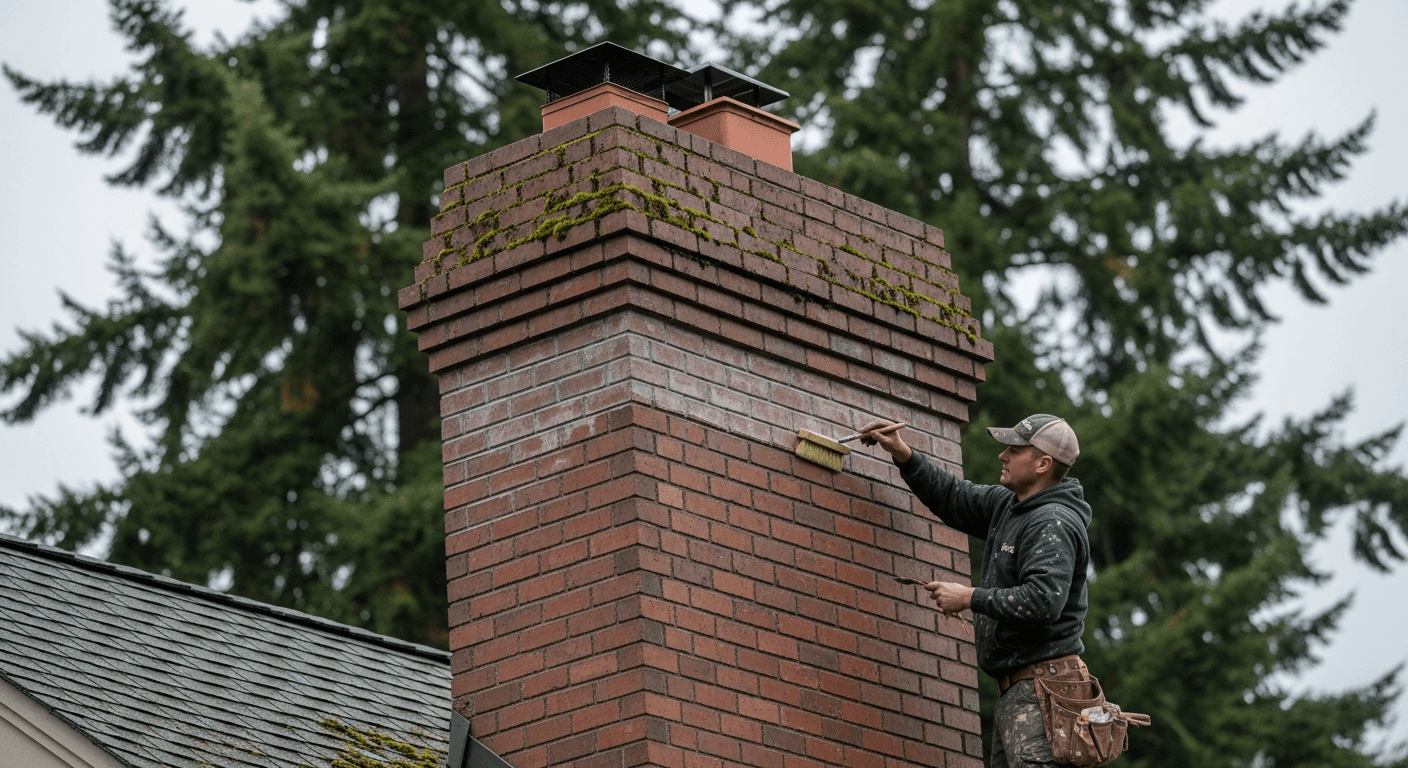
What insurers explicitly exclude is equally important. Damage from freeze-thaw cycling, efflorescence, moss and algae growth, gradual water intrusion through hairline crown cracks, and creosote-related liner deterioration are all classified as maintenance failures. Because Bellevue's wet marine climate makes every one of these failure modes routine, the great majority of chimney repairs homeowners call us about are squarely on the homeowner's tab.
Chimney flashing sits in a persistent gray zone. If a storm directly displaced your flashing or a roofer installed it improperly, a claim may succeed. If moisture worked behind improperly sealed flashing over five or ten years of Eastside winters, expect denial. Keep every service invoice—those dated records can be the deciding factor between a paid claim and a denied one when an adjuster is weighing sudden damage against gradual wear.
Realistic chimney repair costs in Bellevue—what you'll likely pay out of pocket
Because the large majority of chimney repairs fall outside insurance coverage, understanding realistic Eastside out-of-pocket costs is essential before you call an adjuster or a contractor. Labor rates in Bellevue reflect King County's cost of living and sit toward the upper end of national ranges. The table below reflects what we actually charge for the most common repairs on Bellevue's masonry and gas-insert chimneys.
| Repair or Service | Typical Bellevue Cost Range | Covered by Insurance? |
|---|---|---|
| Level 1 chimney inspection | $150–$250 | No (routine maintenance) |
| Level 2 inspection with video camera | $300–$500 | Sometimes—required after a fire or suspected impact damage |
| Standard chimney sweep / creosote removal | $175–$325 | No (routine maintenance) |
| Stage 3 glazed creosote chemical treatment + sweep | $400–$800 | No (maintenance failure) |
| Chimney crown repair or full rebuild | $350–$900 | Yes if storm-caused; No if moisture deterioration |
| Chimney cap replacement (installed) | $200–$500 | Yes if storm-caused; No if corroded or missing long-term |
| Tuckpointing / mortar joint repointing | $500–$1,800 | Rarely—only when sudden impact is documented |
| Chimney flashing repair or replacement | $400–$1,200 | Depends on cause: storm vs. gradual wear |
| Full stainless-steel flue relining | $2,500–$5,500 | Yes if fire-damaged; No if age- or neglect-related |
| Partial liner repair | $800–$2,000 | Yes if sudden damage is documented; No if gradual |
| Partial or full masonry rebuild | $3,000–$12,000+ | Yes if covered peril; No if neglect or deterioration |
A Bellevue homeowner's real experience: the storm claim that almost slipped through
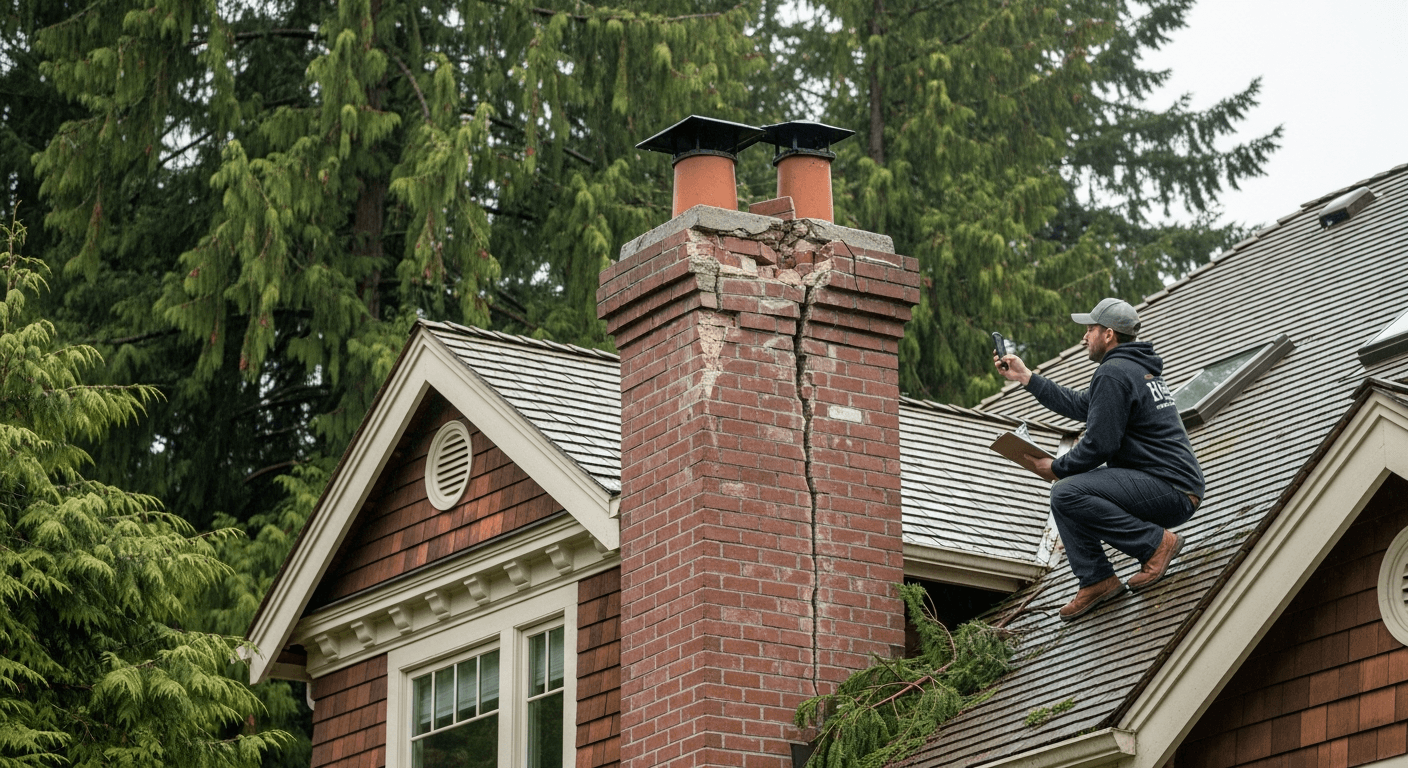
A Somerset neighborhood homeowner called us after a hard November windstorm—the kind that accelerates through the Eastside hill corridors between the Cascades and Lake Washington. A large Douglas fir branch had struck the top of their brick chimney, shattering the precast concrete crown and displacing two courses of brick. The cap was gone entirely.
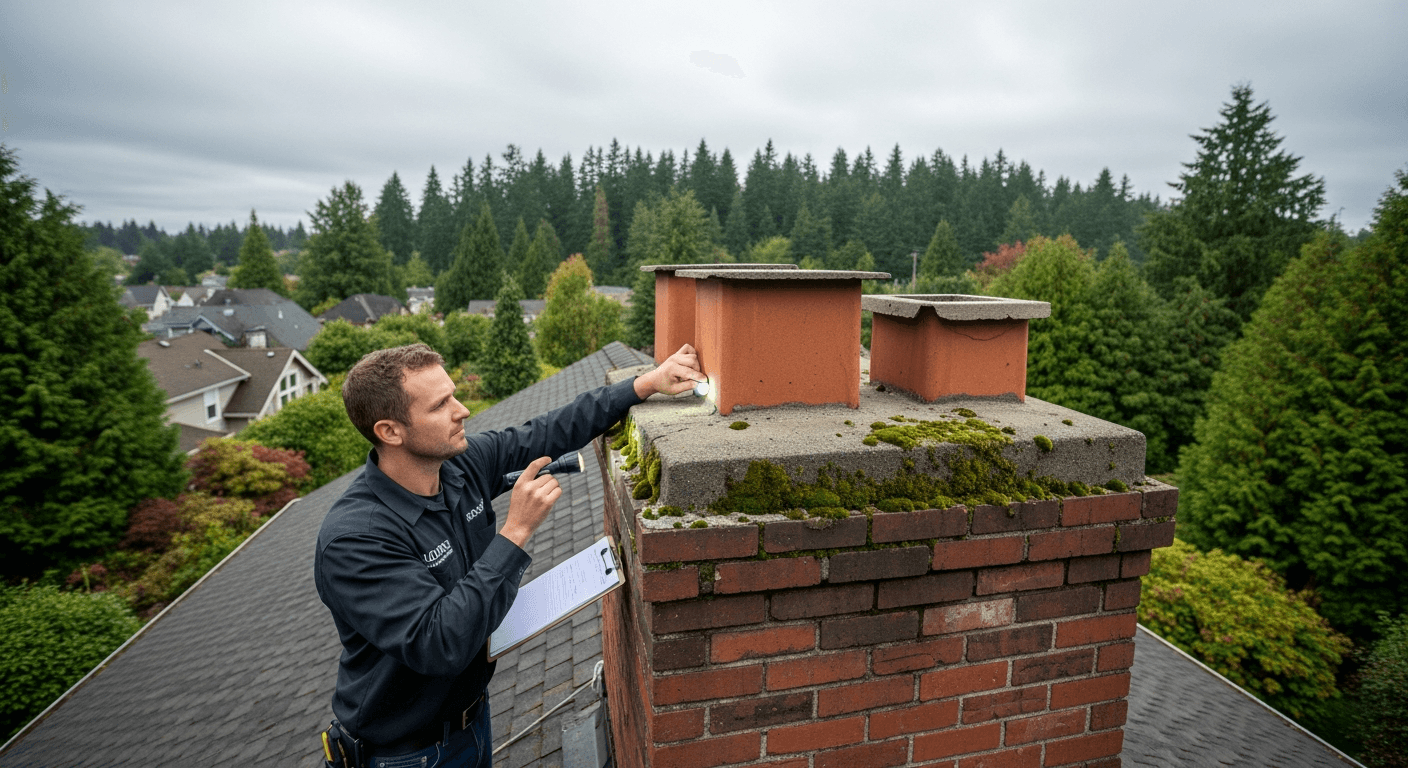
Their insurer had already instructed them to document everything before any work began. We performed a Level 2 video inspection—a step their policy explicitly required before approving any structural chimney claim. The camera confirmed the crown failure was acute and impact-related, with clean fracture lines inconsistent with gradual weathering. Our written report included timestamped photos and a clear separation of the new impact damage from the chimney's pre-existing condition.
The insurer approved the crown rebuild and cap replacement—$1,100 in covered repairs. What was not covered: significant mortar spalling on the chimney's upper four feet that our camera revealed had been developing for years from moisture intrusion. That $900 tuckpointing repair came out of pocket. The homeowner was frustrated but understood once we showed them the difference between fresh fracture surfaces and the rounded, moss-stained mortar edges that decades of Bellevue rain produce. The lesson: a Level 2 inspection report with timestamped photo documentation is your single strongest asset in a legitimate chimney insurance claim.
How to strengthen a chimney insurance claim—and when to call us before the adjuster arrives
If you believe your chimney damage qualifies as a covered peril, photograph everything immediately after the storm or incident—before anyone touches anything. Record the date and time, and pull NOAA's searchable historical weather data for Bellevue (station KBFI or the nearest Eastside reporting station) to obtain official wind-speed and precipitation records for that day. Adjuster teams are experienced at distinguishing impact damage from pre-existing wear; corroborating your claim with weather-service records closes that argument quickly.
Call a certified chimney professional before your adjuster visits. A pre-adjuster Level 2 inspection gives you an independent expert assessment that carries more weight than your description of what happened. Adjusters are skilled generalists; a credentialed chimney technician's written report shifts the conversation from the adjuster's interpretation to documented, photographic evidence.
Before filing any claim, have a frank conversation with your agent about premium impact. In Washington State, even a paid claim can affect your renewal terms. For repairs under roughly $1,500—a crown repair, a cap replacement, minor flashing work—paying out of pocket often costs less over three years than the premium increase a claim can trigger.
One Bellevue-specific caution: the Puget Sound Clean Air Agency issues wood-burning curtailments on stagnant-air days throughout our region, typically from October through February. If a fire-related chimney incident occurs on a day when an active burn ban was in effect, some insurers have cited the violation as grounds to reduce or deny coverage. Always verify burn-ban status at pscleanair.org before lighting a fire.
How often does a chimney need to be cleaned—and why your service history matters to insurers
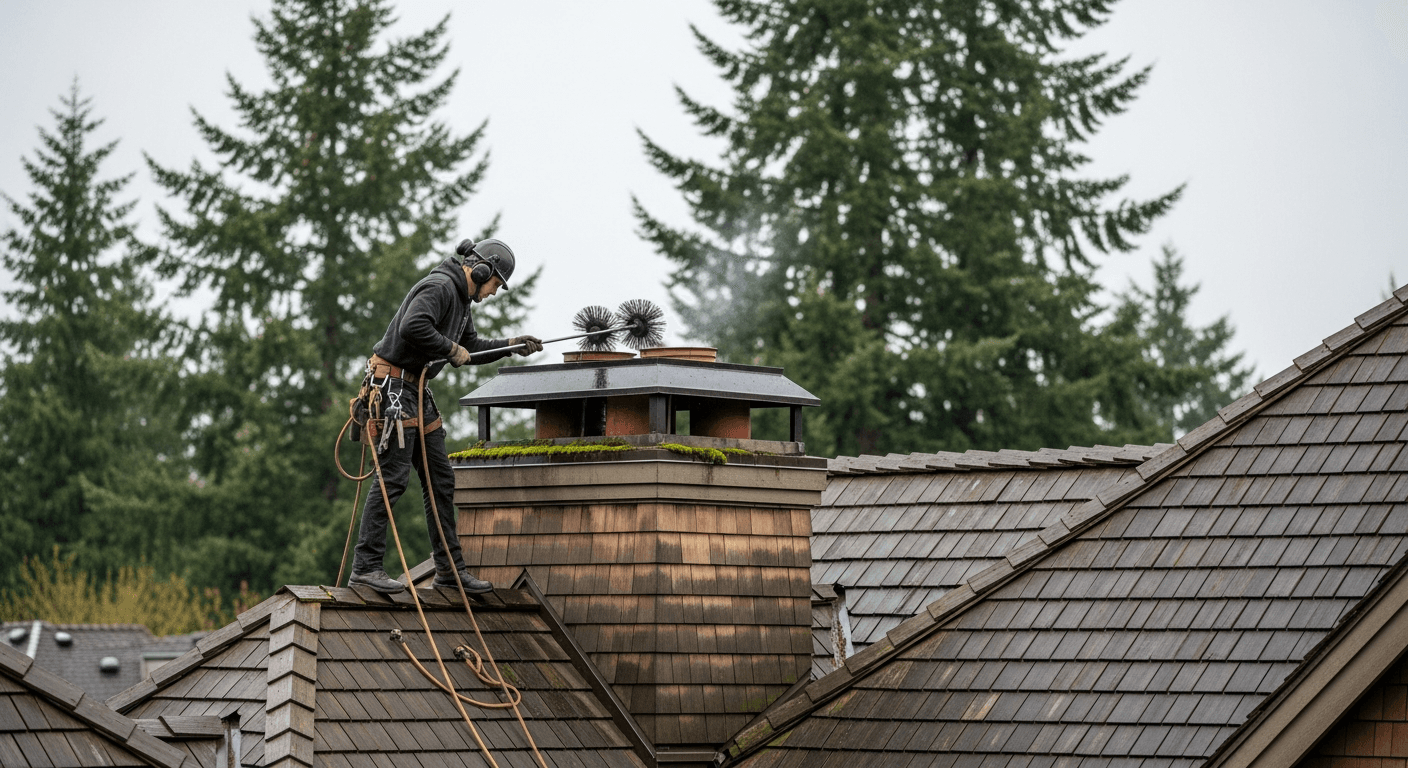
NFPA Standard 211 requires chimneys to be inspected at least once per year and cleaned whenever deposits warrant. For Bellevue homes burning wood through our long, damp heating season—October through April—annual sweeping is typically the minimum, not a suggestion. Our wet marine climate means firewood often retains moisture even after a full season of stacking, burning cooler and generating more creosote per cord than firewood burned in drier climates. Heavy users burning three or more cords per season should consider two sweeps.
Gas fireplace inserts are extremely common in Bellevue's newer construction and remodeled homes, and many owners assume gas means maintenance-free. It does not. Gas inserts can develop blocked flues from debris or spider nests, deteriorating rope gaskets that allow combustion gases to escape into the room, and pilot assemblies that show early signs of failure. An annual inspection catches all of these—and documents that the system was professionally serviced.
From an insurance standpoint, a consistent record of annual sweeps and inspections creates a paper trail of responsible maintenance. If you ever face a fire-related claim, an insurer investigating whether neglect contributed will ask for your service history. A homeowner who can produce five years of dated invoices from a certified chimney sweep is in a fundamentally stronger position than one who cannot recall the last time the flue was looked at.
Frequently asked questions
Will homeowners insurance pay for chimney repair in Bellevue, WA?
Only if damage resulted from a sudden covered peril—windstorm, lightning, hail, falling objects, or fire. Damage from Bellevue's chronic moisture, moss growth, freeze-thaw mortar erosion, or deferred maintenance is almost always excluded. The majority of chimney repairs we perform on the Eastside are out-of-pocket expenses.
What does a Level 2 chimney inspection cost in Bellevue, and when is it required?
A Level 2 video camera inspection runs $300–$500 in Bellevue. NFPA 211 and most insurers require it after any chimney fire, after a storm event that may have caused hidden liner damage, or before selling a home. It is the standard insurers reference when evaluating structural chimney claims, and having one completed before your adjuster visits significantly strengthens a legitimate claim.
How often does a wood-burning chimney need to be swept in Bellevue's climate?
At minimum once per year per NFPA 211. Bellevue's wet winters mean firewood often burns with higher moisture content, producing more creosote than in drier climates. Homeowners burning two or more cords per season should schedule a mid-season inspection. Gas inserts still require an annual inspection even without creosote buildup.
What does a chimney sweep cost in Bellevue, WA?
A standard sweep runs $175–$325 depending on system type, creosote level, and whether a basic visual inspection is included. Stage 3 glazed creosote—a hard, tar-like deposit that forms when fires burn too cool—requires a chemical rotary treatment that costs $400–$800 and is a separate, more involved service than a routine sweep.
Does homeowners insurance cover chimney relining after a chimney fire in Bellevue?
In most cases, yes. A documented chimney fire that cracks or compromises the flue liner is a sudden loss caused by a named peril, and relining is generally covered under dwelling coverage. Full stainless-steel relining in Bellevue runs $2,500–$5,500. A Level 2 inspection report that documents fire damage to the liner—rather than pre-existing age-related failure—is essential to support the claim and prevent denial.
Related services