Yes, your Bellevue masonry chimney almost certainly needs waterproofing — and if it hasn't been treated in the last decade, moisture is likely already working its way in. Bellevue averages over 38 inches of rain annually, with sustained wet periods running October through April; untreated brick absorbs that moisture continuously, freeze-thaw cycles in the mid-20s to low-30s°F nights then fracture mortar joints from the inside out, and moss colonies on north-facing crowns hold moisture against the masonry around the clock. A single professional waterproofing treatment on a structurally sound chimney typically costs $250–$450 and can prevent masonry repairs costing five to ten times more.
Why Bellevue's Climate Makes Chimney Waterproofing Non-Negotiable
Masonry is deceptively porous. A standard brick can absorb up to one cup of water per hour, and Bellevue's maritime winters deliver steady, prolonged rain rather than brief storms — meaning chimneys on homes in neighborhoods like Somerset, West Bellevue, and Bridle Trails sit saturated for weeks at a stretch between October and April.
The primary damage mechanism is freeze-thaw cycling. On a typical Bellevue winter night, temperatures drop to the mid-20s to low-30s°F while masonry is already fully saturated. Water expands roughly nine percent when it freezes, popping mortar joints and spalling brick faces from the inside out. After several seasons, surface staining progresses to cracked mortar, open joints, and eventually water reaching the flue liner, firebox floor, and — in advanced cases — the framing timbers surrounding the chase.
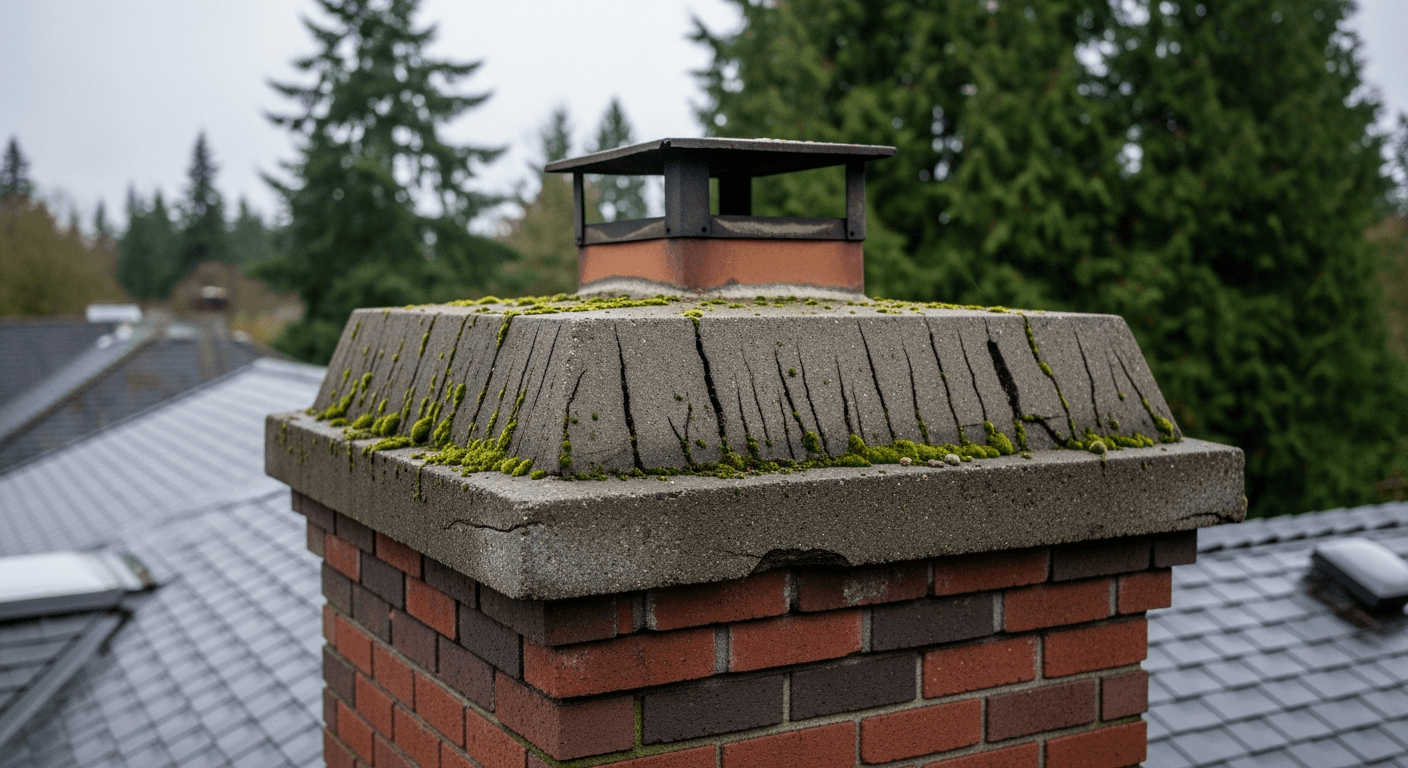
Moss and algae compound the problem specifically in Bellevue's overcast, mild winters. North-facing chimney crowns and the upper brick courses above the roofline stay shaded and damp long enough to sustain biological growth. Moss rhizoids physically penetrate mortar joints and hold moisture against the masonry surface continuously. A green or black fringe along your crown is a reliable indicator that moisture has already been infiltrating the joints below it.
The correct solution is a professional-grade, vapor-permeable penetrating sealer — not a hardware-store silicone paint or film-forming product. The vapor-permeable distinction is critical in a climate like Bellevue's: a film-forming sealer traps combustion moisture inside the masonry, accelerating the very spalling it was meant to prevent. A penetrating sealer blocks liquid water from entering while allowing water vapor from inside the flue to escape outward.
Six Warning Signs Your Bellevue Chimney Is Already Taking on Water
Catching moisture damage early is the difference between a $400 waterproofing treatment and a $4,000 masonry rebuild. These are the six signs Bellevue homeowners most commonly describe when they call us.
First, white efflorescence — chalky mineral deposits streaking the exterior brick face. This is dissolved salt carried to the surface by water migrating through the masonry; it means active moisture movement is happening now. Second, rust streaks or staining around the damper frame inside the firebox, indicating water is traveling down from above the flue collar. Third, a musty or damp smell from the fireplace opening during and after rain — particularly noticeable when Puget Sound Clean Air Agency burn restrictions are in effect and the damper stays closed for extended periods. Fourth, spalled or flaking faces on exterior brick courses, visible as shallow depressions or loose chips in the brick surface. Fifth, eroded mortar joints with recession deeper than a quarter-inch, visible from the ground on upper courses or confirmed by a technician on the roof. Sixth, any moss, algae, or lichen growth on the crown cap, step flashing, or upper brick courses.
Any one of these signs warrants a full inspection before waterproofing is applied. Sealing over compromised masonry traps existing damage and accelerates deterioration. A technician should probe mortar joints for depth and hardness, inspect the crown for cracking or separation, and verify flashing integrity at the roofline before any sealer is applied.
Symptom-to-Cause Reference for Bellevue Chimney Moisture Problems
The table below maps the most common visible symptoms on Bellevue masonry chimneys to their likely moisture causes and the corrective action required before waterproofing can be applied. Using this as a diagnostic guide helps homeowners communicate clearly with a technician and understand why preparatory repairs — not just sealer — may be necessary.
| Visible Symptom | Most Likely Moisture Cause | Required Action Before Waterproofing |
|---|---|---|
| White chalky streaks on exterior brick (efflorescence) | Active water migration through masonry pores carrying dissolved salts to the surface | Dry-brush or chemical efflorescence removal; identify and address the water entry point |
| Rust staining around damper frame inside firebox | Water traveling down the flue interior from above the collar; failed cap or crown crack | Inspect and repair crown; replace or refit chimney cap before sealing |
| Musty or damp odor from fireplace opening after rain | Water accumulating in firebox or lower flue due to failed flashing or open crown joints | Inspect flashing integrity and crown; repair before sealing masonry |
| Spalled or flaking brick faces on exterior courses | Freeze-thaw cycling in saturated masonry; water has already begun fracturing brick | Assess structural integrity; replace severely spalled brick before sealer application |
| Mortar joints recessed more than one-quarter inch | Mortar erosion from prolonged saturation and freeze-thaw cycling | Tuckpoint deteriorated joints and allow cure before waterproofing |
| Moss, algae, or lichen on crown cap or upper courses | Chronic moisture retention on shaded north-facing masonry surfaces | Remove biological growth with appropriate biocide; allow masonry to dry fully |
| Water stains on interior ceiling or wall near chimney chase | Failed or incorrectly lapped step flashing at the roofline | Re-seal or replace flashing; repair interior water damage before waterproofing |
What Chimney Waterproofing Actually Involves — and What It Costs in Bellevue
Professional chimney waterproofing is a multi-step process. It begins with surface preparation: removing moss, algae, and efflorescence, followed by allowing the masonry to dry fully. In Bellevue, that practically means scheduling the work during a dry window — late July through mid-September is the most reliable period before the maritime fall rains return. Any eroded mortar joints are tuckpointed and crown cracks sealed with an elastomeric compound before the waterproofing agent touches the brick.
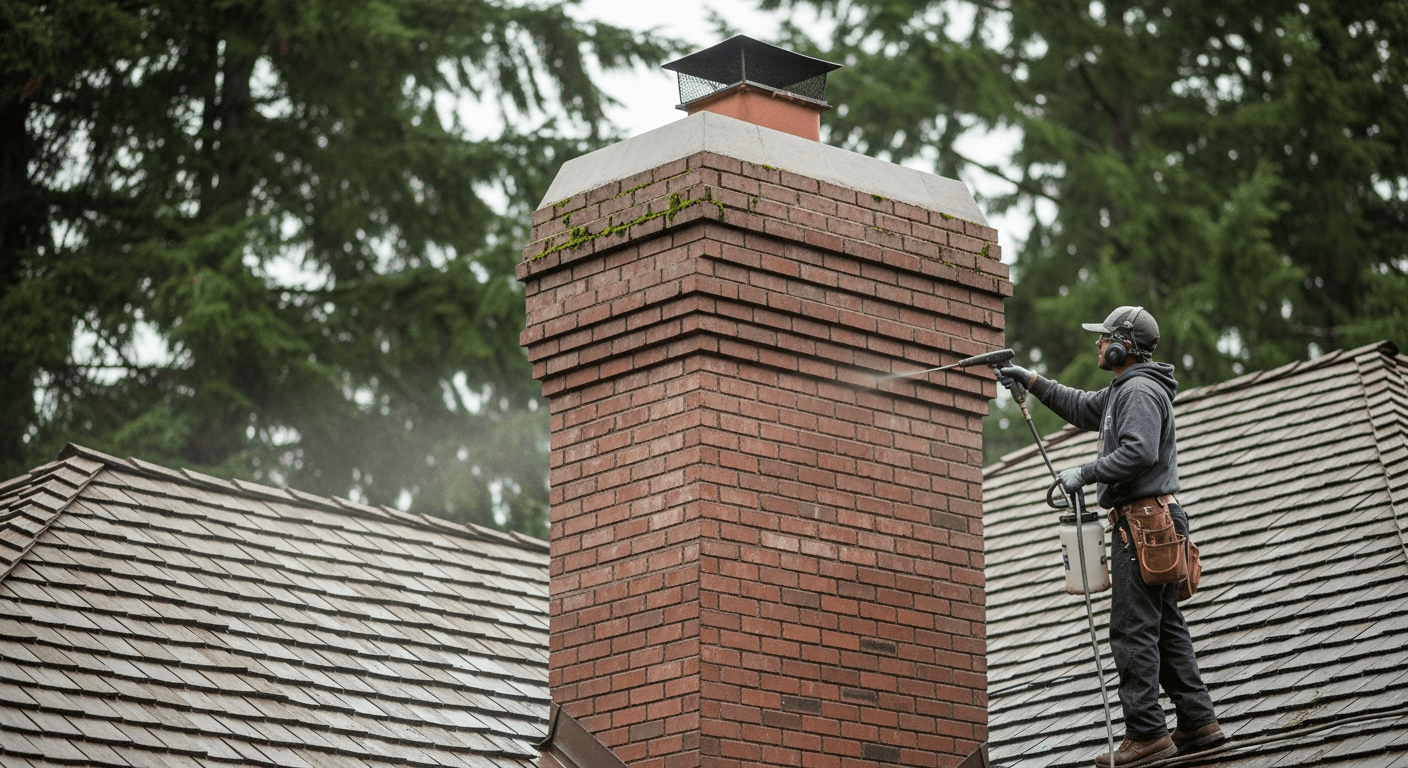
The sealer is applied in two saturating coats using a low-pressure sprayer, with the first coat allowed to penetrate before the second is added. Quality penetrating sealers carry ten-year performance ratings under typical Eastside exposure. The chimney must remain unused for 24 to 48 hours while the sealer cures — scheduling in dry weather is essential because rain during cure will compromise penetration.
The table below reflects current typical pricing for Bellevue and the broader Eastside market. Costs vary with chimney height, roof pitch and accessibility (steep pitches or three-story homes require additional rigging), and the extent of preparatory repairs identified before sealing.
| Service | Typical Price Range | Notes |
|---|---|---|
| Chimney waterproofing — sealer only, standard 2-story | $250 – $450 | Two-coat vapor-permeable penetrating sealer; assumes clean, structurally sound masonry |
| Moss and algae removal prior to waterproofing | $75 – $175 | Frequently bundled with waterproofing; required when biological growth is present |
| Minor crown patching + waterproofing (combined) | $350 – $650 | Hairline cracks sealed with elastomeric compound before sealer application |
| Tuckpointing (per linear foot of mortar joint) | $10 – $25 / linear ft | Required where mortar has receded or crumbled; priced separately from sealer |
| Full waterproofing + tuckpointing package | $600 – $1,400+ | Appropriate for chimneys with moderate joint deterioration across multiple courses |
| Flashing re-seal at roofline | $150 – $350 | Addresses a common secondary moisture entry point separate from masonry pores |
| Sealer condition evaluation (water-bead test + visual) | $99 – $175 | Recommended every 3–5 years; determines whether reapplication is warranted |
A Somerset Homeowner's Waterproofing Story: Catching It Before the Damage Spread
The following is an illustrative, hypothetical scenario based on the types of chimney conditions commonly found in Bellevue's Somerset neighborhood. A homeowner contacts us after noticing white streaking on the upper brick courses of a two-story masonry chimney and a faint musty odor from the firebox following heavy rain. The 1992-built home has a wood-burning fireplace used occasionally on nights when Puget Sound Clean Air Agency restrictions permit, plus a gas insert that runs regularly from October through March.
An inspection finds moderate efflorescence across three exterior brick courses directly below the crown, two hairline crown cracks that have allowed water to pool and run down the exterior of the flue, and mortar joint erosion averaging approximately one-quarter inch deep on the north-facing chimney side — the face that stays shaded and wet longest through a Bellevue winter. The brick itself is structurally intact; no spalling has begun.
Biological growth is removed from the crown, the deteriorated north-face joints are tuckpointed, the crown cracks are sealed with an elastomeric compound, and two full coats of a vapor-permeable penetrating sealer are applied across all exterior masonry surfaces. Total project cost in this scenario comes to just under $800. In a follow-up assessment two years later, the mortar joints and sealer are performing well — no new efflorescence, no fresh cracking. Left untreated for another season or two, the open joints would have allowed enough moisture intrusion to require a partial firebox and lower-flue rebuild, typically a $3,000–$5,000 repair on a comparable Eastside chimney.
When to Schedule Waterproofing — and How to Maintain Protection Long-Term
Timing is critical. Penetrating sealers require dry masonry to bond properly and need 24 to 48 hours of dry conditions to fully cure. In Bellevue, the reliable scheduling window is late July through mid-September — after spring rainfall tapers and before the maritime fall weather reestablishes. Scheduling in November or February is occasionally possible during a dry stretch, but the short dry windows and low temperatures make consistent cure conditions difficult to guarantee.
The optimal annual workflow for a Bellevue masonry chimney is: schedule a sweep and Level 1 inspection in late summer, address any minor repairs the inspection identifies, then waterproof if the sealer is due — all in a single late-summer visit before fireplace use picks up in October. This sequencing ensures repairs are completed on dry masonry and the sealer cures fully before autumn rains arrive.
For ongoing protection, have the sealer condition assessed every three to five years. A technician can perform a simple water-bead test on-site: if water no longer beads and instead darkens the brick surface, the sealer is exhausted and reapplication is warranted. Pair waterproofing with a properly fitted stainless-steel chimney cap — which intercepts direct rain at the flue opening — and correctly lapped step flashing at the roofline, and you have a complete, layered moisture defense system suited to Bellevue's sustained wet climate.
Frequently asked questions
How often does a Bellevue chimney need to be cleaned?
NFPA 211 requires annual inspection for all chimneys and cleaning whenever deposits warrant it. For actively used wood-burning fireplaces in Bellevue, that typically means cleaning every one to two years; gas inserts used regularly generally need cleaning every two to three years. Bellevue's damp winters accelerate both creosote glazing and moss accumulation, making annual inspection especially valuable here.
Will homeowners insurance cover chimney waterproofing or moisture damage repairs?
Standard homeowners policies cover sudden, accidental damage but exclude gradual moisture deterioration and deferred maintenance. Waterproofing is classified as preventive maintenance and is not covered. If a storm event causes sudden structural damage to your chimney, document it immediately and contact your insurer — but expect routine moisture repairs and waterproofing treatments to be out-of-pocket costs.
What does a chimney sweep and inspection cost in Bellevue?
A standard sweep and Level 1 inspection for a single fireplace runs $120 to $225 in the Bellevue area, depending on chimney height, roof access, and creosote buildup level. Combined sweep-and-inspection packages are typical. Be cautious of quotes below $100, which often omit a thorough inspection or proper cleanup.
When is a Level 2 chimney inspection required, and what does it cost?
A Level 2 inspection — which includes a video camera scan of the full flue interior — is required when selling a home, after a chimney fire, or when a heating appliance is changed or added. It costs $250 to $450 in the Bellevue area. The camera scan reveals liner cracks, blockages, and internal moisture damage not visible from the firebox opening, and is frequently requested by home inspectors and buyers' agents on Eastside real estate transactions.
Can I waterproof my chimney myself with a product from a hardware store?
Hardware-store chimney sealers are almost always film-forming silicone or latex products that coat the brick surface rather than penetrating it. In Bellevue's wet climate, these trap combustion moisture inside the masonry and accelerate the spalling they are meant to prevent. Professional waterproofing uses vapor-permeable, penetrating sealers formulated specifically for masonry chimney systems. Given the cost of masonry repair on the Eastside if moisture damage progresses unchecked, professional application with the correct product is the reliable approach.
Related services