
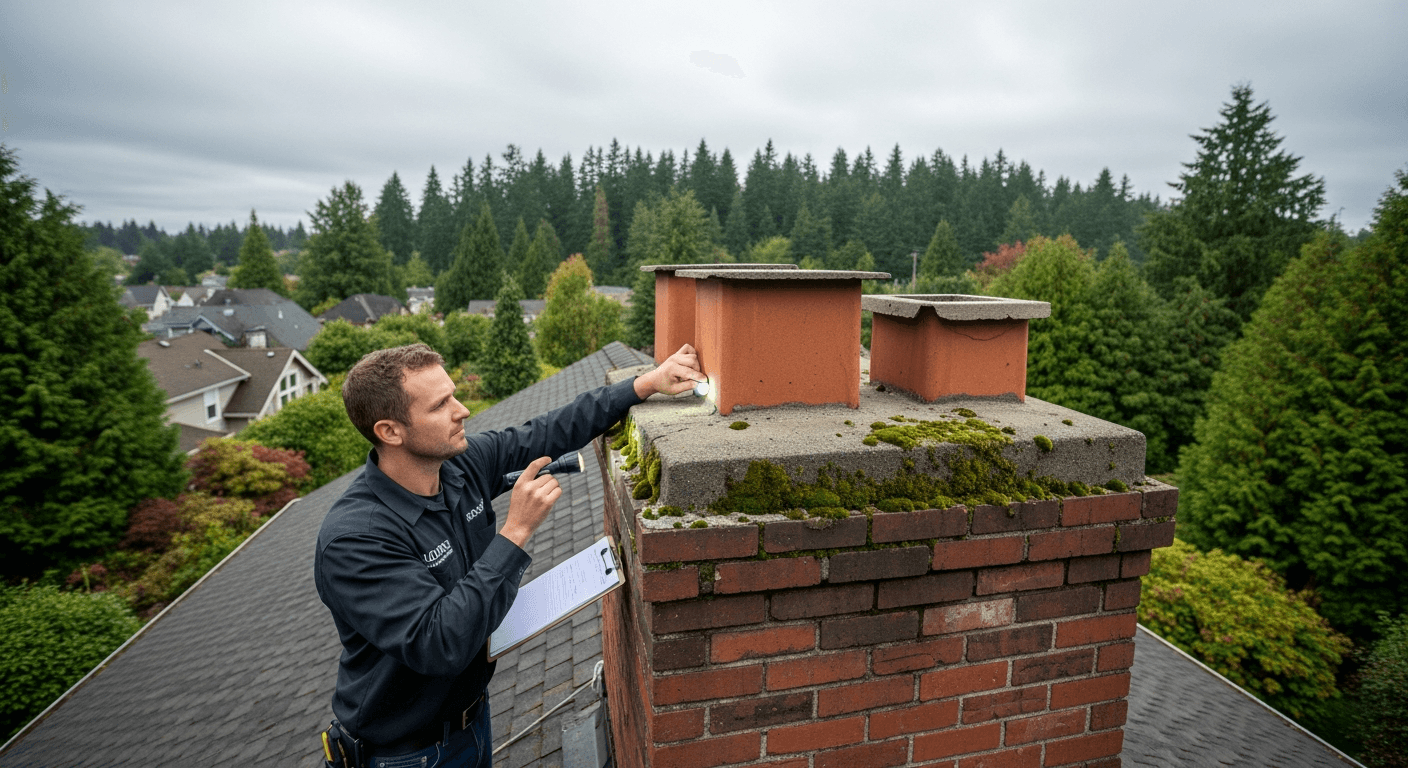
A chimney inspection in Bellevue, WA costs $125–$250 for a Level 1 visual examination and $250–$500 for a Level 2 inspection that includes a continuous video scan of the flue interior. Every wood-burning fireplace or gas insert on the Eastside needs at least one inspection per year — ideally booked in August or September — because Bellevue's wet maritime winters drive creosote glazing, crown micro-fracturing, and mortar erosion faster than most homeowners expect, particularly those who relocated from east of the Cascades or from drier western states.
What Are the Three Levels of Chimney Inspection, and Which One Do You Need?
NFPA Standard 211 defines three inspection levels, and the right level determines both what you spend and what you learn. A Level 1 inspection is the annual baseline: a certified technician visually examines all accessible portions of the firebox, smoke chamber, damper, exterior crown, and visible flue without specialized equipment. It confirms the system is free of obstructions, the crown shows no significant cracking, and the flue tiles have no visible deterioration. For most Bellevue homeowners who use their fireplace regularly and have not experienced any notable events since the last inspection, Level 1 is the correct starting point.
A Level 2 inspection adds a continuous video scan of the entire flue liner and is required whenever you buy or sell a home, after any chimney fire — including the fast, low-temperature fires many Bellevue homeowners never detect — or after the freeze-thaw events that recur throughout the November-to-March wet season. Level 2 is also appropriate for any gas fireplace insert retrofitted into an older masonry firebox, because liner diameter and collar-seal requirements differ fundamentally from those of an original wood-burning system. Level 3 applies when hidden structural damage is suspected; it involves removing portions of the chimney structure and is quoted individually after a Level 2 identifies the scope.
The Puget Sound Clean Air Agency's episodic burn bans add urgency that catches many Eastside homeowners off guard. If a ban is declared in December and your chimney has an unresolved deficiency, you cannot legally burn until repairs are complete. Inspecting in August or September removes that pressure entirely and gives contractors time to complete masonry work while temperatures are still consistently above the 40°F threshold mortar and crown sealants need to cure.
What Does a Chimney Inspection Cost in Bellevue? A Clear Price Breakdown.
The table below reflects current Eastside pricing as of 2025. Costs vary with chimney height, roof pitch, the number of flues, and whether a retrofitted gas insert complicates camera access. Homes on steeper Bellevue terrain — Somerset, Cougar Mountain, Bridle Trails — often have taller chimneys and 8-in-12 or steeper rooflines that require additional fall-protection equipment, adding $50–$100 to the base rate.
A chimney sweep is a separate service from an inspection. Bundling both on the same visit typically saves $50–$75 and improves inspection quality: a swept flue produces cleaner video footage during a Level 2 scan, making hairline liner cracks and separated joints easier to identify and document.
| Service | Typical Price Range (Bellevue, WA) | Time Required | When You Need It |
|---|---|---|---|
| Level 1 Visual Inspection | $125 – $250 | 45 – 75 min | Annually, before burn season |
| Level 2 Inspection with Video Scan | $250 – $500 | 90 – 120 min | Home sale/purchase, after chimney fire, post-storm |
| Level 3 Inspection (structural) | $500 – $1,500+ | Half-day to full day | Suspected hidden damage, major deterioration |
| Inspection + Chimney Sweep Bundle | $225 – $400 | 2 – 2.5 hours | Best annual maintenance value |
| Gas Insert Inspection (Level 2) | $275 – $475 | 90 – 110 min | Retrofitted insert, new homeowner, annual service |
A Real Bellevue Homeowner Scenario: Why Skipping One Inspection Cost More Than Expected
A homeowner in the Somerset neighborhood called us in November after purchasing a 1989 colonial-style home. The seller had disclosed a 'regularly maintained' fireplace, and the buyer's agent had not requested a Level 2 chimney inspection during escrow — a common gap when a general home inspection report shows no visible exterior damage to the chimney.
Our video scan found a section of the original terracotta flue liner had separated at a horizontal joint approximately nine feet up the shaft. Years of freeze-thaw cycling had drawn moisture through a hairline crown crack, expanding the joint until combustion gases could reach the framing cavity. The required repair — removing the damaged tile sections and relining the full flue with a stainless-steel liner — came to $2,800. Had the buyer requested a Level 2 inspection during the transaction, that finding would have supported a full seller credit for the repair. The $325 inspection fee they paid after closing would instead have been the most valuable $325 in the entire purchase.
This situation is not unusual for Bellevue's large stock of 1980s and 1990s masonry chimneys. Crown sealant applied during that construction era typically degrades within 10 to 15 years under Eastside rainfall and freeze-thaw exposure, and many of these chimneys are now on their second or third failure cycle without owners realizing it.
What Specific Problems Does a Bellevue Chimney Inspection Catch That You Cannot See from the Ground?
From street level a chimney can appear sound while concealing several active problems. The most common findings our technicians document on Eastside inspections are: stage-two or glaze creosote deposits in the upper flue sections visible only with a camera; mortar joint erosion inside the firebox where long combustion seasons have carbonized the original mix; crown cracking that has already admitted enough moisture to produce efflorescence stains on the smoke chamber walls; and, specific to retrofitted gas inserts, collar gaps where the insert's vent sleeve does not seal completely against the original flue opening.
Moss and algae growth on the exterior crown is one of the most misread signs in Bellevue. Homeowners routinely treat it as a cosmetic issue. It is not: moss root systems hold standing moisture against the crown surface through every dry period, compressing existing micro-fractures and accelerating the water intrusion that eventually cracks tiles from inside. A thorough inspection documents crown condition with dated photographs, creating a year-over-year baseline and a clear threshold for scheduling waterproofing treatment before damage reaches the liner.
Chimney flashing failures are another locally specific concern. A large share of Eastside homes built before 2005 have step flashing and counter-flashing sealed with butyl-based compounds that lose adhesion after 10 to 12 years of thermal cycling. An inspection that includes the roofline transition will identify separation before the next heavy rainfall season sends water into the attic — a repair that costs a fraction of the remediation needed after insulation and sheathing have been saturated.
When Is the Best Time to Schedule a Chimney Inspection in Bellevue?
The optimal window is August through mid-September. You are ahead of the autumn burn season, technician availability is at its peak, and any repairs identified can be completed before Bellevue's first hard cold snap — which historically arrives in mid-to-late October. Booking in this window also means a Puget Sound Clean Air Agency burn ban cannot strand you with an uninspected fireplace mid-winter.
The second-best window is April through May, immediately after the wet season closes. This timing allows documentation of any damage that developed over winter — freeze-thaw crown cracking, fresh flashing separation, or new moisture staining inside the firebox — while ambient temperatures are reliably above the 40°F minimum that mortar and crown sealants require to cure. Repairs attempted in January or February on Bellevue's west-facing exposures frequently fail within the same season because the patch never fully bonds.
For new Bellevue homeowners, the answer is independent of season: schedule a Level 2 inspection within 30 days of taking possession, regardless of what the seller disclosed or what the general home inspection reported. The cost is small relative to the liability and repair expense of discovering a compromised flue after lighting your first fire.
Frequently asked questions
Is a chimney inspection required by law in Bellevue, WA?
No Bellevue municipal ordinance mandates annual inspections, but the Puget Sound Clean Air Agency requires wood-burning appliances to be maintained in proper working order. Separately, many homeowner's insurance policies require documented chimney maintenance as a condition of coverage — check your policy declarations page or ask your insurer directly before burn season.
Do I need an inspection if I only use a gas fireplace insert?
Yes. Gas inserts produce combustion byproducts including carbon monoxide, and the liner, collar seals, and venting components degrade over time regardless of fuel type. An annual Level 1 inspection and a Level 2 scan every three to five years is the standard for gas appliances. Retrofitted inserts in older Bellevue masonry chimneys warrant closer attention because liner-sizing mismatches and incomplete collar seals are common findings.
How long does a chimney inspection take?
A Level 1 visual inspection takes 45 to 75 minutes for a standard single-flue chimney. A Level 2 inspection with video scan runs 90 to 120 minutes. Homes with two flues, chimneys taller than 20 feet, or steep Eastside rooflines typically add 20 to 30 minutes.
Can I bundle a chimney sweep and inspection on the same visit?
Yes, and we recommend it. The sweep should be performed first so the flue is clean before the camera is introduced — residual creosote and debris obscure the liner surface and can cause the technician to miss hairline cracks. Bundling saves $50–$75 compared to two separate appointments.
If the inspection finds damage, do I have to repair it before I can use the fireplace?
It depends on the finding. A minor crown crack or early-stage mortar erosion can be documented, monitored, and scheduled for repair on your timeline. A cracked or separated flue liner, failed flashing that is allowing water into the structure, or any deficiency that lets combustion gases contact framing must be resolved before the appliance is used again. Every inspection we perform includes a written report with findings ranked by urgency so you can make a fully informed decision.
Related services
