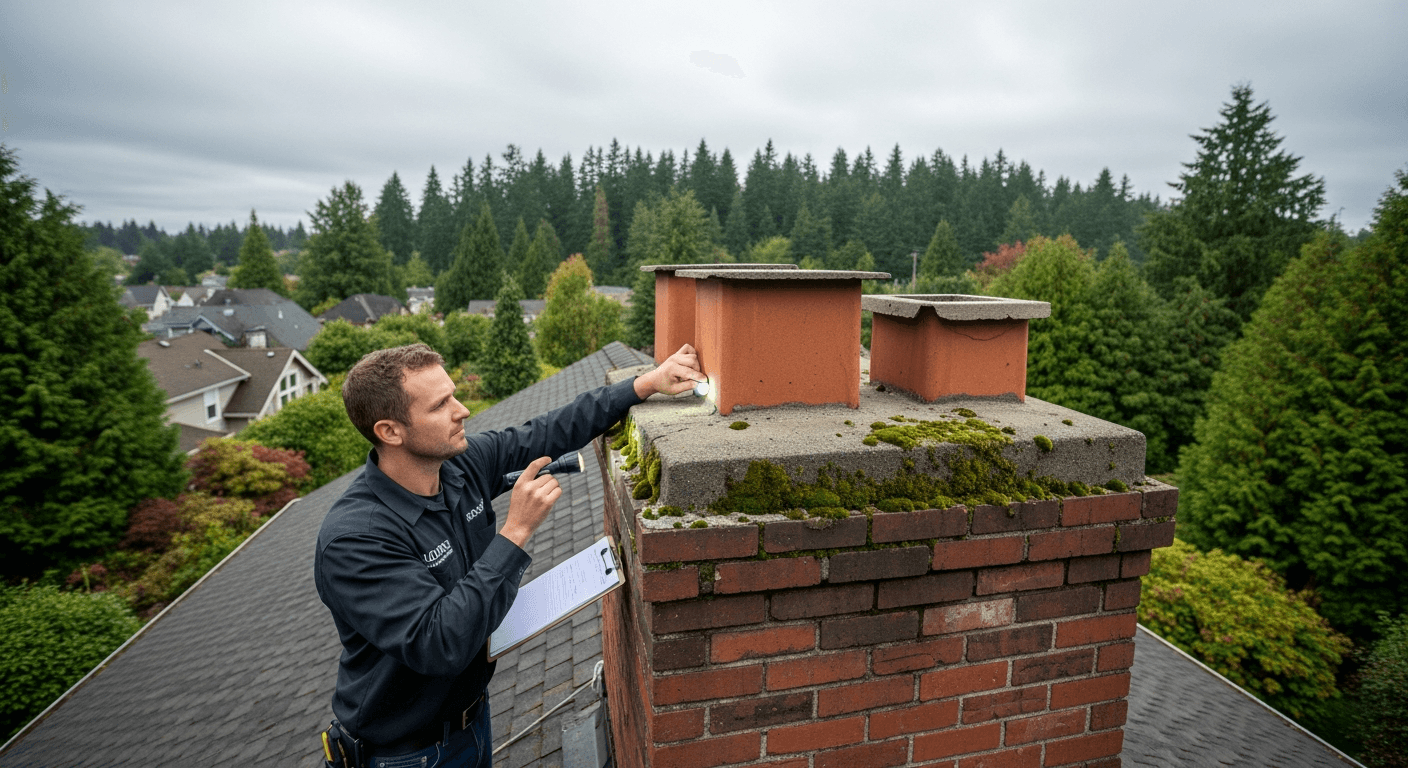
A chimney sweep in Bellevue, WA costs $180 to $280 for a single fireplace; add a Level 1 inspection and the total runs $220 to $350. Those figures reflect conditions specific to the Eastside: Bellevue's wet maritime winters — averaging over 37 inches of annual rainfall — accelerate glazed creosote formation and promote moss and moisture intrusion on masonry crowns, which increases both cleaning time and the likelihood of finding corrective work during an inspection. This article breaks down exactly what drives those costs, what each inspection level legally and practically covers, and how to judge whether the quote in front of you is reasonable.
How Often Does a Chimney Really Need to Be Cleaned in Bellevue?
NFPA 211 sets the floor at one inspection per year and cleaning whenever significant deposits accumulate — but that standard was written for general use, not specifically for Puget Sound winters. In Bellevue, homeowners who burn wood regularly from October through March should schedule a sweep every season before heating begins, ideally in August or September, ahead of the Puget Sound Clean Air Agency's episodic wood-burning ban period that typically starts with the first cold, still nights of autumn.
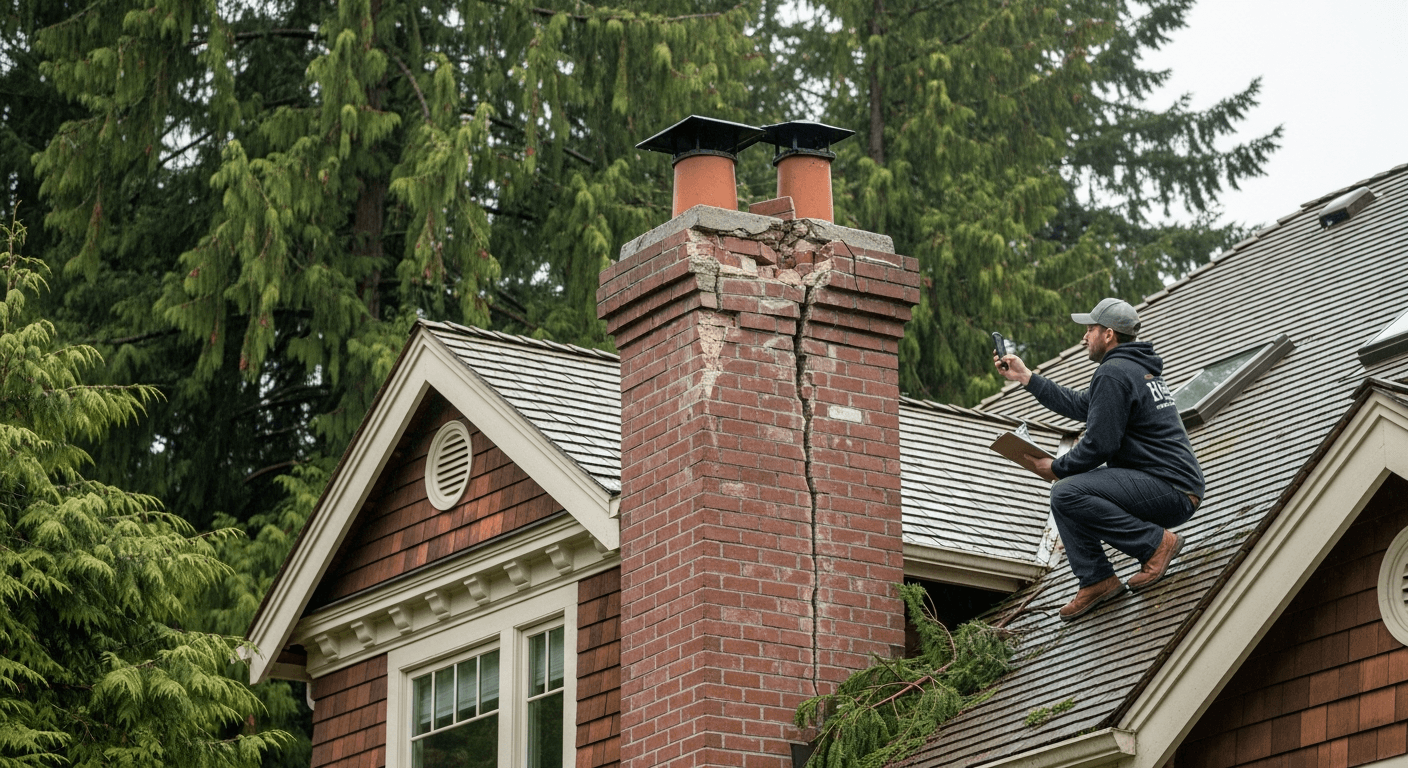
If your home has a gas fireplace insert — a standard feature in many of Bellevue's Eastside custom builds — you won't produce combustible creosote, but the liner, venting, and firebox still require an annual inspection for carbon monoxide integrity and debris obstruction. The issues that surface most frequently in Bellevue's older masonry chimneys after a wet winter are moisture-driven spalling, cracked terra cotta liner tiles, and displaced mortar joints in the smoke chamber — none of which produce visible warning signs inside the home.
A practical threshold: if you've burned two or more cords of wood in a season, or if your last professional sweep was more than 14 months ago, schedule a cleaning regardless of how the firebox looks from the room. Third-degree glazed creosote — the stage at which deposits become fuel rather than residue — is nearly invisible to an untrained eye but ignites readily at temperatures a functioning chimney interior routinely reaches.
What You Actually Get at Each Level — and What It Costs
The three inspection levels defined by NFPA 211 represent genuinely different scopes of work, not marketing tiers. Understanding the distinction prevents sticker shock when a technician recommends stepping up from a basic sweep.
A Level 1 inspection is a visual, accessible-surfaces examination. The technician checks the firebox, damper, smoke chamber, accessible flue interior, and exterior crown during the same visit as the sweep. It is appropriate when the system has been used the same way as the prior season with no known changes, damage events, or ownership transitions.
A Level 2 inspection adds a full-flue camera scan and examination of accessible structural areas — attic, crawl space, or basement — wherever the chimney passes through the building envelope. It is required by NFPA 211 whenever a home is sold or purchased, after any chimney fire regardless of size, after a seismic event, or when changing fuel type such as converting a wood-burning firebox to a gas insert. Level 2 documentation is now a standard buyer contingency in a meaningful share of Bellevue home sales, and select homeowners' insurance carriers active on the Eastside have begun requesting written inspection reports as a condition of coverage.
A Level 3 inspection involves deliberate removal of components — portions of the crown, chase cover, or in rare cases masonry — to access areas that cannot be reached by camera or direct observation. It is uncommon and typically follows a Level 2 that identified a structural anomaly requiring physical verification.
| Service | What's Included | Typical Bellevue Price Range | When You Need It |
|---|---|---|---|
| Basic Chimney Sweep Only | Brush and HEPA-vacuum of firebox and full flue; remove creosote, debris, and blockages | $180 – $240 | Annual maintenance on a lightly used wood-burning fireplace |
| Sweep + Level 1 Inspection | Full sweep plus visual inspection of firebox, damper, smoke chamber, accessible flue, and exterior crown | $220 – $350 | Standard annual service for a regularly used fireplace with no changes or events since last inspection |
| Level 2 Inspection (no sweep) | Camera scan of full flue interior; inspection of accessible structural areas where chimney passes through building | $250 – $450 | Home sale or purchase, post-chimney-fire, post-seismic event, fuel-type conversion |
| Sweep + Level 2 Inspection | Complete sweep combined with full camera inspection and written findings report | $380 – $600 | Pre-sale, after a suspected chimney fire, insurer documentation requirement |
| Glazed Creosote (3rd-degree) Removal | Chemical treatment plus mechanical removal; typically requires two visits | $400 – $900+ | Heavy wood burners; confirmed or suspected glazed deposits in flue |
| Gas Fireplace Insert Annual Service | Venting inspection, burner and ignition check, CO integrity verification | $150 – $250 | Every year regardless of how frequently the unit is used |
| Level 3 Inspection | Controlled removal of crown, chase cover, or masonry to access concealed areas; restoration quoted separately | $500 – $1,500+ | Serious structural anomaly identified at Level 2; condition of concealed flue sections cannot otherwise be determined |
Why Chimney Sweeping Costs What It Does — An Honest Breakdown
The most common reaction before work begins is that chimney sweeping seems expensive for what looks like a straightforward cleaning. Three specific cost drivers explain the pricing without apology.
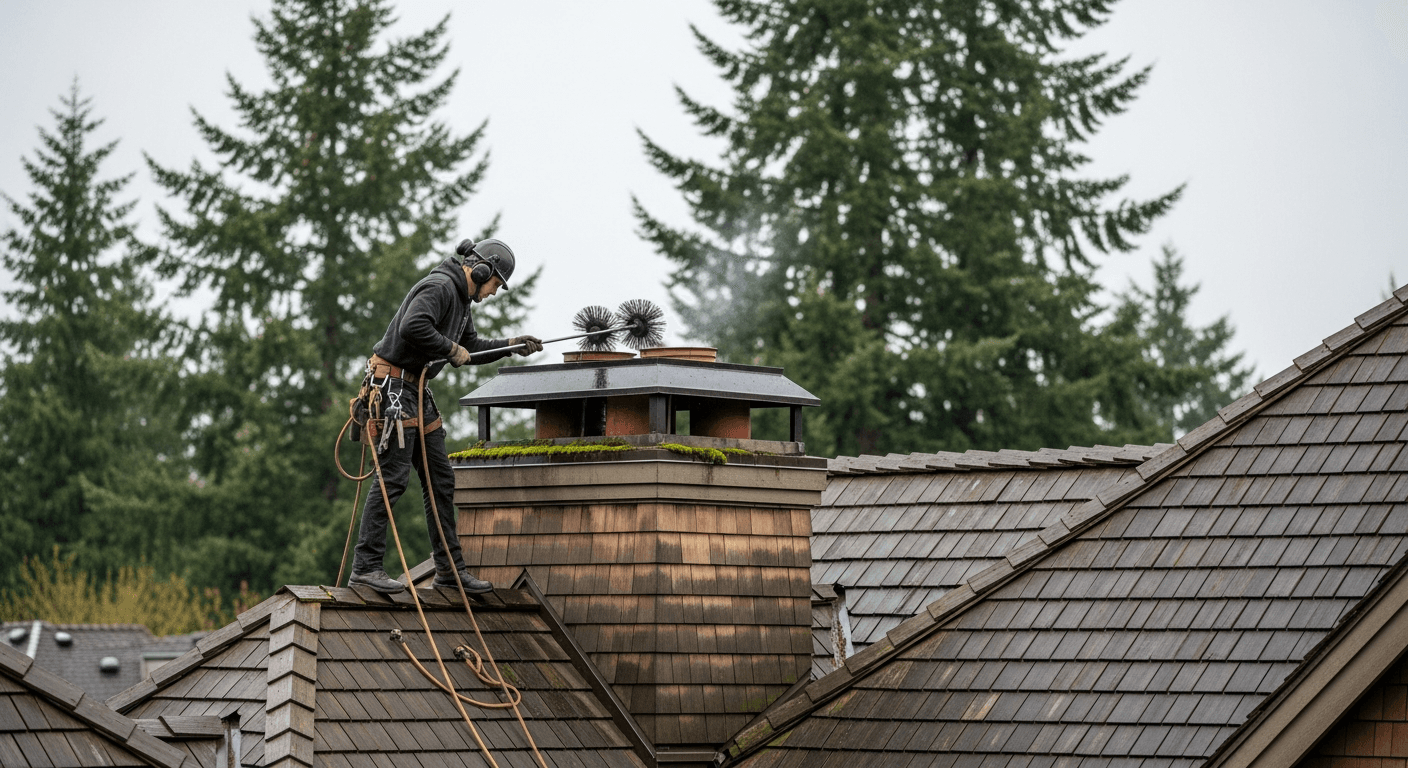
First, equipment. Professional chimney service requires HEPA-rated vacuum systems rated to contain fine combustion particulates, rotary brush rigs capable of breaking up glazed third-degree deposits, and camera systems that can navigate a full flue run and generate documented findings. The capital cost, maintenance, and calibration of that equipment is reflected in labor rates.
Second, licensing and liability. Chimney technicians operating in Washington State carry commercial general liability insurance scaled to fire-risk work, plus workers' compensation coverage. Technicians credentialed through the Chimney Safety Institute of America complete ongoing education requirements to maintain certification. Both the insurance overhead and the training investment are real costs.
Third, Bellevue-specific access conditions. A significant portion of homes in neighborhoods like Somerset, Bridle Trails, and West Bellevue feature steep multi-story rooflines with cedar-shake or tile surfaces, masonry chimneys that require full roof access rather than ground-level flue-rod work, and tight mechanical alcoves housing gas inserts. Roof-access work adds measurable time, requires appropriate fall-protection equipment, and carries risk that single-story or flat-roof structures do not. When a quote seems high, ask directly whether roof access is included in the sweep price and confirm that the scope covers the complete firebox-to-crown path — not only the lower flue section accessible from inside.
A Real Bellevue Scenario: When a Routine Sweep Became a Level 2
A homeowner in Bellevue's Somerset neighborhood called us in early October for a pre-season sweep on a double-sided masonry fireplace — a feature found in a number of the larger custom homes built in that neighborhood during the 1990s. They had burned wood two to three nights a week across the previous two winters and had not scheduled any chimney service since purchasing the home three years earlier.
During the Level 1 visual inspection that accompanied the sweep, our technician identified irregular mortar surfaces in the smoke chamber and a faint odor inconsistent with standard creosote accumulation. Those findings supported a recommendation to proceed with a Level 2 camera inspection before using the fireplace that season. The camera scan revealed a cracked terra cotta liner tile approximately 18 feet up the flue — a defect completely invisible from the firebox opening below and from the crown above, and one that creates direct exposure between the active flue and the home's wood framing.
The liner repair required a follow-up visit and added cost beyond the original sweep estimate. The Level 2 upgrade — priced at roughly $180 more than the sweep-plus-Level-1 package — was the line item that actually mattered. The homeowner avoided operating a fireplace with a confirmed liner breach through an entire heating season. That outcome is precisely the reason price transparency and a clear understanding of inspection tiers have direct, measurable value.
How to Evaluate a Chimney Sweep Quote in Bellevue
A fair quote in the Bellevue market should be itemized rather than presented as a single number. At minimum it should distinguish the sweep fee from any inspection fee, specify whether roof access is included, and clarify whether the price covers one fireplace opening or multiple — double-sided fireplaces and two-story great-room configurations are common enough on the Eastside that some providers quote per opening rather than per flue system.
Be skeptical of any quote significantly below $150 for a combined sweep and inspection. At that price point, the inspection is almost always a cursory visual scan that omits the smoke chamber and skips camera verification — a marketing visit rather than a diagnostic one. At the other end, a quote above $500 for a routine annual sweep with no documented camera findings warrants a request for an itemized breakdown before you authorize the work.
Scheduling timing matters. Late September through November is peak demand in Bellevue as residents prepare for the rainy season and the first sustained cold. Booking in July or August means faster scheduling windows and, with some providers, preferential off-peak pricing. If you heat primarily with wood, ask about an annual service agreement — a fixed-price commitment covering the sweep and Level 1 inspection each year. The cost predictability is worth something on its own, and it removes the friction of rescheduling before each heating season.
Frequently asked questions
How often should a wood-burning chimney be swept in Bellevue?
Once per heating season is the minimum. Bellevue's wet winters accelerate creosote buildup and increase moisture damage to masonry, so schedule your sweep in August or September — before the Puget Sound Clean Air Agency's episodic burn bans begin and before you need the fireplace. If you burn more than two cords per season, twice a year is reasonable.
What does a Level 2 chimney inspection cost in Bellevue?
A standalone Level 2 inspection runs $250 to $450. Combined with a sweep, expect $380 to $600. The price reflects camera equipment, additional access time across the full flue run, and the written documentation report that Bellevue home sales and some insurers now request as standard.
What is the average cost to sweep a chimney in Bellevue, WA?
A single-fireplace sweep averages $180 to $280. Adding a Level 1 inspection brings the typical total to $220 to $350. Bellevue prices run above national averages because a large share of Eastside homes require full roof access on steep, multi-story rooflines rather than simpler ground-level rod work.
Do I need a Level 2 inspection if I'm not selling my home?
Yes, in specific circumstances: after any chimney fire, after an earthquake, when switching from wood to a gas insert, or if your flue has never been camera-scanned or hasn't been scanned in more than five years. Cracked terra cotta liner tiles — a documented issue in Bellevue's older masonry chimneys — are only reliably detected by camera. A visual-only inspection will not find them.
Is a chimney inspection required when buying a home in Bellevue?
NFPA 211 requires a Level 2 inspection any time a property changes hands, and the Bellevue real estate market reflects that standard — Level 2 camera inspections are increasingly written into buyer contingency clauses. Some homeowners' insurance carriers active on the Eastside also request written inspection documentation before issuing or renewing a policy on a home with a wood-burning fireplace.
Related services