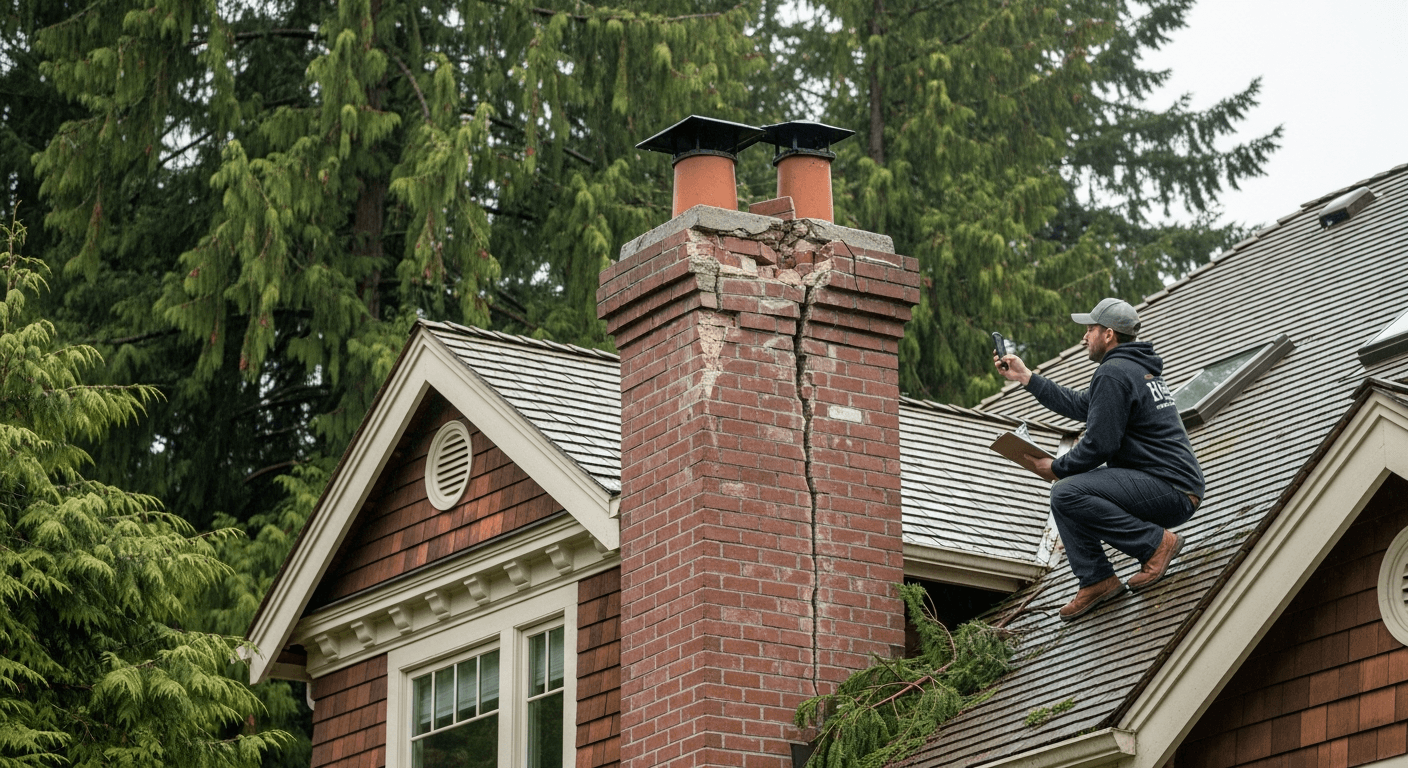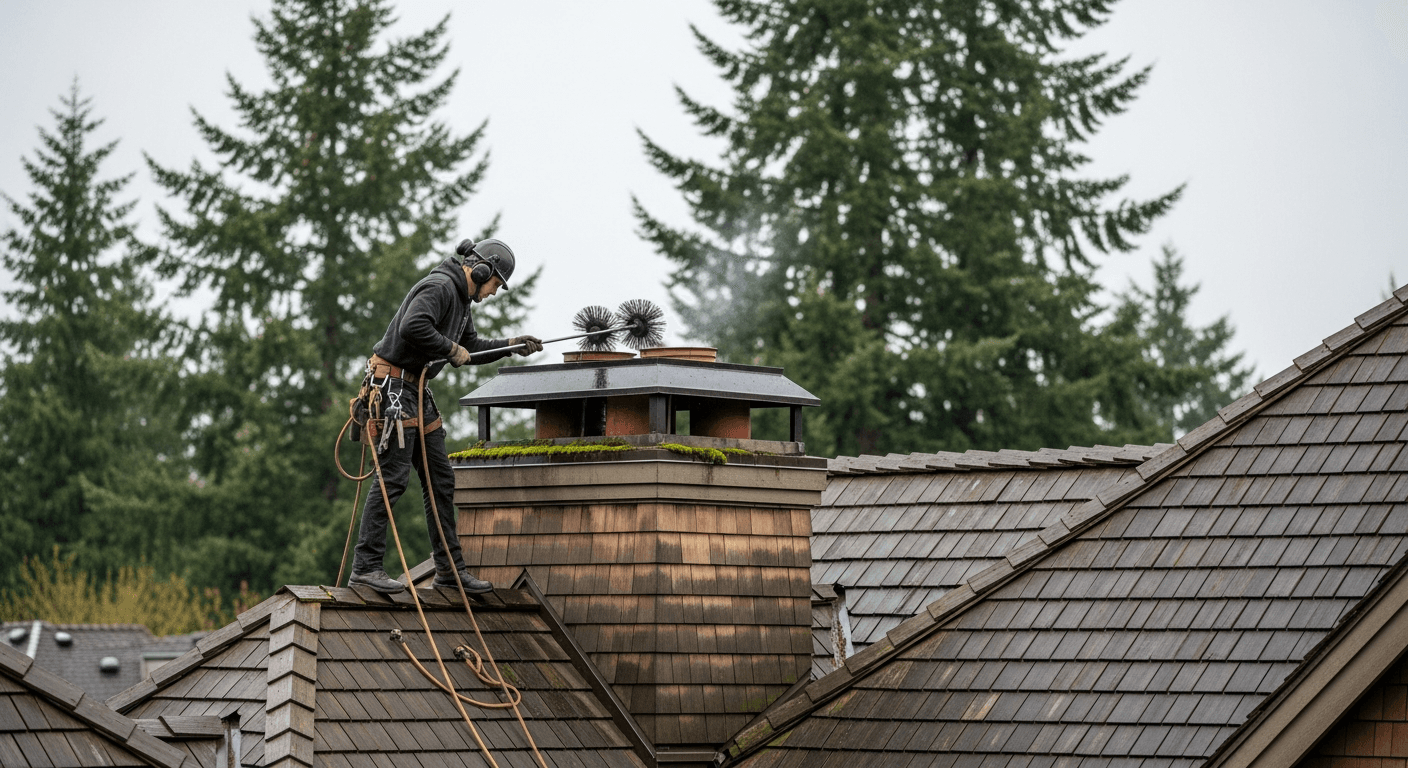
A Level 2 chimney inspection in Bellevue costs $250–$500, includes a video camera scan of the full flue interior, and is required any time you buy or sell a home, experience a chimney fire, switch fuel types, or sustain damage from a Pacific Northwest windstorm or Puget Sound-area seismic event. It goes far beyond the visual check performed during a routine annual sweep — and for the clay-tile-lined masonry chimneys and gas inserts common in Bellevue's Eastside neighborhoods built between the 1970s and 1990s, it is routinely the inspection that surfaces cracks and mortar failures invisible from the firebox opening. If you are weighing Level 1 versus Level 2, default to Level 2: the cost difference is modest, and the camera documentation can prevent a five-figure repair surprise after closing.
What exactly is a Level 2 inspection, and how does it differ from a standard chimney inspection?
The Chimney Safety Institute of America (CSIA) defines three inspection levels. A Level 1 is a visual check of accessible chimney components — firebox, damper, smoke chamber, and exterior crown — conducted during a routine annual cleaning. It is appropriate only when the chimney has been in continuous, unchanged use with no known damage events.
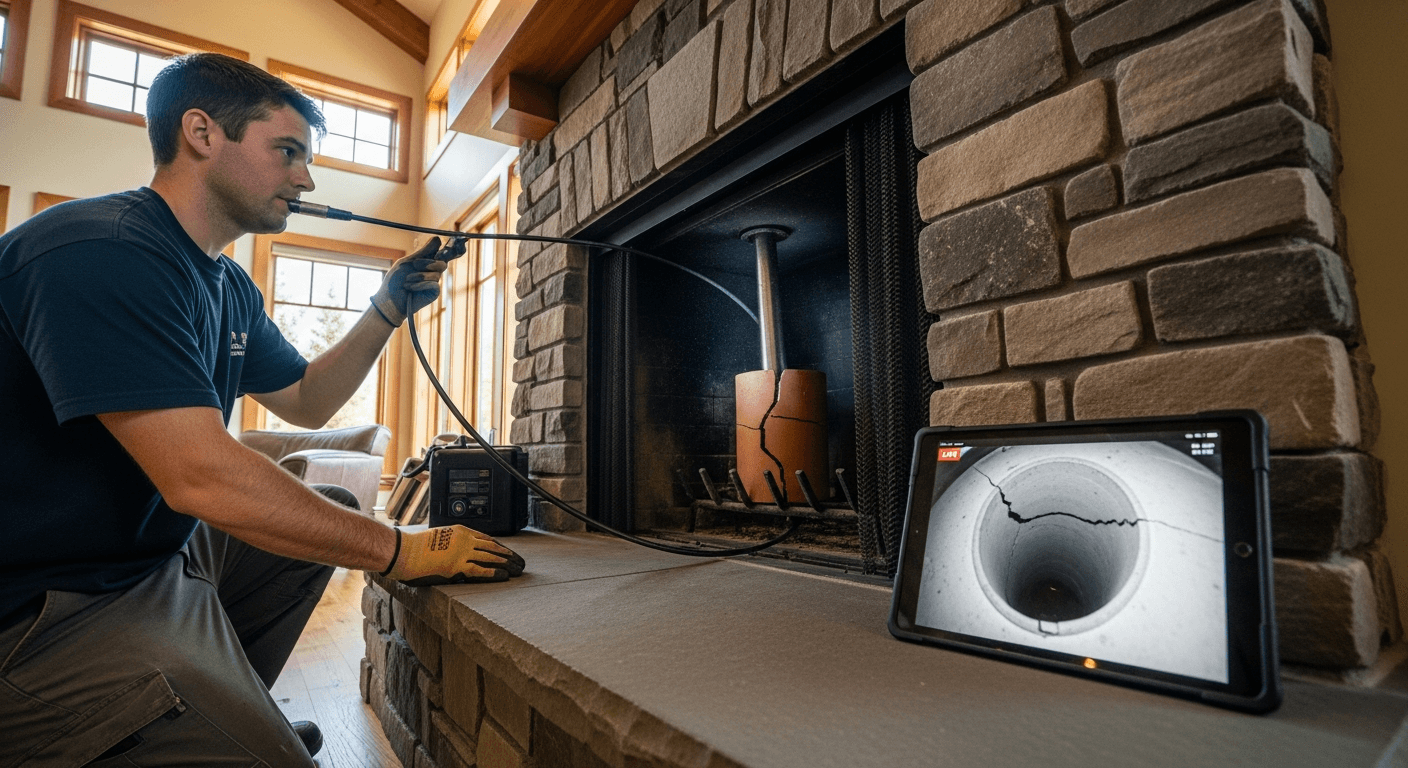
A Level 2 inspection adds a video camera scan of the entire flue liner from firebox to cap. The technician examines every inch of the liner for cracks, spalling brick, deteriorated mortar joints, offset tiles, and gaps where combustion gases or flames could escape into the surrounding chase framing or attic space. It also covers accessible portions of the chase where it passes through attic, crawlspace, and basement areas.
A Level 3 inspection — the most invasive — requires removing portions of the chimney structure and is reserved for confirmed serious structural damage. Most Bellevue homeowners will encounter Level 1 and Level 2 inspections over the life of their chimney; Level 3 is comparatively rare and is ordered only when Level 2 findings justify it.
The practical distinction is significant: liner cracks in the clay tile flues common throughout Bellevue's older masonry chimneys are typically invisible from the firebox opening, even to an experienced technician. A Level 2 camera scan is the only reliable method to locate them before they become a carbon monoxide pathway or chimney-fire ignition point inside the home.
What triggers a Level 2 inspection requirement in a Bellevue home?
NFPA 211 — the national standard governing chimney inspections — specifies four situations that require a Level 2 inspection: any real estate transaction, any change in fuel type or connected appliance, any operational malfunction or external event such as a chimney fire or seismic activity, and any significant rebuild of or repair to the chimney or its connected appliance.
In Bellevue, the most common trigger is a home purchase. Eastside homes built between 1970 and 1995 frequently feature original clay tile liners that have never been camera-inspected. A Level 2 inspection before closing is the only way to know whether that liner is intact — a seller's Level 1 report on file does not satisfy the NFPA 211 requirement and does not include camera documentation.
Two Bellevue-specific conditions elevate the urgency beyond the national baseline. First, Bellevue's wet maritime winters — averaging roughly 37 inches of annual rainfall — drive persistent moisture into crown mortar and liner joints. Repeated freeze-thaw cycling at temperatures that regularly dip into the low 30s accelerates crack propagation in clay tile in ways that accumulate invisibly over years. Second, Puget Sound Clean Air Agency burn restrictions mean many Bellevue fireplaces see inconsistent use patterns, including periods of smoldering low-heat fires that deposit glazed creosote — a Level 1 condition that a camera scan quantifies before it becomes an ignition source.
A Level 2 inspection is also required before converting a wood-burning firebox to a gas insert, or when upgrading an existing insert to a higher-output model. Gas appliance installation changes liner sizing and draft requirements; the camera scan confirms the existing flue can safely serve the new appliance before any hardware is committed.
What does a Level 2 chimney inspection cost in Bellevue — and what is included?
The table below reflects current pricing for Bellevue and the broader Eastside market. Actual quotes vary based on chimney height, number of flues, accessibility constraints, and whether a sweep is bundled with the inspection.
A Level 2 inspection is quoted as a separate service from a Level 1 sweep-and-check. If the chimney also requires cleaning, the total will sit at the higher end of the combined range. Bundling is the better value in most situations: the technician and camera equipment are already on site, and a single mobilization covers both services.
Always confirm that any quote includes a full-length video recording of the camera scan — not just a verbal summary at the end of the appointment. That footage is your documentation for insurance claims, repair negotiations at closing, and future reference if a follow-up inspection is needed.
| Service | Typical Bellevue Price Range | What Is Included |
|---|---|---|
| Level 1 Inspection (visual only) | $100 – $175 | Accessible firebox, damper, smoke chamber, exterior crown — no camera scan |
| Level 2 Inspection (camera scan) | $250 – $500 | Full video camera scan of flue liner, accessible attic/crawlspace/basement chase areas, written report with video or still images |
| Level 2 + Chimney Sweep (bundled) | $350 – $600 | Level 2 inspection plus full creosote removal and cleaning — the standard package for real estate transactions and post-event inspections |
| Level 3 Inspection (invasive) | $1,000+ | Structural access via removal of chase components; ordered only when Level 2 confirms suspected serious damage requiring direct examination |
| Gas Insert Inspection (Level 2) | $275 – $450 | Camera scan of flue liner, inspection of insert-to-liner connection and combustion pathway, draft verification |
A Bellevue homeowner's experience: what the camera found that the prior inspection missed
Earlier this year, buyers under contract on a 1988 colonial-style home in Bellevue's Somerset neighborhood — drawn in part by a large double-sided masonry fireplace — reviewed the listing disclosure, which stated the chimney had been 'serviced within the last two years.' A Level 1 inspection from the sellers was on file.
The buyers requested a Level 2 inspection as a contract contingency. When the camera ran the full length of the flue, it revealed a complete lateral crack in a clay tile liner section approximately fourteen feet above the firebox — invisible from the firebox opening and absent from the prior Level 1 report. The crack pattern was consistent with years of moisture cycling through Bellevue's wet winters, and the gap was wide enough that combustion gases were escaping into the surrounding wood-framed chase.
With video documentation in hand, the buyers negotiated a $4,200 credit from the sellers — enough to cover a full stainless steel liner installation by a licensed contractor before closing. The Level 2 inspection cost $385. Without it, they would have taken ownership of a chimney that posed both a carbon monoxide risk and a direct fire-spread pathway into the home's framing.
This scenario is not rare on the Eastside. Masonry chimneys on homes of this vintage look structurally intact from the firebox. The deterioration is almost always in the middle section of the flue, where neither a homeowner nor a Level 1 technician can see.
How to prepare for your Level 2 inspection and get the most out of it
Schedule your inspection in late summer or early fall — September is the optimal window in Bellevue. The summer dry period allows moisture-driven cracks to stabilize in their open position, making them cleaner for the camera to capture. Fall scheduling also ensures results and any necessary repairs are completed before November, when Bellevue's burn season begins and fireplace use peaks.
Before the technician arrives, ensure the firebox is cold and ash-free. Remove any glass doors or decorative screens to give the camera equipment unobstructed access to the flue throat. If you have noticed a sticking damper or visible moss on the crown — both common on Bellevue masonry chimneys given the rainfall — mention both at the start of the appointment. They are diagnostic signals that guide where the technician focuses the camera scan.
After the inspection, your written report should explicitly categorize each finding as safe for use as-is, requires monitoring, or requires repair before use. If repairs are recommended, ask the technician to distinguish between safety-critical items — liner cracks, failed mortar joints at the smoke chamber, compromised crown — and maintenance items that can be addressed on a longer timeline. That distinction affects both your repair urgency and the conversation with your homeowners insurer.
For real estate transactions, request that the video file be saved in a shareable format so you can transmit it directly to your agent and the sellers. A written summary describes the problem; video footage of a cracked clay tile fourteen feet up the flue makes the case without ambiguity.
Frequently asked questions
How often does a chimney need to be cleaned in Bellevue?
NFPA 211 recommends annual inspection and cleaning for any fireplace in active use. In Bellevue, where wet winters encourage burning denser Douglas fir and occasional improperly seasoned wood during burn-ban-free periods, creosote accumulates faster than in drier inland climates. Once per year — ideally in late summer before burn season — is the correct baseline for a wood-burning fireplace. Gas fireplaces still require an annual Level 1 inspection, though cleaning frequency is lower because combustion byproduct accumulation is minimal.
Will homeowners insurance cover chimney repair in Bellevue?
Standard homeowners insurance covers sudden, accidental damage — a chimney fire, storm damage to the crown or cap, or cracking caused by a documented seismic event. It does not cover deterioration from deferred maintenance, which is the most common finding in Bellevue's aging masonry chimneys. A Level 2 inspection report that documents sudden cracking attributable to a specific event — rather than years of moisture cycling — is your strongest tool for supporting an insurance claim. Contact your insurer before scheduling repairs to confirm exactly what documentation and timeline they require.
What does a standard chimney sweep cost in Bellevue?
A chimney sweep with a Level 1 inspection for a single-flue wood-burning fireplace in Bellevue typically runs $150–$250. Bundled with a Level 2 camera inspection — recommended for any home purchase, post-chimney-fire evaluation, or first cleaning on a chimney with unknown service history — the combined cost is $350–$600. Be cautious of quotes significantly below $100 for a full sweep; that pricing structure typically signals a pressure-sales model rather than a complete service.
What does a Level 2 chimney inspection cost in Bellevue, WA?
A standalone Level 2 inspection in Bellevue typically costs $250–$500, depending on chimney height, number of flues, and whether the quote includes a full video recording versus still images in a written report. Bundled with a sweep, expect $350–$600. Confirm before booking that the quote covers the full-length camera scan of the liner and a written or video report — a verbal summary at the appointment is not sufficient documentation for a real estate transaction or insurance claim.
Do I need a Level 2 inspection when buying a home in Bellevue?
Yes. NFPA 211 explicitly requires a Level 2 inspection at every real estate transaction. A sellers' Level 1 report already on file does not satisfy this requirement — it contains no camera documentation of the liner interior. Given the age of many Eastside masonry chimneys and the moisture exposure they accumulate through Bellevue's wet winters, a Level 2 camera scan is the only way to verify liner integrity before you take ownership and light the first fire.
Related services