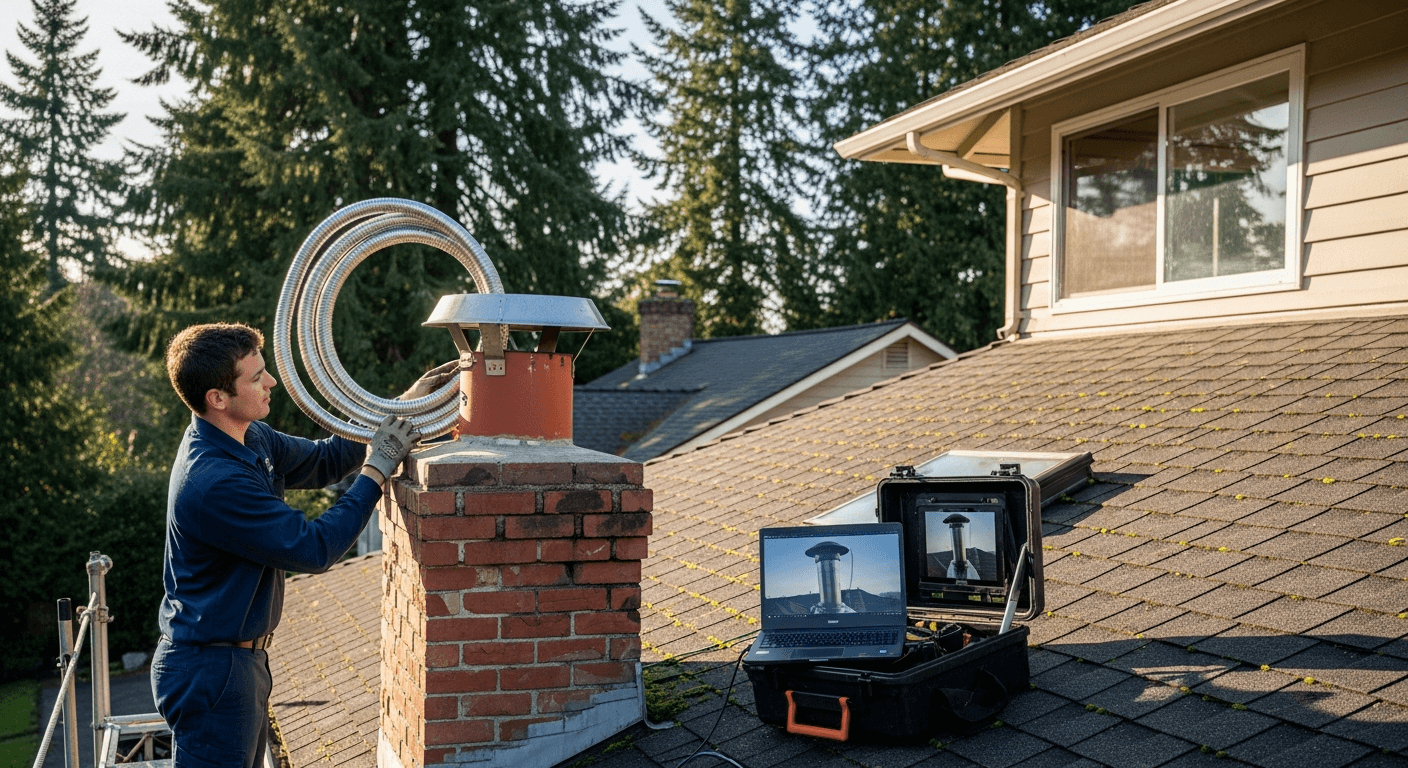
The short answer is: inspect every year, sweep whenever the inspection finds buildup. That is how the national standard frames it, and it is why two neighbors on the same Bellevue street can need different schedules. One burns a few holiday fires on a gas-converted fireplace; the other heats with a wood stove from November to March. Here is how to work out your own interval.
What the standard actually says
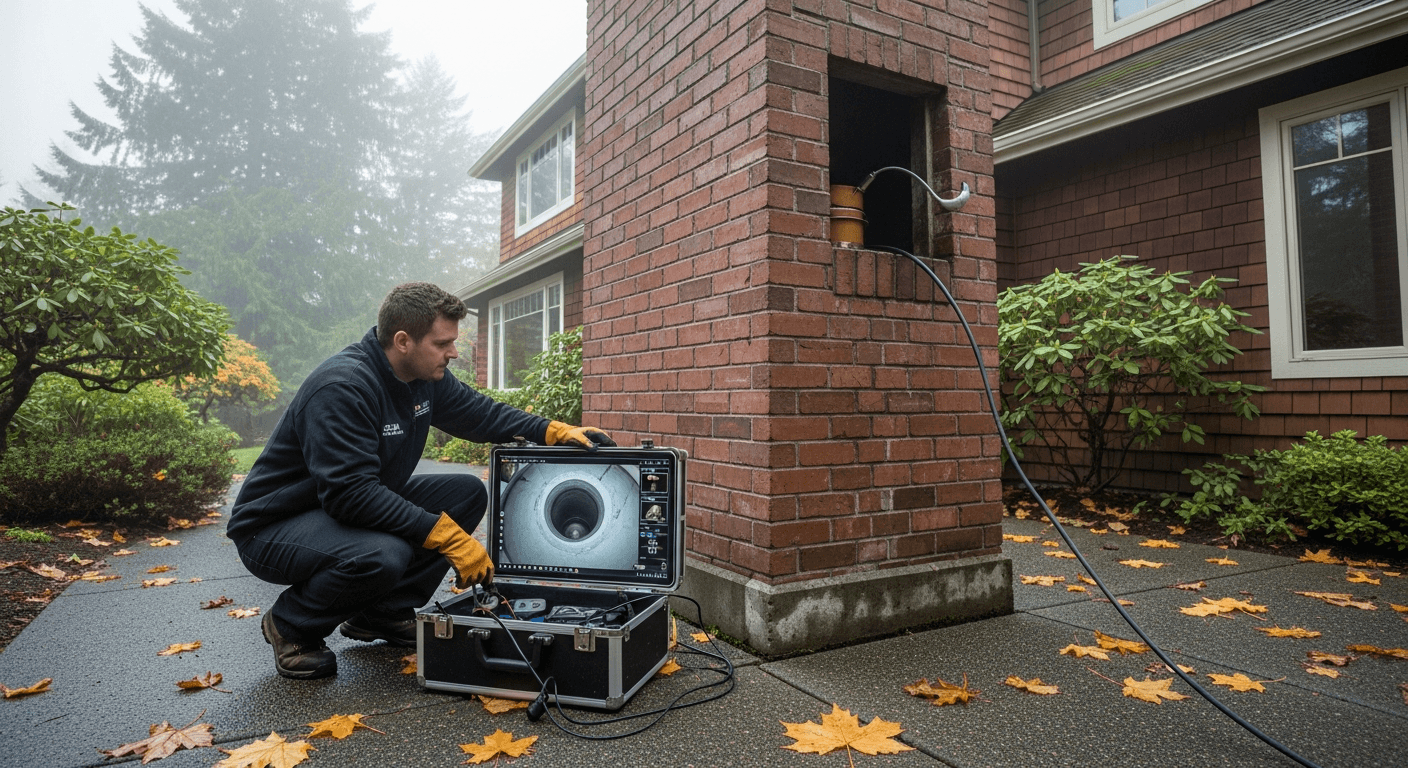
Under NFPA 211, every chimney, fireplace and vent gets a yearly inspection covering its soundness, any deposits, and its clearances to combustibles. The Chimney Safety Institute of America passes the same rule on to homeowners. The wording is about inspecting; cleaning follows from what that inspection finds.
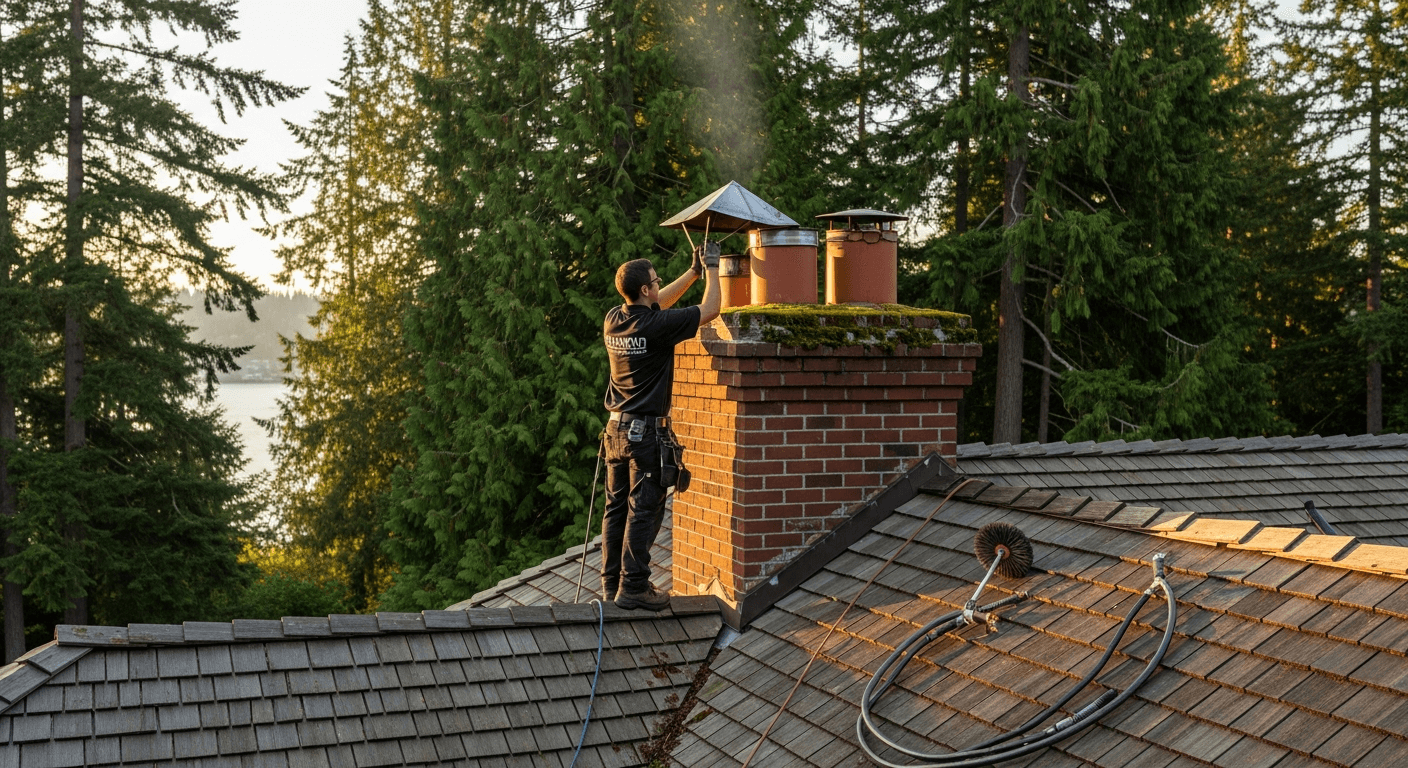
So the fixed part of the schedule is the yearly look. The sweep follows the evidence: a flue with a thin dusting of soot may not need brushing, while one with a crusted layer does, whatever the calendar says.
Matching the interval to how you burn
The table gives a realistic starting point for common Eastside setups. Your inspection result overrides it in either direction.
| How the fireplace or stove is used | Inspection | Sweep |
|---|---|---|
| Occasional fires in an open masonry fireplace | Every year | When the inspection finds buildup |
| Regular winter fires, several evenings a week | Every year, before the season | Usually every year |
| Wood stove or insert as a main heat source | Every year, plus a mid-season check | Once or more per season |
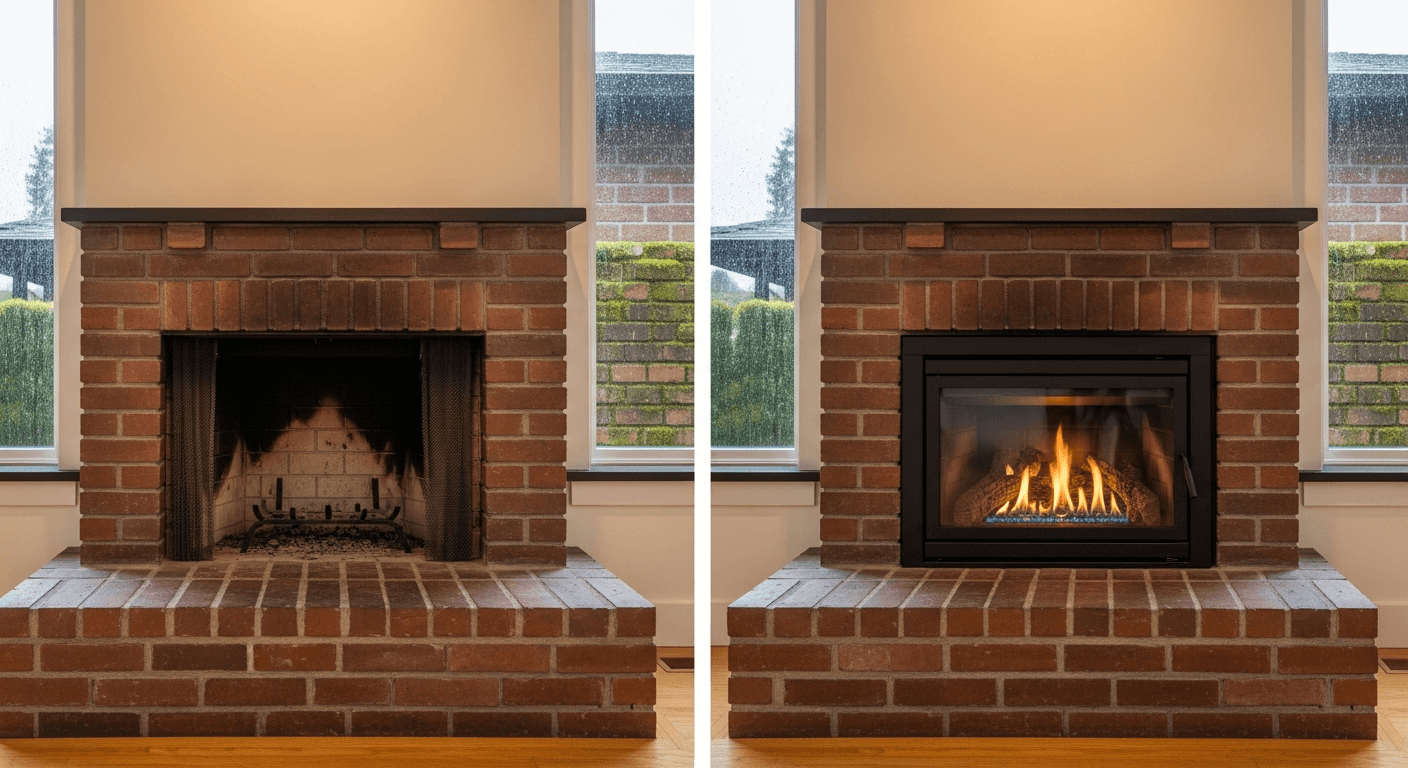
| Gas fireplace or gas insert | Every year | Venting and burner service rather than a creosote sweep |
| Fireplace unused for several years | Before the first fire | Before the first fire |
What speeds up buildup
Wet wood is the main one, and it is also against the rules: the Puget Sound Clean Air Agency permits nothing but seasoned, dry wood or manufactured logs, with a cap on how dense chimney smoke may get. Wood that hisses or smokes heavily burns cool, and cool smoke condenses on the flue walls as creosote.
Small, smoldering fires do the same thing. A fire kept low all evening to take the chill off never heats the flue enough to carry its smoke out cleanly, so a light-use fireplace can still build up more than its owner expects.
Plan around the wet season and burn bans
On the Eastside the wet season runs from about October into May, with November on average the wettest month. Scheduling the yearly visit in late summer or early fall means the flue is checked before the first cold snap and before the rain makes roof access harder.
Winter also brings burn bans. The agency reported that in 2023, wood smoke from home heating pushed King County fine-particle levels over its health goal on up to three winter days. Homes that depend on wood as their only adequate heat can apply to be exempted from a ban, though smoke still may not be visible, so a clean, well-drafting flue matters even more for those homes.
Signs you should not wait for the yearly visit
Book a check sooner if smoke rolls into the room when the fire is lit, if you smell a sharp, tarry odor on damp days, if you hear crackling or roaring in the flue, or if flakes of black deposit fall into the firebox. Any one of these means the flue is not doing its job.
Frequently asked questions
Do I need to sweep my chimney every year if I rarely use it?
You need the yearly inspection. The sweep itself depends on what the inspection finds; a lightly used flue may not need brushing every year.
How often should a wood stove chimney be swept?
A stove used as a main heat source through an Eastside winter usually needs at least one sweep per season, and often a mid-season check.
Does a gas fireplace need its chimney swept?
Gas does not produce wood creosote, but the vent, burner and termination still need a yearly look for blockages, corrosion and nesting.
What is the best month to schedule a chimney sweep here?
Late summer or early fall, before the wet season sets in and before the first burn ban of the winter.
Sources
- CSIA — Homeowner Resources — accessed September 23, 2026
- NFPA — NFPA 211 standard — accessed September 23, 2026
- Puget Sound Clean Air Agency — Wood Burning and the Law — accessed September 23, 2026
- Puget Sound Clean Air Agency — 2023 Data Summary — accessed September 23, 2026
- Puget Sound Clean Air Agency — About Burn Bans — accessed September 23, 2026
- WeatherSpark — Bellevue climate — accessed September 23, 2026
Related services