Wood-burning chimneys in Bellevue require more maintenance and cost more to keep safe than gas fireplace inserts — but gas inserts carry hidden failure points that cause homeowners to skip inspections they cannot afford to miss. Bellevue's 38-inch annual rainfall, concentrated between October and March, accelerates deterioration in both masonry chimneys and flexible stainless liners faster than national averages suggest. This article gives you the specific service requirements, realistic local costs, and a clear decision framework for whichever system your Eastside home has.
What Bellevue's climate does to chimneys that most homeowners don't realize
Bellevue averages 38 inches of rain per year, with roughly 70 percent of that total falling between October and March — the exact window when wood fires and gas inserts see their heaviest use. Active use combined with near-constant moisture exposure is a harder test than either factor alone.
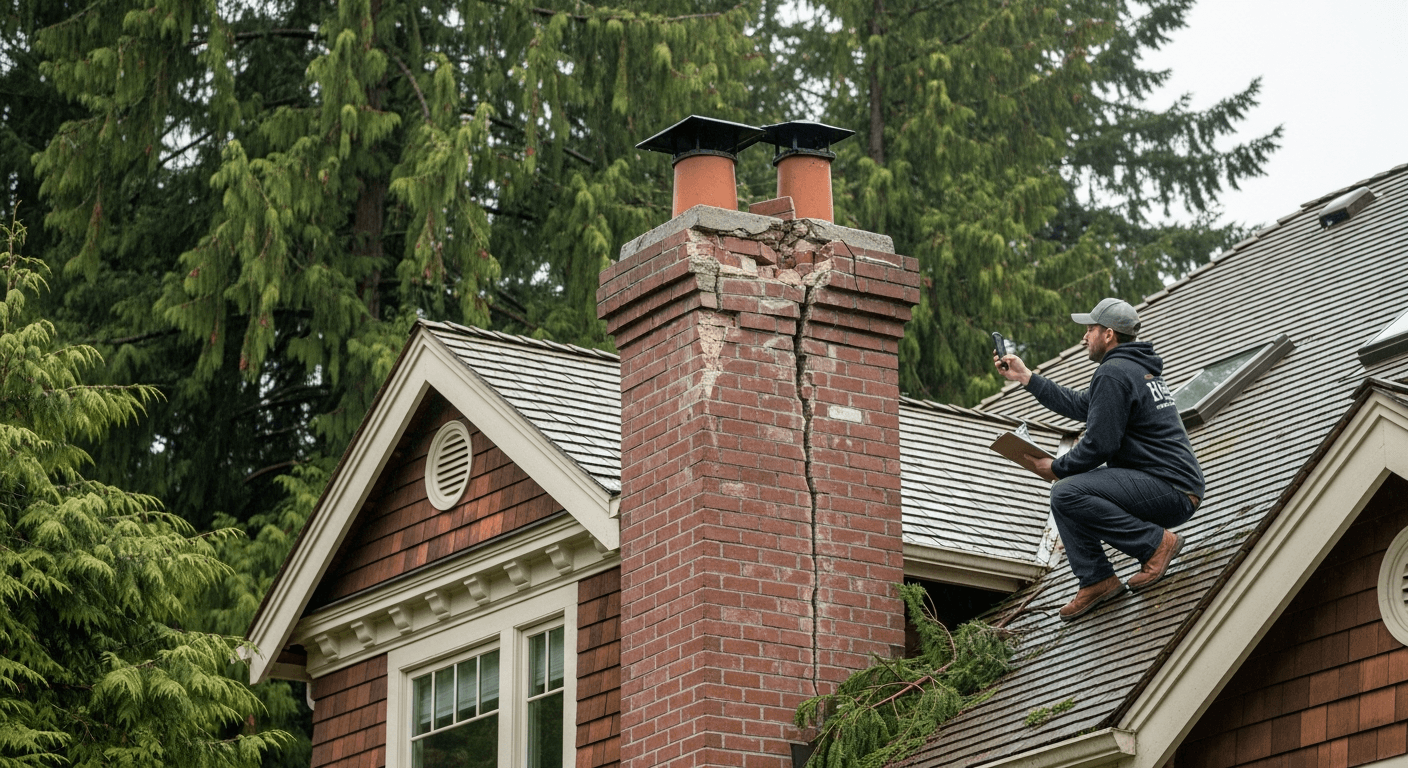
For the masonry chimneys common in Somerset, Bridle Trails, and other established Eastside neighborhoods, moisture is the primary driver of structural failure. Rain saturates porous brick and mortar; even the shallow freeze-thaw cycles Bellevue experiences through December and January open micro-cracks that widen each successive season. Chimney crowns are the most vulnerable point: the algae and moss growth visible on Eastside rooflines holds standing moisture against concrete surfaces and accelerates spalling at a measurable rate. A crown left uncoated through two Bellevue winters will typically show surface cracking that requires remediation.
Gas inserts face a chemically different version of the same problem. Because they burn at lower flue temperatures than wood fires, their liners see more condensation from combustion byproducts. That acidic condensate attacks clay tile liners from the inside. A large share of Bellevue homes with gas inserts converted from wood-burning fireplaces are still running on original clay tile liners that were sized and built for wood — liners that are both the wrong diameter for gas venting efficiency and increasingly compromised by acid condensate. A visual inspection from the firebox opening cannot detect this condition.
Wood-burning fireplaces: what maintenance actually looks like and why it adds up
The NFPA recommends annual chimney inspections for all fuel-burning appliances, but for Bellevue wood-burning fireplaces that baseline is a floor, not a ceiling. Sweep frequency should track actual usage: one sweep per cord burned is the practical standard, with a minimum of one sweep per active season.
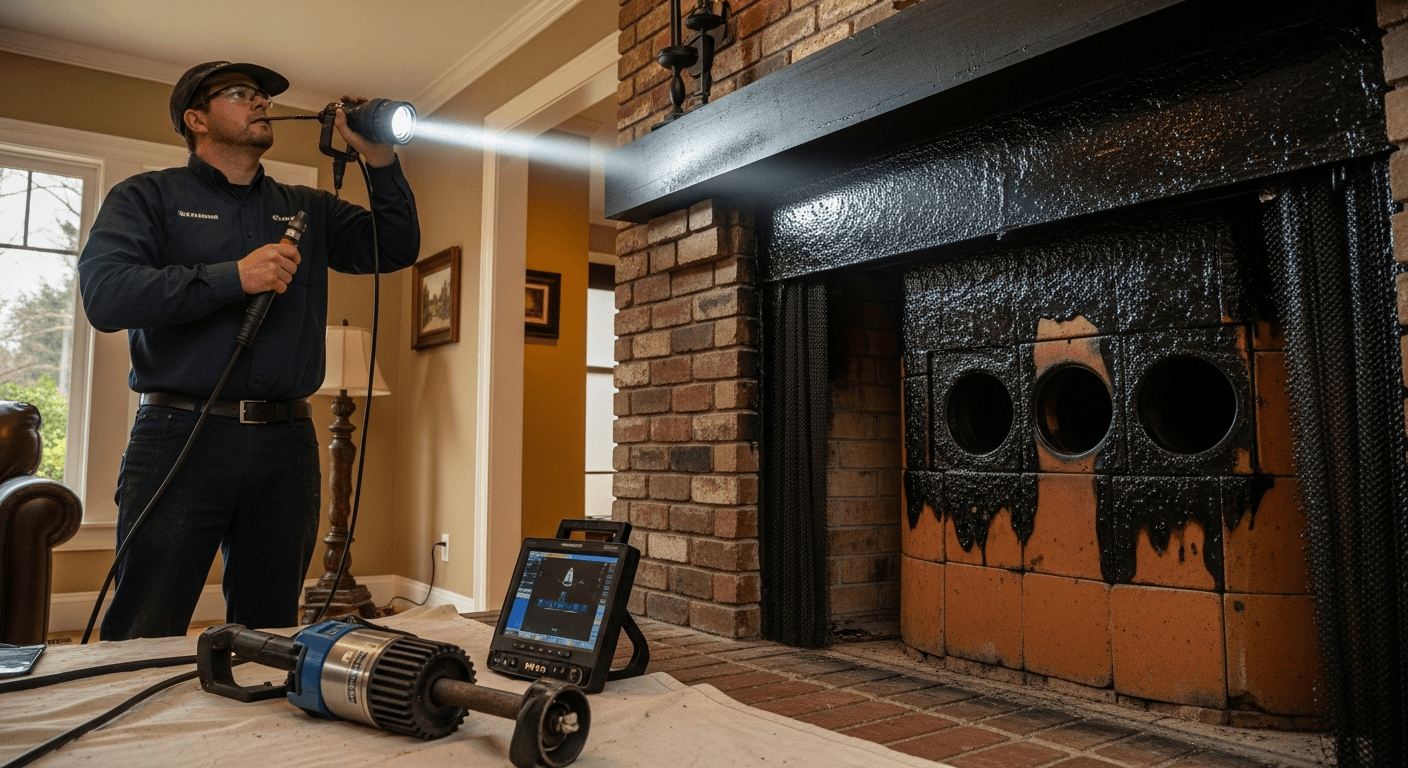
Bellevue's wet climate creates a specific creosote hazard. Homeowners who purchase split firewood in October or November are often burning wood that has seasoned for only a few months rather than the recommended twelve. Under-seasoned wood burns at lower flue temperatures and produces sticky, high-gloss Stage 2 or Stage 3 creosote rather than the dry, flaky Stage 1 deposits that brush out easily. Glazed creosote requires chemical treatment and significantly more labor to remove — and it is the form most directly associated with chimney fires.
Beyond sweeping, masonry chimneys in Bellevue need mortar joint repointing on a cycle that depends on original construction quality and exposure, crown inspection and sealing every two to four years, and flashing checks whenever the roof is disturbed. A chimney without a cap on a Bellevue home is a direct funnel for rainfall onto the smoke shelf and into the firebox — a condition that saturates the masonry from the inside and makes every other repair more expensive.
Gas fireplace inserts: lower day-to-day cost, but the inspection is non-negotiable
Gas inserts produce no creosote, which eliminates the sweeping cost entirely — but the annual professional inspection is not optional. A qualified technician servicing a gas insert checks the burner assembly, ignition components, thermocouple, firebox panel integrity, door gaskets, decorative media condition, and the flexible stainless liner that carries combustion gases including carbon monoxide out of the home. These components degrade on a timeline that has no visible external signal until failure.
The most common scenario on the Eastside is the converted masonry fireplace: a gas insert installed inside an existing wood-burning firebox with a flexible stainless liner run up through the original clay tile flue. When installed correctly and maintained annually, this is a safe and efficient configuration. The problems arise when the insert was installed by a previous owner with no documentation, and the current homeowner assumes that because the unit lights and heats, nothing needs attention. The liner connection at the firebox, the termination cap at the top, and the liner body itself all require annual physical verification — none of which can be confirmed by watching the flame.
There is one operational advantage worth stating clearly: Puget Sound Clean Air Agency burn restrictions, which apply on stagnant-air winter days several times each season in the Bellevue area, do not affect gas inserts. A gas insert operates legally on any air quality day, including Mandatory Burn Ban days. That reliability has real value for Eastside homeowners using a fireplace insert as supplemental heat — but it depends entirely on the system venting correctly.
Side-by-side: annual chimney maintenance costs for gas vs. wood in Bellevue, WA
The cost difference between systems is real but frequently misread in both directions. Gas insert owners underestimate their costs because they equate no creosote with no service needed. Wood-burning owners sometimes skip inspection years because the fireplace appears to be working. Both assumptions shift routine maintenance costs into repair costs.
The table below reflects current service pricing for Bellevue and the broader Eastside market. Costs vary with chimney height, liner condition, roof accessibility, and findings at the time of service.
| Service | Gas Fireplace Insert | Wood-Burning Fireplace |
|---|---|---|
| Annual Level 1 Inspection | $125 – $200 | $150 – $225 |
| Sweeping / Cleaning | Not required | $175 – $350 per sweep |
| Level 2 Inspection (camera scan) | $300 – $500 | $300 – $500 |
| Flexible Liner Replacement | $1,800 – $3,200 | $2,000 – $3,500 |
| Crown Repair or Reseal | $200 – $600 | $200 – $600 |
| Mortar Repointing (minor) | Rarely needed | $400 – $1,200 |
| Chimney Cap Installation | $150 – $350 | $150 – $350 |
| Typical Annual Spend (light use) | $125 – $250 | $350 – $650 |
| Typical Annual Spend (heavy use) | $250 – $500 | $550 – $1,100 |
A real scenario: the Somerset homeowner who assumed a gas insert meant no chimney work
A homeowner in the Somerset neighborhood contacted us after purchasing a home with a gas insert already installed in a masonry firebox. The previous owner had operated the insert for several years with no documented service history. Because the unit lit reliably and produced heat, the new homeowner assumed no inspection was needed.
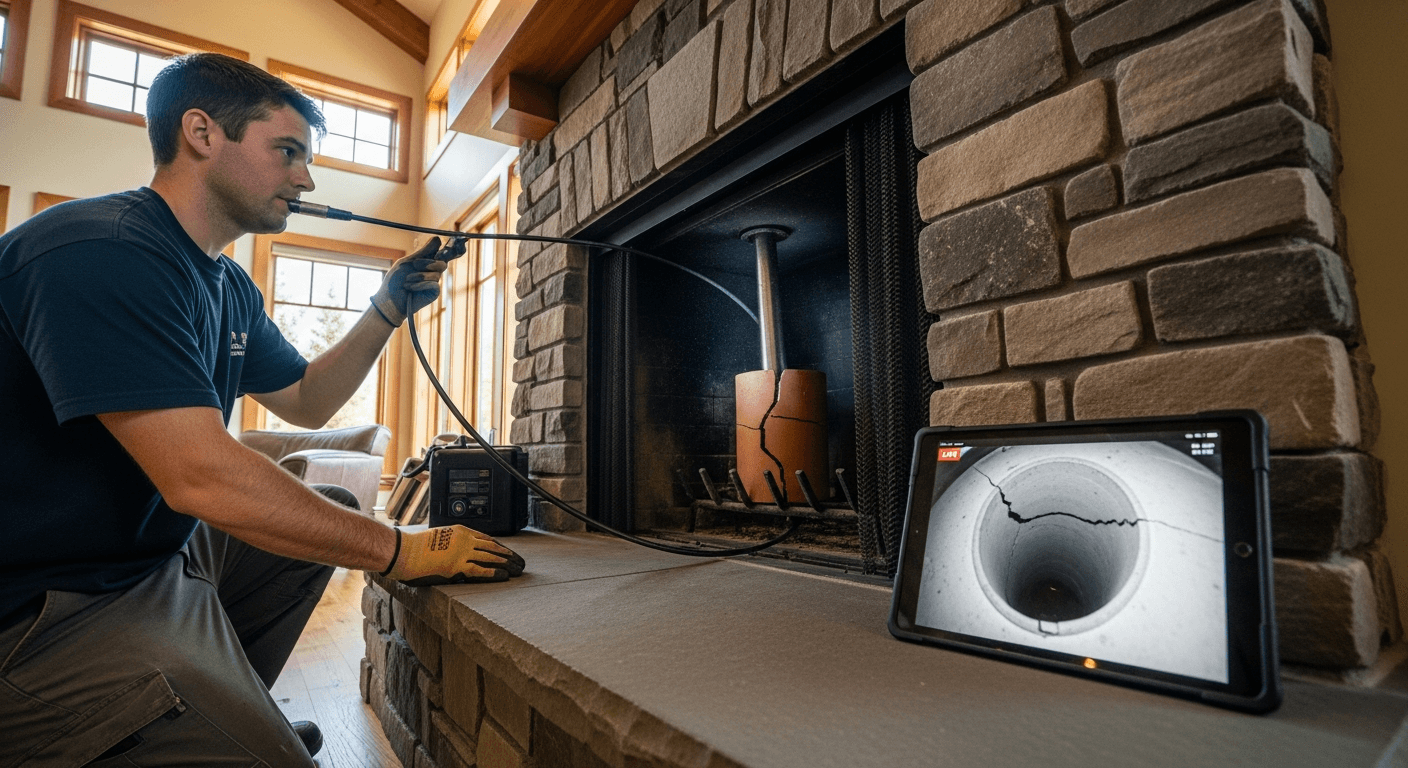
We performed a Level 1 inspection and observed enough to recommend a Level 2 camera scan. The camera revealed that the flexible stainless liner had separated at a seam approximately eight feet above the firebox. Combustion gases — including carbon monoxide — were partially venting into the annular space between the flexible liner and the original clay tile flue rather than exiting at the top cap. The chimney exterior showed no symptoms whatsoever. Relining with a correctly fitted liner and resecuring the insert connection cost approximately $2,200. Had the separation continued to enlarge, carbon monoxide reaching the home's living space through any gap in the surrounding masonry was a realistic outcome.
This scenario is representative, not exceptional. Gas inserts in converted masonry chimneys are among the most common configurations on the Eastside, and a system that lights and heats on demand has already passed the only test most homeowners think to apply.
How to set the right service schedule for your Bellevue home
For gas inserts: schedule a professional inspection every fall before the heating season begins. If you have no documentation of the liner installation or prior service history — common with Eastside homes that have changed ownership — start with a Level 2 camera inspection regardless of how well the insert appears to function. That single inspection establishes a documented baseline and identifies any liner issues before they become carbon monoxide risks.
For wood-burning fireplaces: schedule a sweep and inspection before each burning season and add a mid-season sweep if you burn more than two cords between October and March. Have the crown inspected every two years; Bellevue's rainfall is persistent enough that even a previously sealed crown benefits from reapplication of breathable masonry sealer on a four-to-five-year cycle. Confirm your chimney cap is in place and undamaged before the October rains begin.
For both systems: maintain a simple paper or digital folder with inspection reports, liner documentation, and repair receipts. Eastside buyers and their agents routinely request chimney service history during transactions, and a documented maintenance record is a straightforward way to protect both safety and resale value. A well-maintained chimney on a Bellevue home is a verifiable asset; an undocumented one is a negotiating liability.
Frequently asked questions
How often should a wood-burning chimney be swept in Bellevue?
Once per cord of wood burned, with a minimum of one sweep per active season. Bellevue's wet winters push many homeowners toward under-seasoned firewood, which burns at lower temperatures and produces sticky Stage 2 or Stage 3 creosote — the kind that requires chemical treatment to remove and poses the greatest chimney fire risk. Sweep frequency tied to cord count, not calendar months, is the most accurate approach.
Do gas fireplace inserts need annual chimney inspections if they don't produce creosote?
Yes. Gas inserts vent combustion byproducts including carbon monoxide through a flexible liner, and that liner, its seam connections, and the insert's internal components all degrade over time without visible symptoms. Annual inspections catch cracked firebox panels, failed door gaskets, deteriorating liner sections, and seam separations — none of which are detectable from inside the home or by observing normal operation.
Does homeowners insurance cover chimney repairs in Bellevue?
Standard homeowners insurance typically covers sudden, accidental damage — a chimney damaged by a falling tree or a house fire, for example. It does not cover gradual deterioration, deferred maintenance, or moisture damage that accumulates over multiple seasons. Repointing, crown sealing, and liner replacement are homeowner expenses in virtually all standard policies.
Can Bellevue burn bans affect gas fireplace insert use?
No. Puget Sound Clean Air Agency burn restrictions apply to wood-burning fireplaces, wood stoves, and other solid-fuel appliances. Gas fireplace inserts are exempt and may be operated on any air quality day, including Mandatory Burn Ban days. This exemption applies only when the insert is properly installed and venting correctly — which is one more reason annual inspection matters.
Why does professional chimney sweeping cost more than homeowners expect?
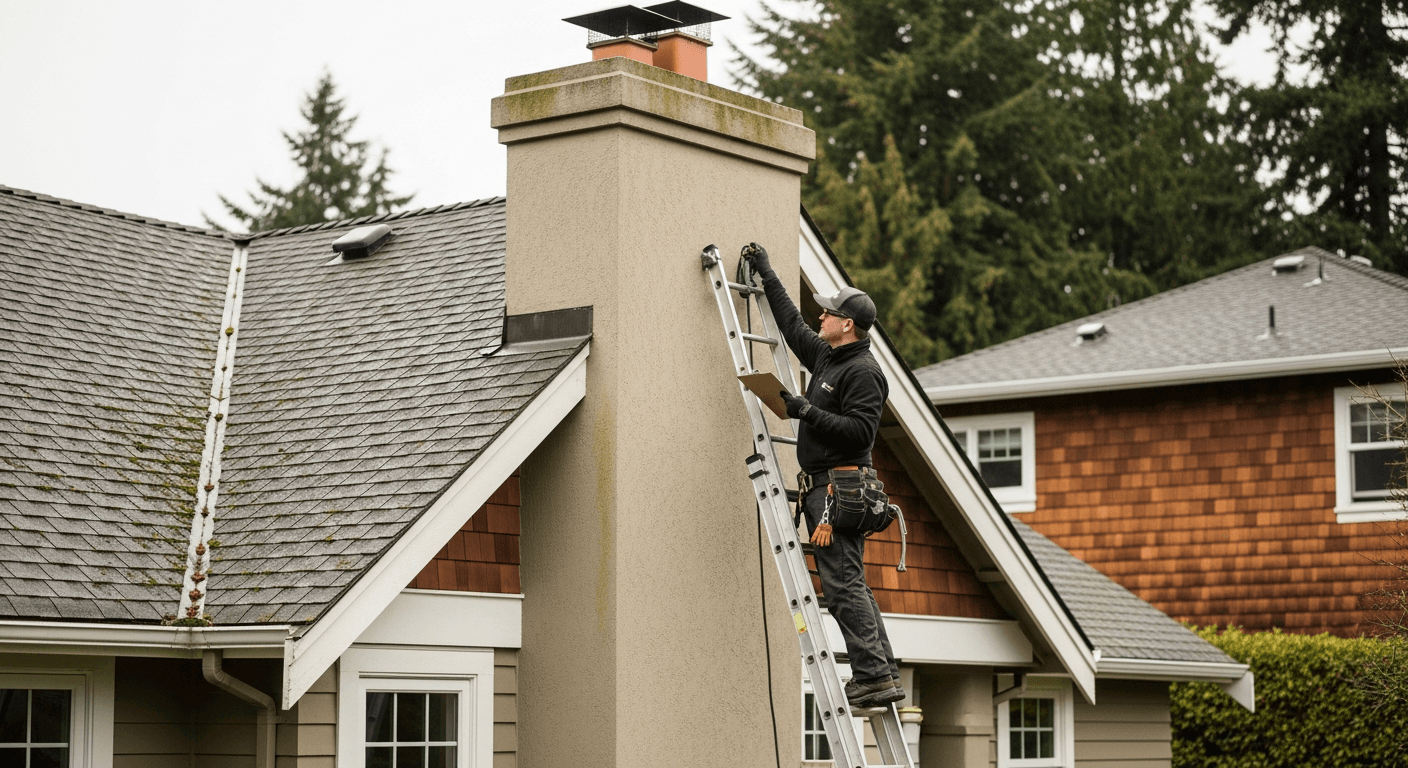
A sweep includes a full inspection of the firebox, damper, smoke chamber, liner, and exterior components in addition to cleaning. Technicians use HEPA-filtered professional vacuum systems to contain fine creosote and ash, and they work at height on roofs — including the steep and complex rooflines common on Eastside homes. Certification, insurance, and specialized equipment are built into the cost. The price reflects skilled work with real safety implications, not a simple cleaning task.
Related services