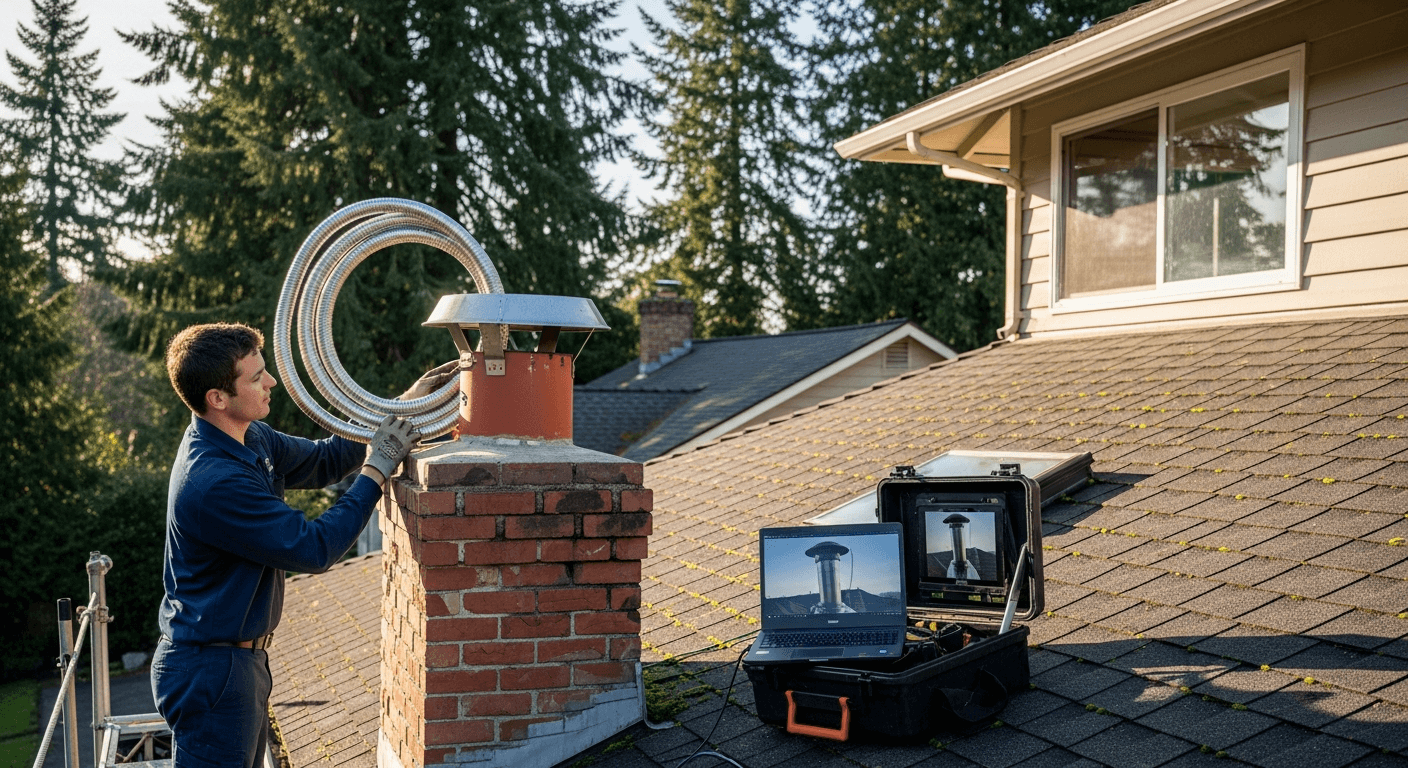
Creosote is the leading cause of chimney fires in wood-burning systems, and in Bellevue's cool, damp maritime climate it advances through its three stages faster than homeowners typically expect. Stage 1 flaky creosote is cleared in a single standard sweep; Stage 2 tarry deposits require a rotary cleaning system and added labor; Stage 3 glazed creosote — disproportionately common in Bellevue homes where wet winters encourage slow, smoldering fires — demands a two-visit chemical conversion treatment or full relining before you can safely light another fire. Scheduling annual service before October, when masonry temperatures drop and the Puget Sound Clean Air Agency burn season begins, keeps most chimneys at Stage 1 and holds removal costs to their minimum.
The Three Stages of Creosote — and Why Stage 3 Is a Different Problem Entirely
Creosote forms when wood smoke cools before it fully exits the flue, leaving combustion byproducts condensed on the liner walls. Every chimney accumulates some creosote, but the form it takes determines both fire risk and removal cost. Stage 1 creosote is a dry, flaky, gray-black dust that a quality chimney brush removes in one pass. If your chimney is swept every year and you burn seasoned hardwood — Douglas fir, alder, or big-leaf maple dried to below 20 percent moisture — this is typically all a Bellevue technician finds.
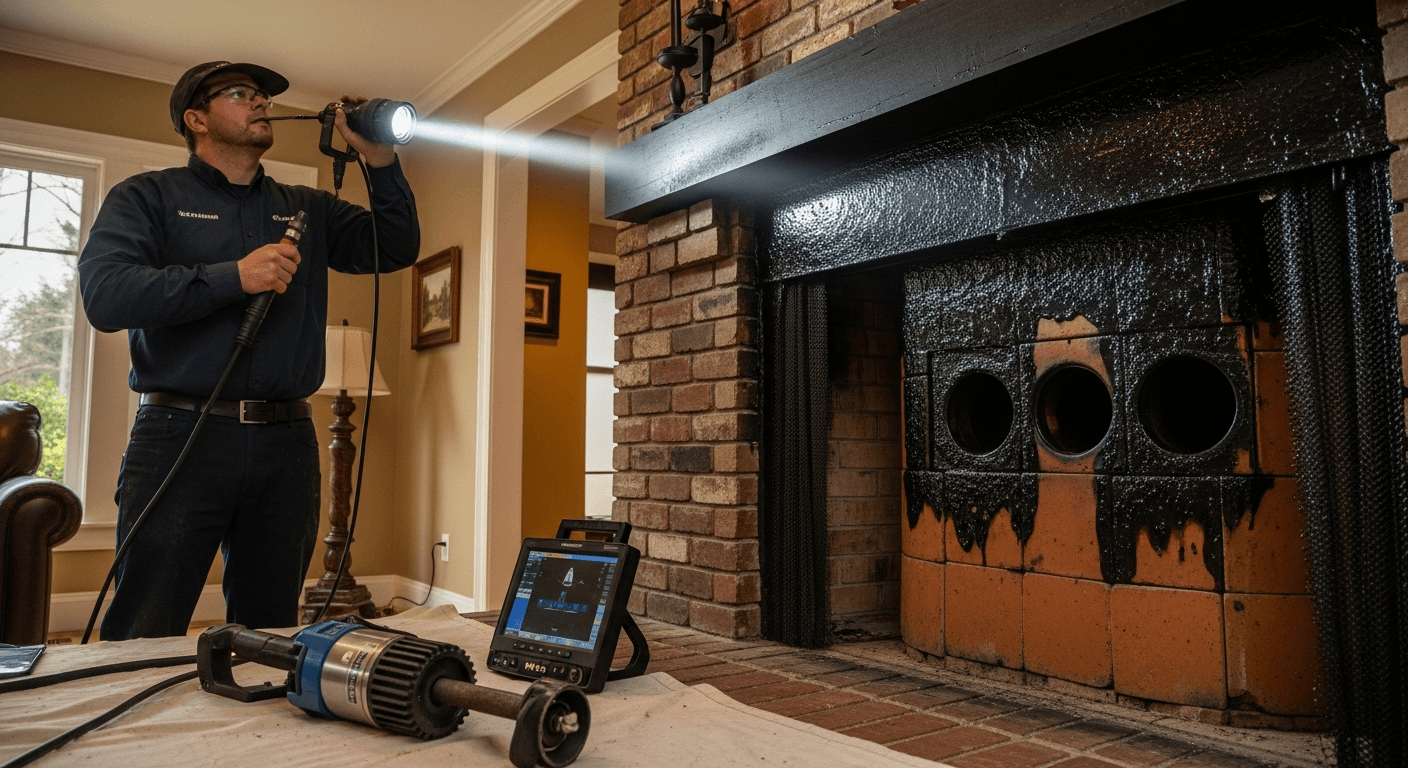
Stage 2 creosote is a sticky, tar-like layer that clings to flue tiles or a stainless steel liner. It requires firmer mechanical scrubbing with a rotary cleaning system and takes 30 to 60 minutes longer than a standard sweep, which is why removal carries a higher service charge. Stage 2 is especially common in Bellevue homes with masonry chimneys used only occasionally — a fireplace run for four or five holiday evenings each season never reaches the sustained flue temperatures needed to exhaust combustion gases cleanly.
Stage 3 — glazed creosote — looks like shiny black paint baked onto the flue walls. It is highly concentrated, ignites at temperatures 200°F lower than earlier-stage deposits, and is completely resistant to mechanical brushing. The correct removal protocol is a two-visit chemical treatment: a conversion product based on magnesium oxide or a similar alkaline compound is applied on the first visit to break the glaze into a removable ash, which is then swept out on the second visit, typically seven to fourteen days later. In cases where the liner has been compromised by a previous chimney fire — hairline fractures in terracotta tile, buckled stainless sections — relining is the only safe resolution. Bellevue's persistent October-through-March drizzle keeps exterior masonry cold and accelerates the condensation conditions that produce glaze rather than flake, which is why our technicians encounter Stage 3 deposits here at a higher rate than in eastern Washington's drier climate.
What Creosote Removal Actually Costs in Bellevue
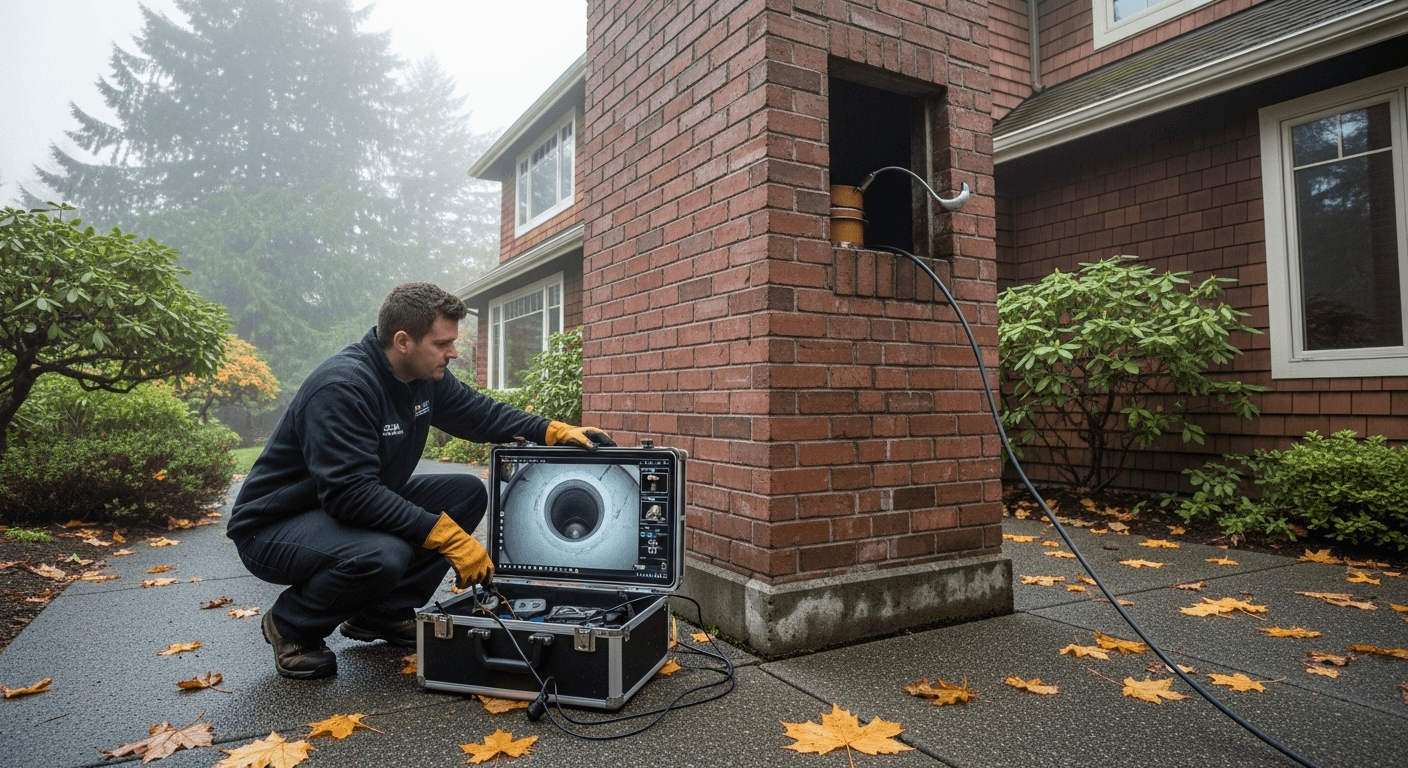
Pricing is determined by the stage your chimney presents when the technician inspects the flue with a camera or high-powered inspection light. A standard sweep removing Stage 1 creosote is the baseline. Stage 2 and Stage 3 require additional labor, specialized equipment, and — for Stage 3 — a mandatory second visit, all of which increase the final invoice. The table above shows realistic Bellevue-area price ranges based on current local service rates.
A Level 1 inspection is bundled with every standard sweep. If Stage 2 or Stage 3 is identified during that inspection, the technician explains the additional scope and cost before any further work begins. Intercepting creosote at Stage 1 is consistently the most economical outcome — the cost difference between a standard sweep and a Stage 3 chemical treatment plus relining can exceed $4,000, which is the single most compelling financial argument for not skipping an annual service appointment.
| Creosote Stage | Condition | Typical Bellevue Service | Estimated Cost Range |
|---|---|---|---|
| Stage 1 | Dry, flaky, gray-black dust | Standard sweep + Level 1 inspection | $175 – $250 |
| Stage 2 | Sticky, tar-like buildup | Rotary cleaning system + extended sweep | $250 – $375 |
| Stage 3 (mild) | Thin glaze, liner intact | Two-visit chemical treatment + sweep | $400 – $600 |
| Stage 3 (severe) | Thick glaze or liner damage | Chemical treatment + stainless steel relining | $1,800 – $4,500+ |
| Post-chimney-fire | Any stage following a flue fire | Level 2 inspection + targeted remediation | $300 – $500+ inspection; repairs vary |
Recommended Cleaning Frequency by Situation
How often a Bellevue chimney needs professional service depends on how the fireplace is used, what fuel is burned, and how Bellevue's maritime climate affects that particular installation. The table below summarizes recommended cleaning frequency for the most common household situations, based on NFPA 211 guidance and local conditions observed by Bellevue Chimney Pros technicians.
| Household Situation | Fuel Type | Recommended Cleaning Frequency | Primary Risk Without Service |
|---|---|---|---|
| Occasional use (4–10 fires per season) | Mixed or softwood | Once per year, September preferred | Stage 2–3 buildup from low flue temps |
| Moderate use (2–4 fires per week, Nov–Mar) | Seasoned hardwood below 20% moisture | Once per year, September preferred | Stage 1–2 buildup; manageable with timely sweeps |
| Heavy use (daily fires for supplemental heat) | Seasoned hardwood below 20% moisture | Twice per year: April and September | Stage 2 buildup even with correct fuel |
| Heavy use (daily fires for supplemental heat) | High-moisture or softwood | Twice per year minimum; inspect mid-season | Rapid Stage 3 glazing, elevated chimney fire risk |
| Chimney unused for 2 or more seasons | N/A | Inspection before any fires are lit | Animal nesting, hidden liner damage, or latent glaze |
| Following any suspected chimney fire | Any | Level 2 inspection before next use | Cracked liner allowing heat or CO transfer to structure |
A Hypothetical Bellevue Scenario: The Fireplace That Only Gets Used at Christmas
Consider a homeowner in Bellevue's Somerset neighborhood who notices a faint tar smell drifting into the living room whenever the gas furnace cycles on — not from an active fire, just from the house warming up. The home has a large masonry fireplace the previous owners used regularly, but the current family has burned perhaps four or five fires total over three years, always with bundled softwood purchased at a grocery store.
When a technician scopes the flue in this type of situation, a textbook Stage 3 glazed deposit approximately a quarter-inch thick is a plausible finding, running from the smoke chamber down through the first three flue tile joints. The off-gassing from that glaze — warmed by radiant heat from the furnace below — explains the tar smell. More concerning, interior tile surfaces in this scenario may show hairline stress fractures consistent with a low-grade chimney fire the owners never detected.
The appropriate resolution is a two-visit chemical treatment to convert and remove the glaze, followed by a Level 2 inspection that can identify any liner damage localized to specific tile sections. A stainless steel liner insert resolves confirmed damage permanently. The takeaway: infrequent use combined with high-moisture softwood is more dangerous than regular use with the right fuel, because the chimney never reaches the sustained temperatures that slow creosote accumulation.
Why Bellevue's Climate Makes Creosote Worse — and What You Can Do About It
Creosote formation accelerates when flue gases cool before they exit the chimney. Bellevue's maritime winters — overnight lows regularly in the high 30s from November through February, with measurable precipitation on roughly 150 days per year — keep exterior masonry cold throughout the burn season. Cold masonry chills the interior flue walls, causing smoke to condense faster and deposit thicker layers with each fire. The same moisture that softens mortar joints and grows moss on chimney crowns in this climate is the underlying driver that causes creosote here to glaze rather than flake.
Practical countermeasures for Bellevue homeowners: burn only seasoned hardwood with a moisture content below 20 percent — a wood moisture meter costs about $20 at any hardware store and removes all guesswork; build hot, bright fires rather than smoldering low ones, since adequate draft prevents condensation; schedule your annual sweep in September before masonry temperatures drop; and install a quality flue-top damper or stainless chase cover to block cold-air infiltration when the fireplace is not in use, which keeps the liner warmer at startup.
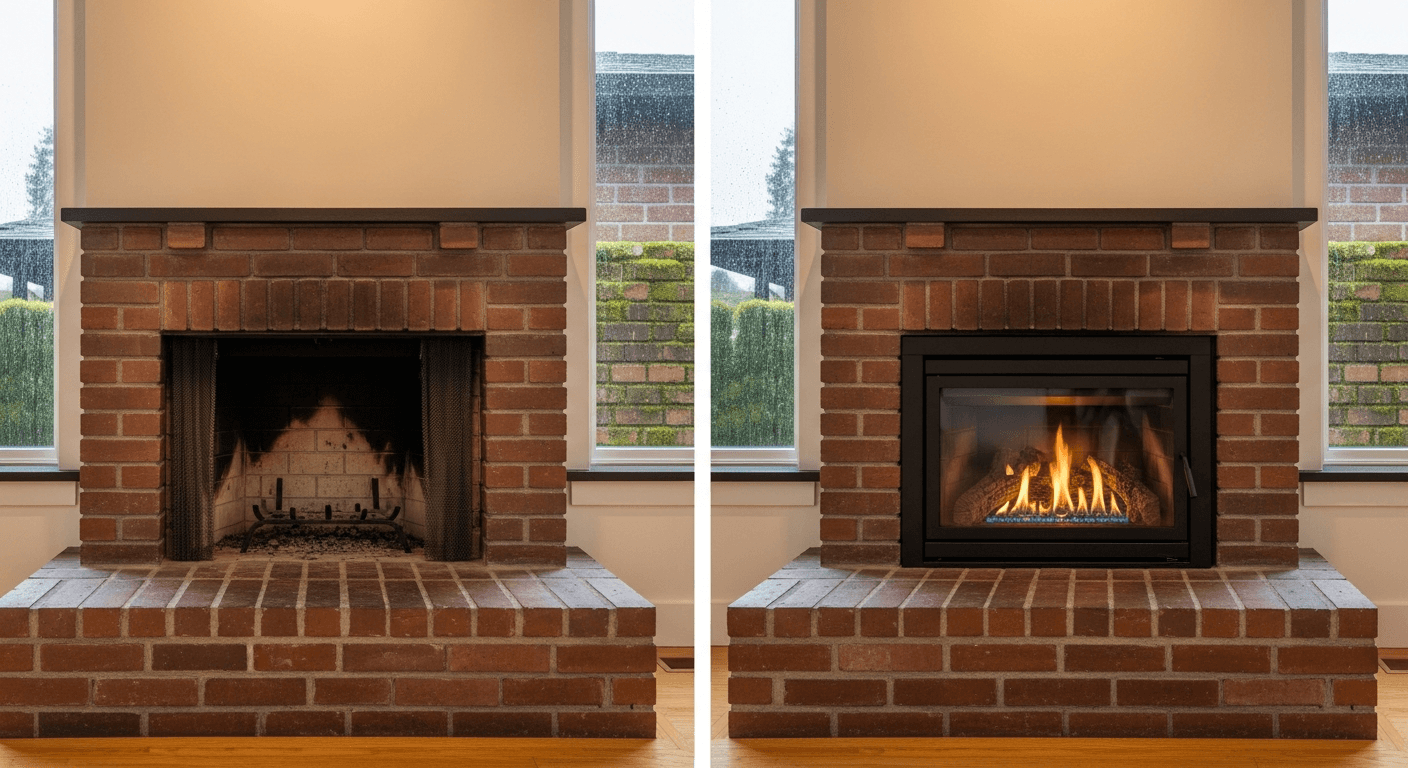
If your home has a gas fireplace insert — common in Bellevue's newer construction and post-2000 remodels — creosote is not a concern, but annual inspection of the venting system, burner assembly, and gas connections remains manufacturer-required and essential for safety. Gas appliances present a different risk profile: carbon monoxide and obstructed vent paths, both of which a qualified technician evaluates during a standard annual service call.
How to Know Which Stage You Have Before You Call
You do not need to self-diagnose — that is precisely what a professional sweep and inspection are for. However, several observable signs suggest buildup beyond Stage 1: a persistent oily or tar smell when the fireplace is warm or when the house heats up on a mild day; visible shiny black streaking on the firebox walls above the damper plate; a damper that feels sticky or will not open fully; or any past incident involving unusual smoke volume, a roaring or rushing sound in the chimney, or a fire that burned unusually hot and extinguished itself rapidly. That last cluster of symptoms is consistent with a past chimney fire and automatically warrants a Level 2 inspection regardless of what the creosote deposit looks like.
For most Bellevue homeowners burning wood two to four evenings per week from November through March, one annual sweep in September or early October is sufficient to hold creosote at Stage 1. If you burn daily throughout winter — as is common in custom homes in the Clyde Hill and Medina areas that use a fireplace for meaningful supplemental heat — twice-yearly service is the right cadence: one sweep in April after the burn season closes and one in September before it opens.
Frequently asked questions
How often does a Bellevue chimney need to be cleaned?
NFPA 211 requires inspection and cleaning at least once per year for any chimney in use. In Bellevue, where damp maritime winters accelerate creosote condensation on cold masonry, scheduling that service in September — before the burn season and before Puget Sound Clean Air Agency advisory days begin — is the right baseline. Households burning daily throughout winter benefit from a second sweep in April.
What is Stage 3 creosote and how is it removed?
Stage 3 creosote is a hard, shiny glaze baked onto flue walls that cannot be removed by brushing. Removal requires a two-visit chemical process: a conversion product is applied on the first visit to break the glaze into a sweepable ash, and the residue is removed on a second visit seven to fourteen days later. If the liner sustained damage from a prior chimney fire, relining replaces the chemical treatment as the correct solution.
Why does Stage 2 or Stage 3 removal cost more than a standard sweep?
Stage 1 creosote in a Bellevue chimney is removed in a single sweep visit. Stage 2 requires a rotary cleaning system and 30 to 60 additional minutes of labor. Stage 3 requires two separate visits, a chemical conversion product, and specialized application equipment. The higher cost reflects documented additional work, not a variable pricing decision.
Can creosote-removal logs substitute for professional cleaning?
Products like Creosote Sweeping Log can help loosen Stage 1 deposits between professional visits but are not a substitute for mechanical cleaning. They have no meaningful effect on Stage 2 or Stage 3 buildup in a Bellevue chimney, and they provide zero information about liner condition — the other critical finding of a professional inspection. Use them as a supplemental tool, not a replacement.
Does the Puget Sound Clean Air Agency burn advisory affect when I should schedule service?
Burn advisories restrict wood burning on stagnant-air days that typically occur November through February. Scheduling your Bellevue chimney sweep in September means your chimney is ready and inspected before the first advisory day of the season, so you can burn on every eligible day without delay and avoid the rushed booking window that fills service calendars in October and November.
Related services