A chimney sweep in Bellevue, WA costs $149–$999, with most homeowners paying $199–$299 for a standard single-flue fireplace with a Level 1 visual inspection included. Three things move the price: how many flues the chimney carries, whether the roof is safely walkable or needs fall protection, and how much creosote has accumulated since the last service — a flue left three or more seasons can take twice the time and push toward the top of the range.
How Often Does a Bellevue Chimney Actually Need Cleaning?
The answer depends on fuel type, burn frequency, and the specific moisture exposure your chimney faces on the Eastside. For a wood-burning fireplace used three or more nights a week through a Bellevue winter, an annual sweep before the season starts is the floor, not the ceiling. If you're burning unseasoned wood or mixing green wood with dry — both common on the Eastside, where homeowners often stockpile whatever fell during a windstorm — creosote accumulates faster than a once-a-year sweep can safely manage. A mid-season check may be warranted in those cases.
Gas fireplace inserts produce far less combustion byproduct, so a professional inspection every one to two years is generally sufficient. But that inspection still matters. Gas combustion generates moisture, and the venting system — particularly the flex connector and exterior termination cap — needs to be confirmed clear and intact each season. Many Bellevue homeowners with gas inserts skip annual service on the assumption that clean-burning gas means a clean chimney. It doesn't: moisture staining, soot accumulation on the firebox interior, and venting blockages from insects or small animals are all documented findings on gas systems that haven't been serviced.
If you purchased a home on the Eastside and have no service records for the chimney, schedule a sweep and a Level 1 inspection before the first fire regardless of when you moved in. This applies especially to the older masonry chimneys found throughout Bellevue's established neighborhoods — Lakemont, Somerset, Phantom Lake, Woodridge — where previous owners may have burned for years without professional service and where hairline liner cracks and deteriorated smoke chamber parging are common findings.
Recommended Cleaning Frequency by Situation in Bellevue
The table below summarizes how often Bellevue and Eastside homeowners should schedule chimney service based on their specific situation. These recommendations account for the region's sustained rainfall, the prevalence of mixed or green wood burning, and the documented risk of Stage 2 and Stage 3 creosote in Pacific Northwest climates.
| Situation | Recommended Frequency | Primary Reason | Key Warning Sign to Watch For |
|---|---|---|---|
| Wood-burning fireplace, 3+ nights per week through Bellevue winter | Annually — before burn season | High creosote accumulation rate; Stage 2 risk within a single season of heavy use | Restricted draw; visible soot at firebox opening |
| Wood-burning fireplace, occasional use (fewer than 10 fires per season) | Every 1–2 years minimum; always inspect if 2+ seasons elapsed | Lower creosote load but moisture infiltration continues between uses | Odor when damper is open; visible staining on firebox interior |
| Wood-burning fireplace, burning unseasoned or green wood | Annually — consider mid-season check | Green wood produces 2–3× more creosote than seasoned wood; Stage 3 glazed creosote risk elevated | Hard, shiny deposits visible inside firebox or on damper plate |
| Gas fireplace insert, regular Eastside use | Every 1–2 years | Low combustion byproduct but venting blockages and moisture damage accumulate | Sulfur or musty odor on startup; pilot irregularities |
| Any chimney with no documented service history | Before the very next fire, regardless of elapsed time | Unknown creosote level, liner condition, and blockage status; cannot be assessed from the living room | No records; previous owner burn habits unknown |
| Chimney in Bellevue neighborhood with mature tree canopy (Lakemont, Somerset, Woodridge) | Annually — inspect crown and cap for moss, algae, debris | Tree debris accelerates moisture infiltration; nesting animals common | Moss on crown; debris visible at cap; animal sounds in flue |
What You Should Expect to Pay: Chimney Sweep Costs in Bellevue, WA
Pricing in Bellevue runs above national averages, reflecting the cost of operating a licensed, insured, CSIA-certified business on the Eastside. What you pay depends on the type of system, the level of creosote buildup, and whether a Level 1 inspection is bundled with the cleaning — which it should be at any professional appointment.
Quotes that fall dramatically below the ranges below are a warning sign. A $69 chimney sweep special typically means a technician with a basic brush, no HEPA-filtered vacuum containment system, no meaningful inspection, and no liability coverage. That combination produces soot-stained interiors, missed hazards, and no documentation of the chimney's condition. A professional sweep includes a commercial-grade vacuum sealed to the firebox before any brush enters the flue, a systematic inspection of the firebox, smoke chamber, liner, crown, and cap, and a written summary of findings.
The table below reflects realistic pricing for common chimney services in the Bellevue area as of 2025. Use these ranges to benchmark any quote you receive.
| Service | Typical Bellevue Price Range | What's Included | Best Timing |
|---|---|---|---|
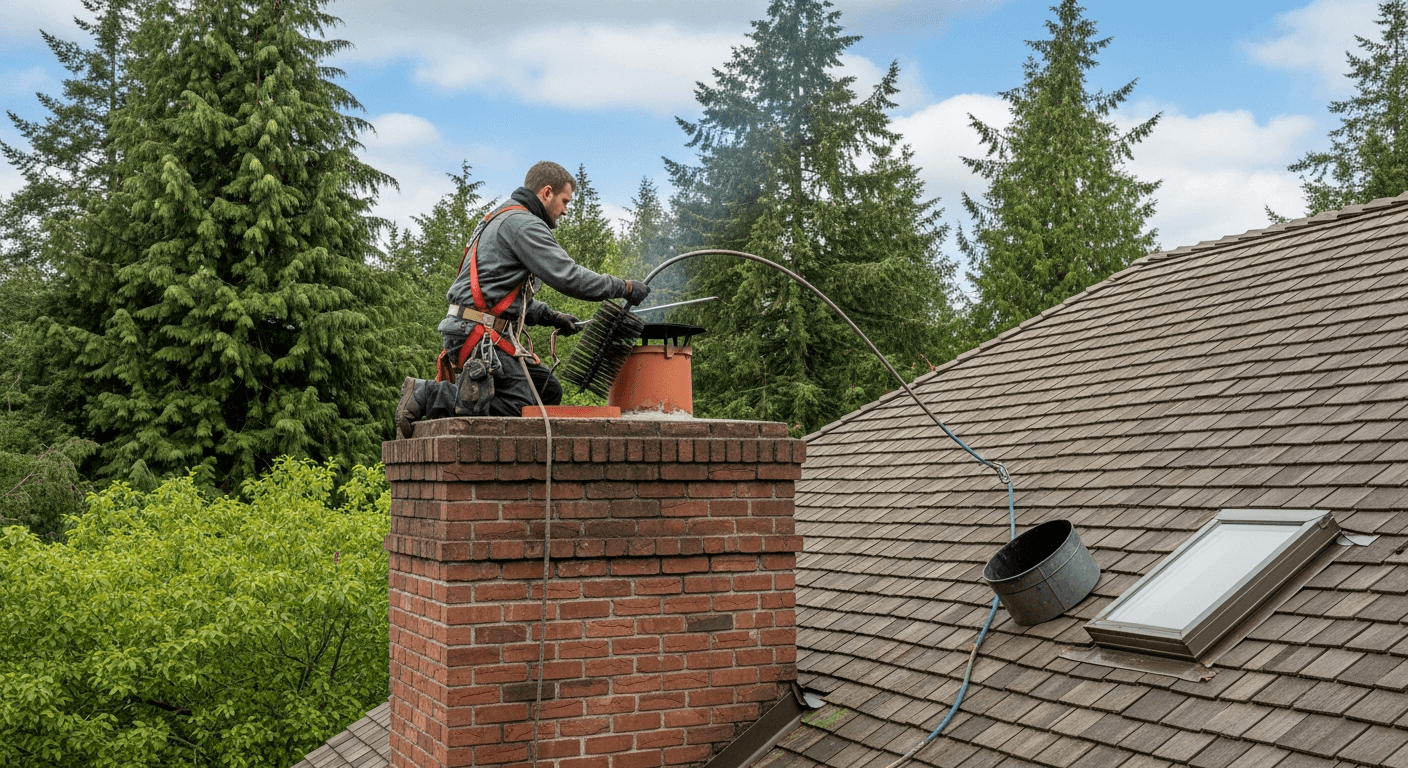
| Wood-burning fireplace sweep + Level 1 inspection | $199 – $299 | Flue brushing, HEPA vacuum containment, firebox, smoke chamber, cap and crown visual inspection, written findings | July – October |
| Gas fireplace insert cleaning + inspection | $149 – $229 | Venting and flex connector check, burner inspection, firebox cleaning, exterior termination cap inspection | Spring or early fall |
| Heavy creosote (Stage 2) removal | $299 – $999 | Rotary cleaning system, full flue and smoke chamber inspection, follow-up condition assessment | Before burn season |
| Glazed creosote (Stage 3) chemical treatment + removal | $400 – $700+ | Chemical desiccant application, mechanical removal, liner integrity assessment, documentation | As discovered — treat as urgent |
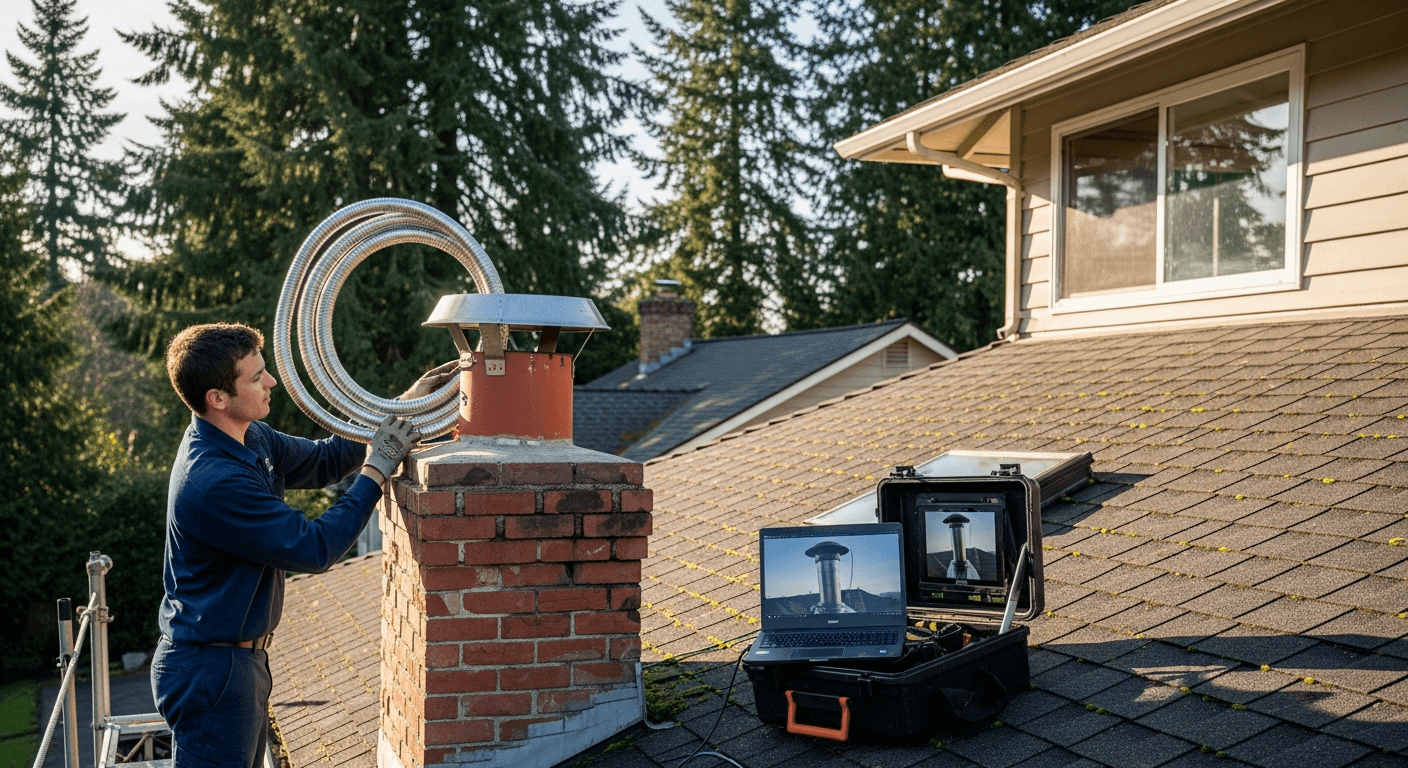
| Level 2 inspection (video camera scan) added to sweep | $100 – $175 additional | Full video scan of liner, joints, and smoke chamber; digital report with images | Real estate purchase, after any chimney fire, before major repair |
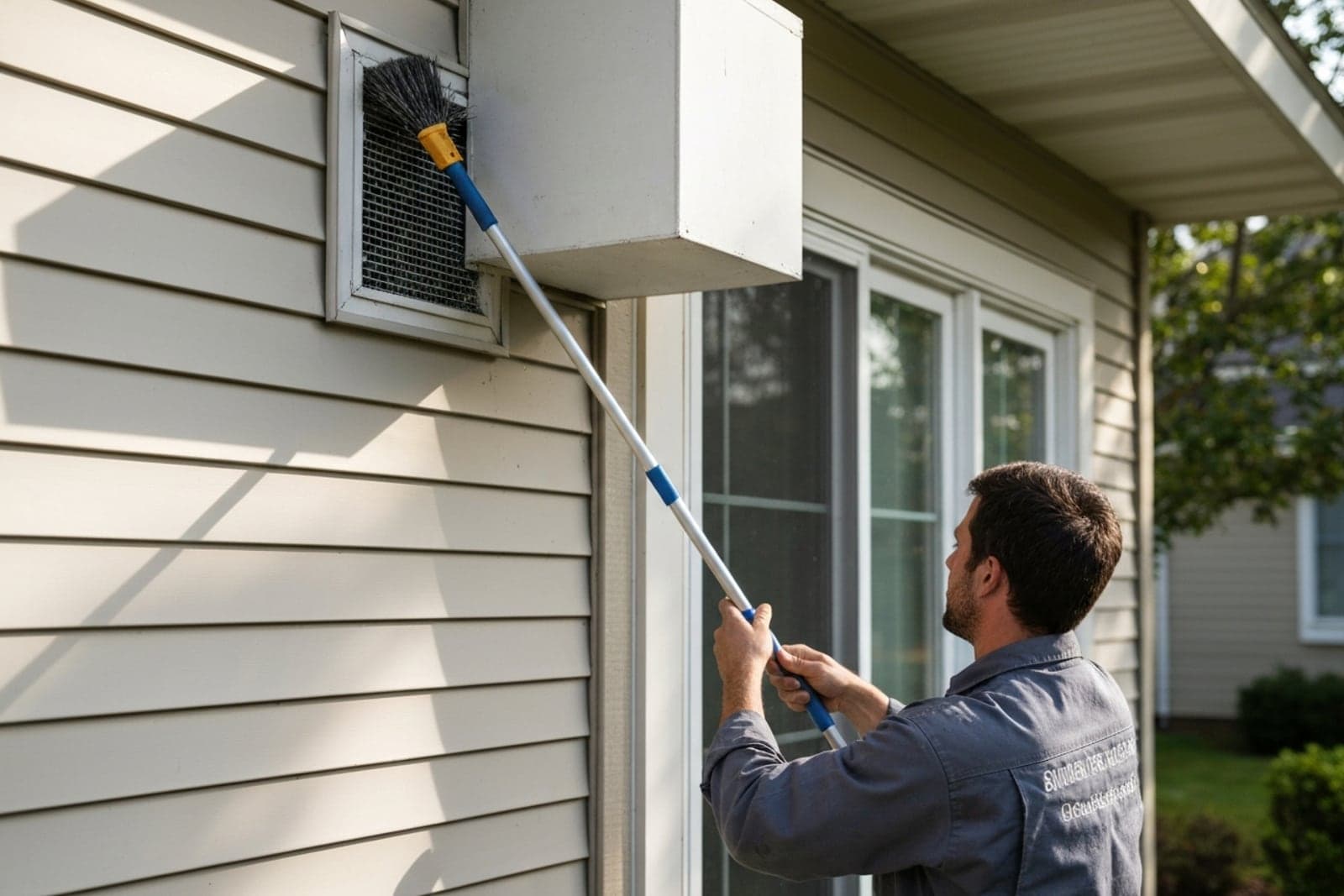
| Dryer vent cleaning (add-on) | $89 – $149 | Full-length vent brushing and blow-out, lint trap area cleared, exterior vent cover checked | Annual — any season |
A Bellevue Customer Scenario: The Gas Insert That Hadn't Been Serviced in Four Years
Consider a hypothetical scenario that illustrates a common Eastside pattern: a homeowner in the Lakemont neighborhood calls in early October after noticing a faint sulfur odor when the gas insert runs. The home is well-maintained — custom masonry surround, newer glass doors — and the previous owners left paperwork showing the insert was installed about five years prior. There is no record of a professional cleaning since installation.
When a technician pulls the insert for inspection, the flex venting connector behind the unit has a partial blockage from a wasp nest that built up over two summers. The nest has partially collapsed into the liner, restricting airflow enough to cause incomplete combustion on cold-start cycles — the source of the odor. The liner shows moisture staining consistent with condensate sitting longer than normal, a predictable result of restricted venting in an Eastside climate that delivers sustained rain from October through April.
The repair requires a full cleaning, a replacement flex connector, and a sealant application around the exterior termination cap where the wasps found entry. Total cost: just under $400. Had the homeowner run the insert through another heating season without service, the restricted venting would have continued allowing carbon monoxide to migrate toward the living space during cold-start cycles. Wasp and paper-wasp nest blockages in gas venting terminations are a documented, recurring finding on the Eastside — not an edge case.
Why Bellevue's Climate Makes Annual Sweeping Non-Negotiable
Bellevue's 38 to 45 inches of annual precipitation creates chimney deterioration patterns that homeowners from drier climates don't anticipate. Moisture infiltrating the flue during fall and winter combines with combustion acids to form a corrosive condensate that attacks mortar joints and liner seams from the inside. When a chimney goes without annual sweeping and inspection, that damage compounds over multiple seasons — invisibly, until a repair that could have cost $300 becomes a liner replacement that costs $3,000.
Glazed creosote — the hard, tar-like Stage 3 deposit — is a specific Pacific Northwest risk. It forms when flue temperatures run consistently low, which happens when homeowners burn small, smoldering fires to take the edge off a cool evening rather than building full, sustained fires with a completely open damper. Many Eastside homeowners burn exactly this way: a modest fire on a damp October night, green wood mixed with dry, damper partially closed to slow the burn. This pattern produces glazed creosote that a standard brush cannot remove and that represents a documented chimney fire hazard. Chemical treatment followed by mechanical removal is the only solution, and it costs significantly more than a standard sweep.
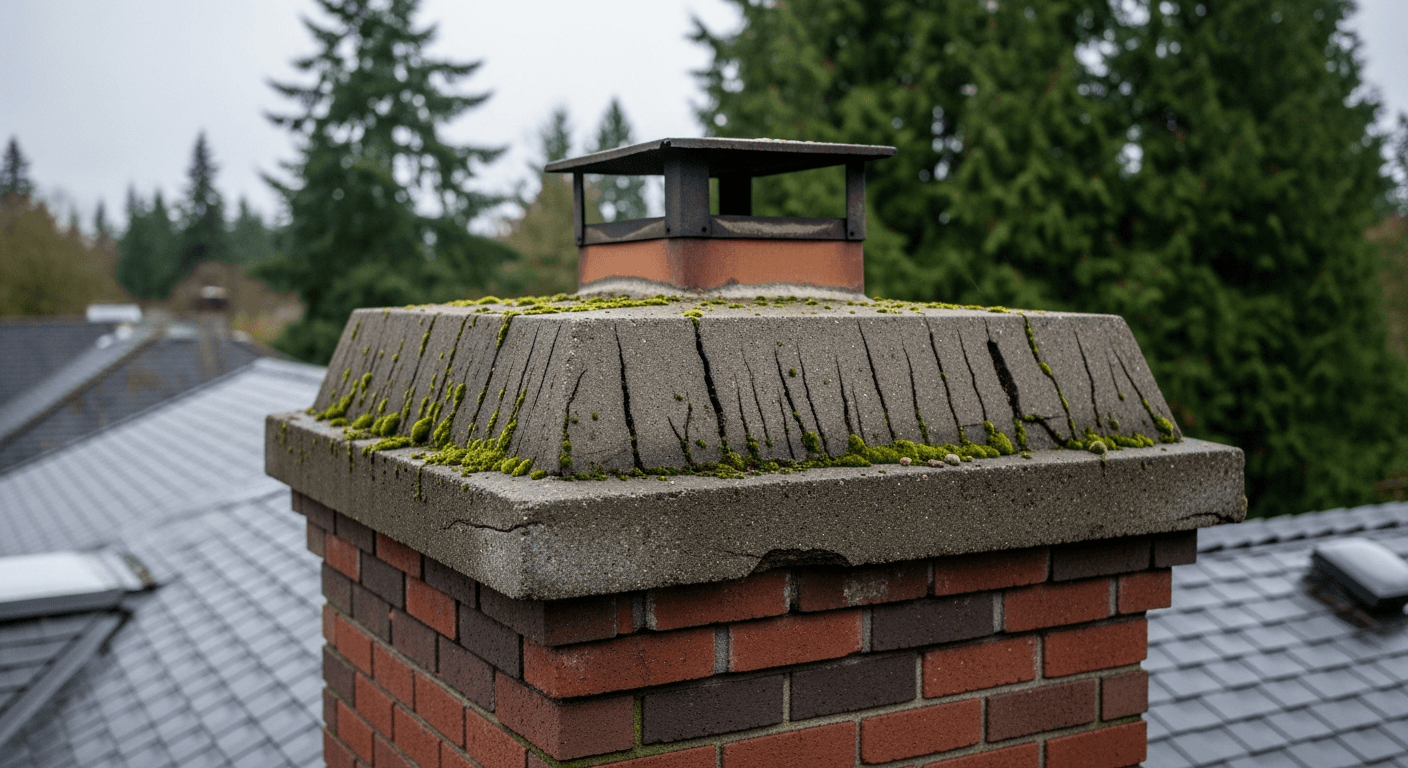
Moss and algae on chimney crowns and exposed brick are the visible symptoms of the moisture problem, and they're common on Eastside homes with mature tree canopy overhead. But the hidden damage — inside the liner and at the smoke chamber — is what drives chimney fires and carbon monoxide events. Annual sweeping consistently catches these issues while they're still repair-scale rather than rebuild-scale.
How to Schedule Smartly and Avoid the Fall Rush
The busiest period for chimney work on the Eastside runs from mid-September through early November, when homeowners realize burn season has arrived and every company's schedule compresses within days. Booking in July or August delivers better appointment availability, more flexibility on scheduling windows, and a technician who isn't moving between back-to-back calls under time pressure.
If you have a wood-burning fireplace, schedule your sweep before the first Puget Sound Clean Air Agency burn ban of the season. PSCA issues particulate burn bans during stagnant air events that typically begin in October and November in the Puget Sound basin. A chimney that hasn't been inspected shouldn't be fired the moment a ban lifts — which is exactly the pressure that leads homeowners to use fireplaces that haven't been cleared for safe operation.
Gas insert owners are better served by spring scheduling. Booking in April or May — after the heating season ends and before summer fills calendars with other home projects — means any moisture intrusion, animal entry, or venting damage from the wet season gets caught before it has months to worsen. It also keeps your system documented and ready for the following fall without a last-minute call in October.
Frequently asked questions
How often does a chimney need to be cleaned in Bellevue?
Wood-burning fireplaces used regularly through an Eastside winter should be swept annually, ideally in July or August before burn season. Gas fireplace inserts in Bellevue need professional cleaning and inspection every one to two years. Any chimney in the Bellevue area with no documented service history should be inspected before the next fire, regardless of when it was last used.
What does a chimney sweep cost in Bellevue, WA?
A professional wood-burning fireplace sweep with a bundled Level 1 inspection runs $199 to $299 in Bellevue. Gas insert cleaning and inspection runs $149 to $229. Stage 2 heavy creosote removal runs $299 to $999. Quotes well below these ranges typically indicate no HEPA vacuum containment, no meaningful inspection, and potentially unlicensed work. Confirm the technician holds CSIA certification and carries liability insurance before booking.
Does homeowners insurance cover chimney cleaning or repairs?
Homeowners insurance covers chimney damage from sudden, accidental events — a chimney fire, lightning strike, or wind damage to the cap and crown. It does not cover damage from deferred maintenance, gradual deterioration, or creosote buildup. A documented annual service record strengthens any claim you do file by demonstrating the chimney was properly maintained prior to the event.
What does a Level 2 chimney inspection cost in Bellevue?
Added to a standard sweep appointment in Bellevue, a Level 2 video camera inspection typically runs $100 to $175 additional. A standalone Level 2 inspection runs $250 to $400. It is required when purchasing a home, after any chimney fire or significant seismic event, and when a liner replacement or major repair is being evaluated.
Is it safe to use a fireplace that hasn't been swept in two or more years?
No — not without a professional inspection first. After two or more seasons without service, creosote deposits in a Bellevue chimney may have reached Stage 2 or Stage 3 levels, mortar joints may have deteriorated from moisture cycling, and insect or animal nesting may be restricting the flue. None of these conditions are visible from inside the living room. Have the chimney inspected and cleared before the first fire of the season.
What is the average price to sweep a chimney?
Nationally the average sits around $200–$300 for a standard single-flue sweep. In Bellevue and across the Eastside the working range is $149–$999, with most homeowners paying $199–$299. Price moves with flue count, roof access, and how much creosote has built up since the last service.
Why is chimney sweeping so expensive?
Most of the cost is not the brushing. It is the containment — negative-air equipment and drop cloths so soot never enters the room — plus roof access and fall protection, the camera check that comes with a proper sweep, and the liability insurance any legitimate operator carries. A visit that skips those steps is cheaper because it is a different, lesser job.
What is the difference between chimney sweeping and chimney cleaning?
There is no real difference. 'Sweeping' is the traditional trade term and 'cleaning' is the plain-language one, and companies use them interchangeably. What matters is the scope: whether the full flue is brushed from top to bottom, whether the smoke chamber and firebox are included, and whether a Level 1 visual check comes with it.
How do I find a good chimney sweep?
Look for four things. A CSIA certification or equivalent credential. A current Washington State contractor registration you can verify on the L&I website. A written scope that says exactly what is included before you book. And before-and-after photos of the flue on completion. Treat urgent pressure to authorise a large repair on the spot as a reason to get a second opinion.
Related services