Yes — if your liner is cracked, deteriorated, or was never installed after a gas insert conversion, your Bellevue home has an active safety hazard, not a deferred maintenance item. Puget Sound's 38-inch annual rainfall accelerates clay tile breakdown faster than most homeowners expect, and a failed liner is among the leading documented causes of house fires and carbon monoxide intrusion in otherwise well-maintained Eastside homes. The right liner, properly installed, resolves the problem once and lasts 25 to 50 years.
What a Chimney Liner Actually Does — and Why Bellevue's Climate Destroys Them
A chimney liner has three jobs: contain combustion gases so they exit safely to the exterior, shield the surrounding masonry from heat and corrosive byproducts, and size the flue correctly so your appliance drafts efficiently. Without a functioning liner, superheated gases transfer through deteriorated mortar joints into adjacent framing — a documented ignition path for house fires — and carbon monoxide seeps through hairline cracks into living spaces before any alarm triggers.
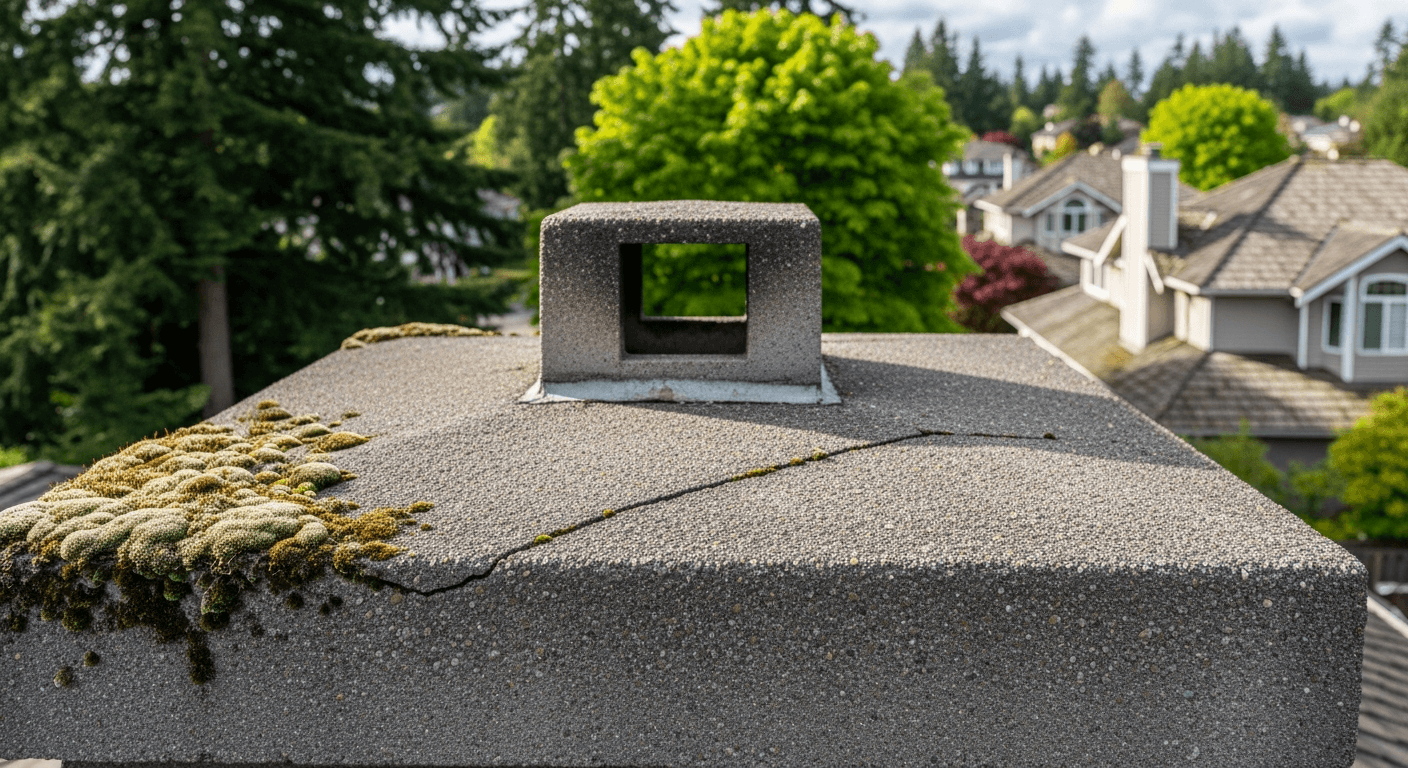
Bellevue's climate is particularly destructive to liner systems. The region averages roughly 38 inches of rain annually, and the heaviest precipitation falls October through March — the same months chimneys work hardest. Water infiltrating through a porous crown, failed mortar joints, or a missing cap reaches clay tile and drives freeze-thaw spalling. Terra-cotta flue tiles, the standard liner material in virtually every masonry chimney built on the Eastside before the mid-1990s, are especially vulnerable: a single crack admits moisture, the crack widens through the next winter, and within two or three seasons one damaged tile becomes a compromised flue section.
Glazed creosote — the dense, tar-like third-stage deposit common in chimneys serving wood-burning appliances in cool, damp climates — attacks clay tile chemically when it ignites during a chimney fire. Even a minor chimney fire, one a homeowner may never notice, can fracture an entire tile liner through thermal shock. A second failure mode is just as common in Bellevue: liner incompatibility. Many Eastside homes have older masonry chimneys — originally sized for large open fireplaces — that were later connected to smaller, high-efficiency gas inserts during renovations. An oversized flue connected to a modern gas insert produces chronic condensation, acidic runoff, and poor draft regardless of how sound the tile appears.
The Three Relining Options — and Which One Fits Your Appliance
The correct liner depends on your appliance type, flue height and geometry, and the condition of existing masonry. Here is how the three main options compare for Bellevue homeowners.
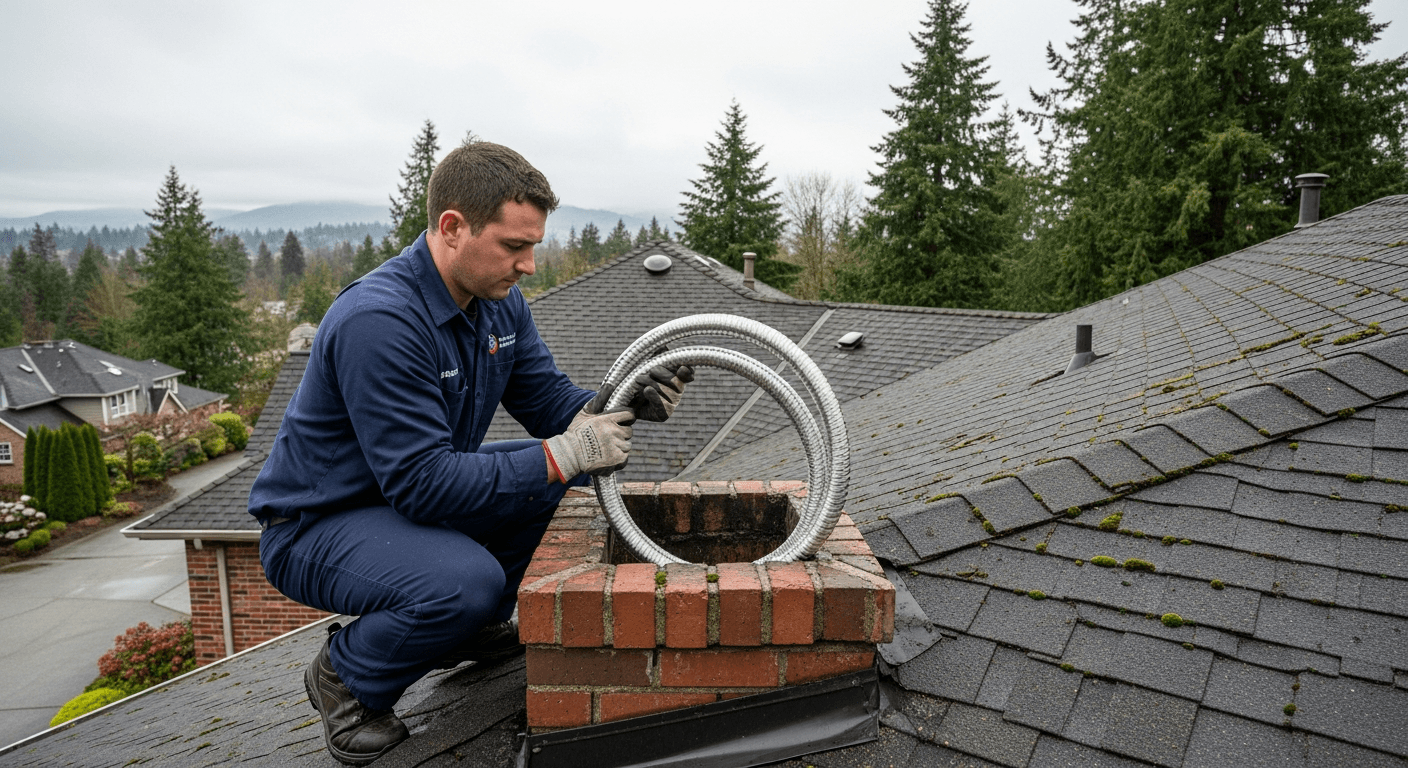
Flexible stainless steel liner systems are the most common relining solution for Bellevue's existing masonry chimneys. A corrugated stainless tube is lowered inside the existing flue, connected to the appliance collar at the firebox, and capped and flashed at the top. Flexible liners accommodate the slight offsets built into many Eastside craftsman-era and mid-century modern chimneys. Gas appliances require a 316L alloy liner; wood-burning appliances require the heavier 304 alloy. A single-flue installation typically takes one day.
Rigid stainless steel liner sections offer a smoother interior bore and are preferred for tall, straight flues — common in the larger custom masonry chimneys found in Bellevue's Clyde Hill, Somerset, and West Bellevue neighborhoods. They cost moderately more than flexible systems but produce slightly better draft and are easier to brush-clean annually.
HeatShield or poured-in-place castable ceramic systems apply a resurfacing compound to the interior of the existing flue, rebuilding the liner wall without removing tiles. This is the only method that restores the original flue dimensions and the only viable option when existing tiles are structurally intact but porous or lightly cracked. It is also the most expensive option and requires specialized mixing and application equipment — not every contractor offering chimney work in the region is equipped or certified to do it.
What Chimney Relining Costs in Bellevue in 2025
Liner costs vary based on flue height, liner diameter, alloy selected, and whether prep work — tile debris removal, offset correction, cap replacement, or connection hardware — is required. The figures below reflect typical ranges for single-family homes in Bellevue as of 2025. Two-story and taller chimneys, and those with offsets or partial obstructions, fall toward the higher end of each range.
One critical note for gas fireplace insert owners: a liner is not optional. Washington State building code and NFPA 54 require that any gas appliance connected to an existing masonry flue use a properly sized, listed liner. A significant number of Eastside homeowners who had gas inserts installed during 2010s renovations discover years later that the installer connected directly to the original oversized, unlined flue — a code violation that can affect insurance coverage and create measurable CO risk.
| Liner Type | Best For | Typical Bellevue Cost Range | Expected Lifespan |
|---|---|---|---|
| Flexible stainless steel (316L) | Gas inserts and gas fireplaces | $1,200 – $2,500 | 20 – 30 years |
| Flexible stainless steel (304) | Wood stoves and wood-burning fireplaces | $1,500 – $3,000 | 20 – 25 years |
| Rigid stainless steel sections | Straight flues, wood or gas appliances | $2,000 – $4,000 | 25 – 50 years |
| HeatShield / poured-in-place ceramic | Intact but porous or lightly cracked clay tile | $3,500 – $6,500 | 50+ years |
| Full clay tile replacement (open masonry rebuild) | Severely deteriorated or collapsed flue tile | $5,000 – $10,000+ | 50+ years |
A Bridle Trails Homeowner Found Out the Hard Way — What a Cracked Liner Looks Like at Inspection
A homeowner in the Bridle Trails neighborhood called us last October after their heating contractor noted — almost as an aside — that the chimney connected to their gas fireplace insert was worth having looked at. The insert had been installed during a living room renovation roughly four years earlier. Drafts seemed normal, the appliance functioned without issue, and there had been no detectable smell or smoke.
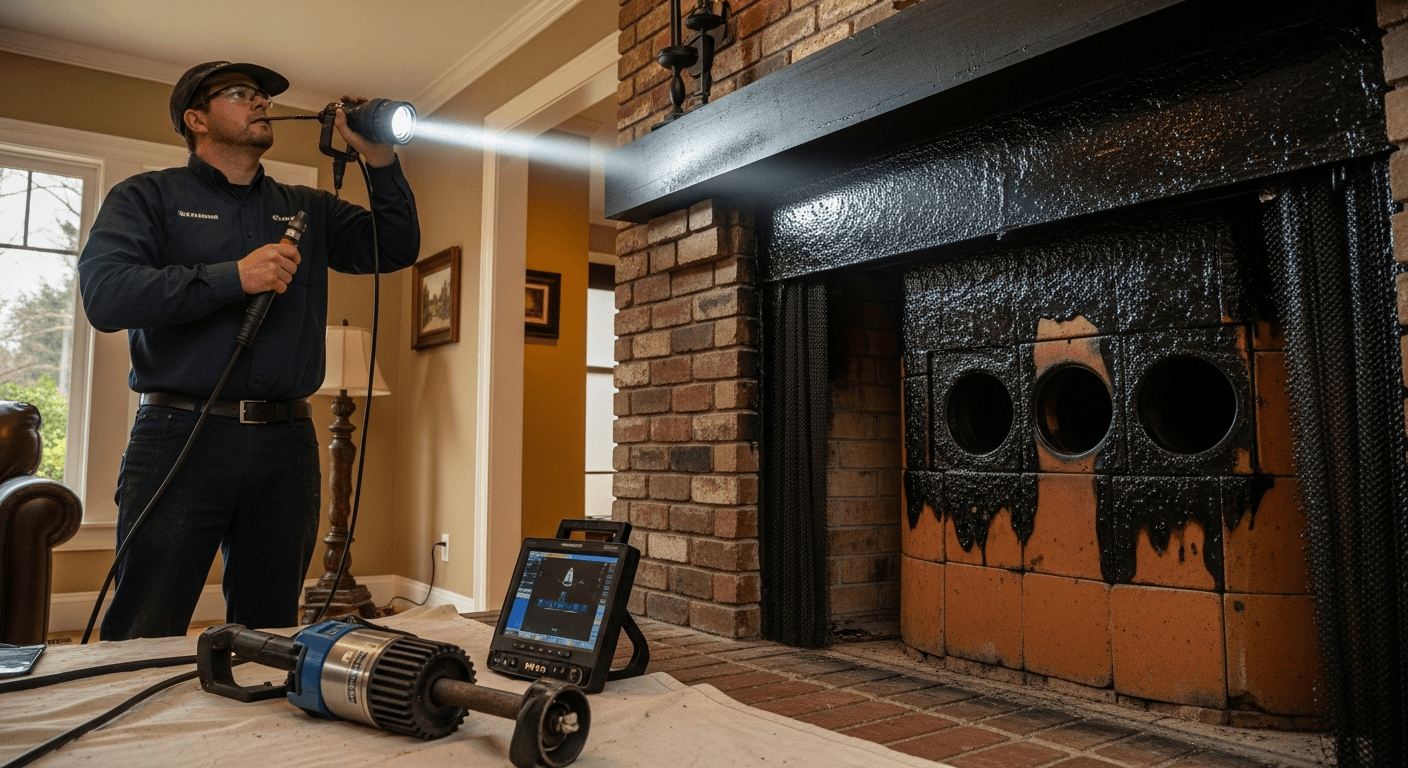
Our Level 2 camera inspection revealed that the original 1980s clay tile flue had never been lined after the insert was installed. The insert's 4-inch exhaust collar had been adapted to the original 8-inch flue with a sheet-metal reducer — technically operational but both a code violation and a condensation trap. The high-efficiency insert's cooler exhaust gases were condensing against the cold tile walls, and four years of acidic condensate had dissolved the mortar joints between two tile sections near the flue's upper third. On warm, breezy days combustion gases vented normally; on cold, still days with a weak stack effect, our measurements showed a backdraft risk into the living space.
We installed a 4-inch 316L flexible stainless liner the following week, connected it directly to the insert collar with the correct transition hardware, and fitted an insulated top cap. Total cost was $1,875. The homeowner's reaction was unambiguous relief — they had two young children and had used the fireplace several nights a week the previous winter without knowing the condition of the flue. This scenario is not unusual on the Eastside: gas insert installations from the 2010s and early 2020s frequently bypassed the liner step to reduce project cost or because the installer lacked chimney certification.
How to Know If Your Bellevue Chimney Liner Needs Replacement
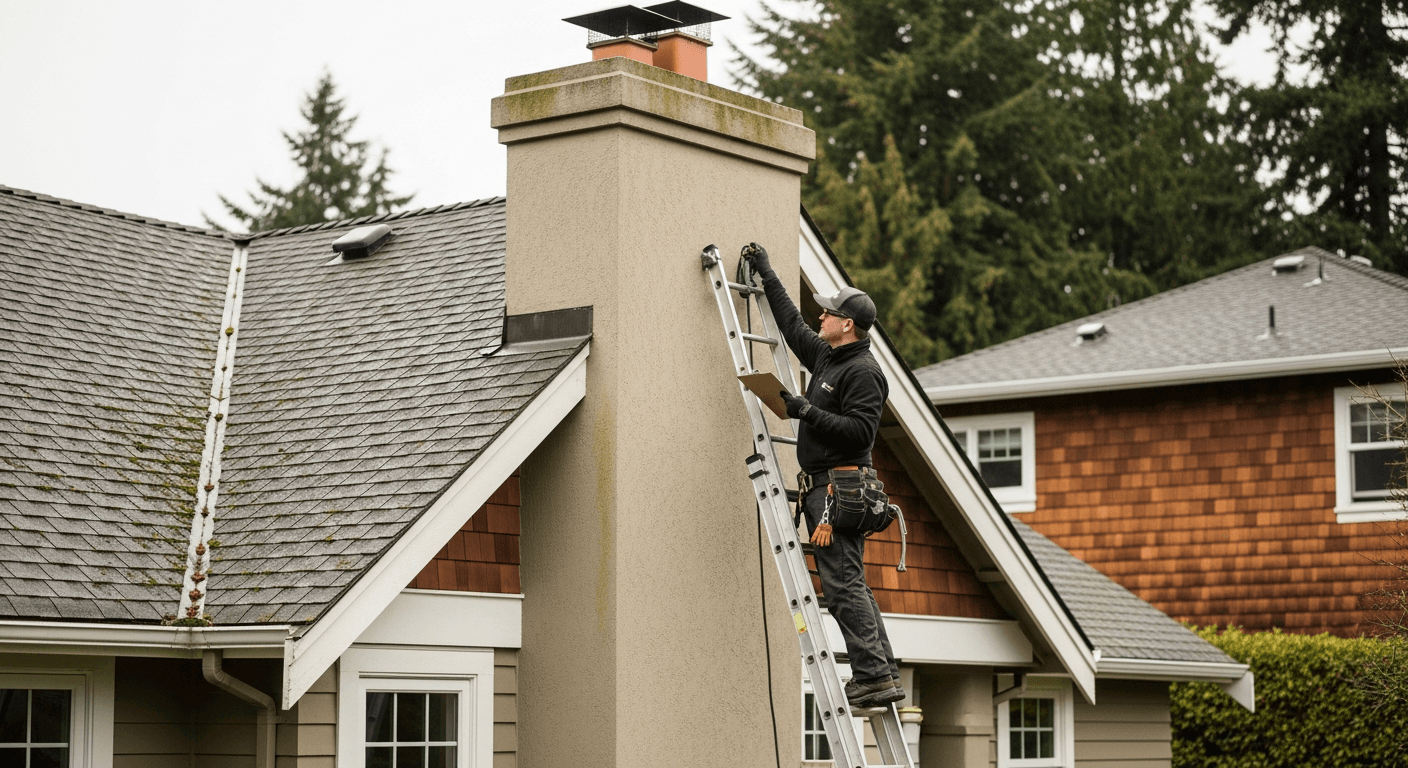
A liner problem is almost never visible from ground level or from inside the firebox. The only reliable diagnostic is a camera inspection — the video scanning performed as part of a Level 2 chimney inspection. Conditions that should prompt an inspection immediately include: any chimney fire in the past (a roaring sound from the flue, visible sparks or flames from the cap, or a fire department response); a gas insert or wood stove installed without paperwork documenting liner work; white efflorescence staining on exterior masonry above the roofline; a persistent smoke or gas odor in the home after appliance use; or a recent home purchase, since seller disclosures rarely include accurate chimney liner history.
Puget Sound Clean Air Agency wood-burning restrictions add a practical scheduling reason to inspect early. When burn restrictions lift in fall and air quality improves, homeowners want to use their fireplaces immediately — not wait two to three weeks for a liner installation opening. We recommend booking inspections in August or September so any relining work is complete before October demand fills the schedule.
If you are buying a home in Bellevue, do not rely on the general home inspection for liner assessment. Most home inspectors do not carry chimney cameras and cannot see beyond the first few feet of flue. A dedicated Level 2 chimney inspection before closing is the only way to know the condition of what you are purchasing.
Frequently asked questions
How long does a chimney liner last in Bellevue's climate?
Clay tile liners last 50 years under ideal conditions, but Bellevue's wet winters typically cause cracking and mortar joint failure in 20 to 30 years. Flexible stainless steel liners last 20 to 30 years depending on alloy and fuel type. Poured ceramic resurfacing systems routinely exceed 50 years when the underlying masonry is sound.
Is a chimney liner required by code for a gas fireplace insert in Washington State?
Yes. Washington State building code and NFPA 54 require a properly sized, listed liner for any gas appliance connected to a masonry flue. An unlined or incorrectly sized flue is a code violation that can void your homeowner's insurance coverage in the event of a claim.
Can I use my fireplace while waiting for a liner replacement?
No. Once an inspection has identified a cracked, missing, or code-noncompliant liner, the appliance should remain off until repairs are complete. The carbon monoxide and fire risks from a compromised liner are not reduced by limiting use frequency.
Will homeowners insurance cover chimney liner replacement in Washington?
Possibly, if the damage resulted from a sudden event such as a chimney fire or storm. Damage from gradual moisture intrusion, normal wear, or a prior code-violation installation is typically excluded. Document the cause with your inspection report and contact your insurer promptly — delays reduce coverage options.
How long does chimney liner installation take?
A standard flexible stainless steel liner in a single-flue Bellevue masonry chimney takes four to six hours and is completed in one visit. Poured ceramic resurfacing requires two visits spaced 24 hours apart for the compound to cure. A full clay tile replacement as part of an open masonry rebuild takes two to four days depending on chimney height and access.
Related services