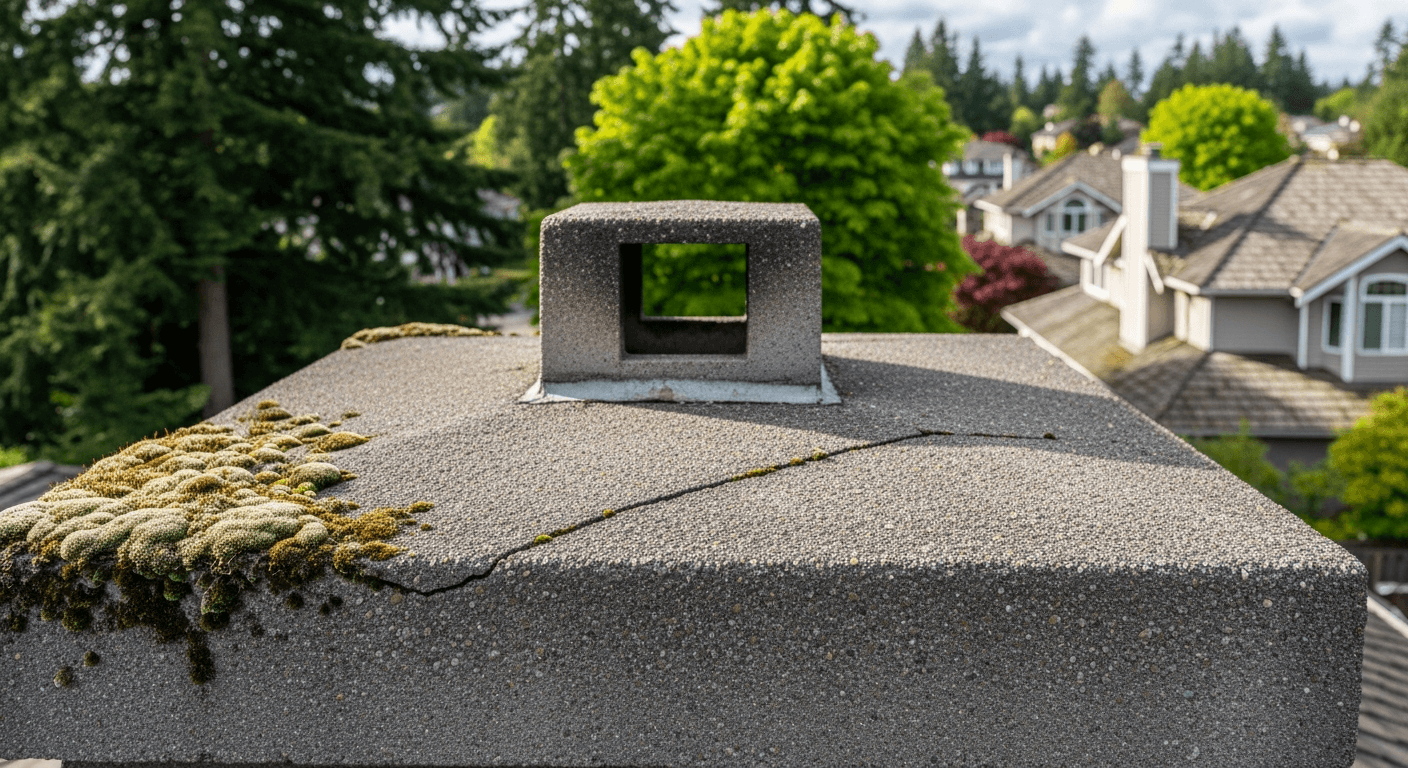
A cracked chimney crown or moss-covered top is the leading source of preventable water damage we find on Bellevue chimneys — and it is almost always caught too late. In Bellevue's freeze-thaw winters, a hairline crown crack can split a masonry chimney from the inside in a single season, turning a $300 repair into a $3,000 liner replacement. Caught in late summer before burn season opens, most crown repairs and moss treatments run $200 to $800 and finish in one visit.
Why Bellevue's Climate Turns Minor Crown Cracks Into Major Repairs
Bellevue receives 37 to 40 inches of rainfall annually, most of it falling as persistent light drizzle between October and April rather than hard, fast-draining downpours. That slow, continuous saturation is exactly what drives water into micro-cracks in concrete chimney crowns — and what keeps masonry wet long enough for moss and algae to colonize porous surfaces.
Bellevue winters deliver a textbook freeze-thaw cycle: overnight lows regularly drop to 28–34°F while daytime temperatures climb back above 40°F. Water trapped in a small crown crack freezes, expands by roughly nine percent, widens the crack, and the next drizzle pushes deeper. Over two or three seasons this process can fracture a crown entirely or send water running down the flue liner, softening the mortar joints between flue tiles and eventually reaching the smoke chamber and firebox.
Moss compounds the problem. A mature moss colony on the crown or upper brick courses acts as a sponge, holding moisture against masonry for days after rain stops — moisture that would otherwise drain and dry within hours on bare concrete. Homes on the wooded west-facing slopes of Somerset, Bridle Trails, and Enatai are especially vulnerable: heavy conifer and maple canopy keeps chimneys shaded and damp, and moss can establish itself within two to three years of a fresh repointing if no biocide treatment is applied.
How to Spot Crown Damage and Moss Before They Become Expensive
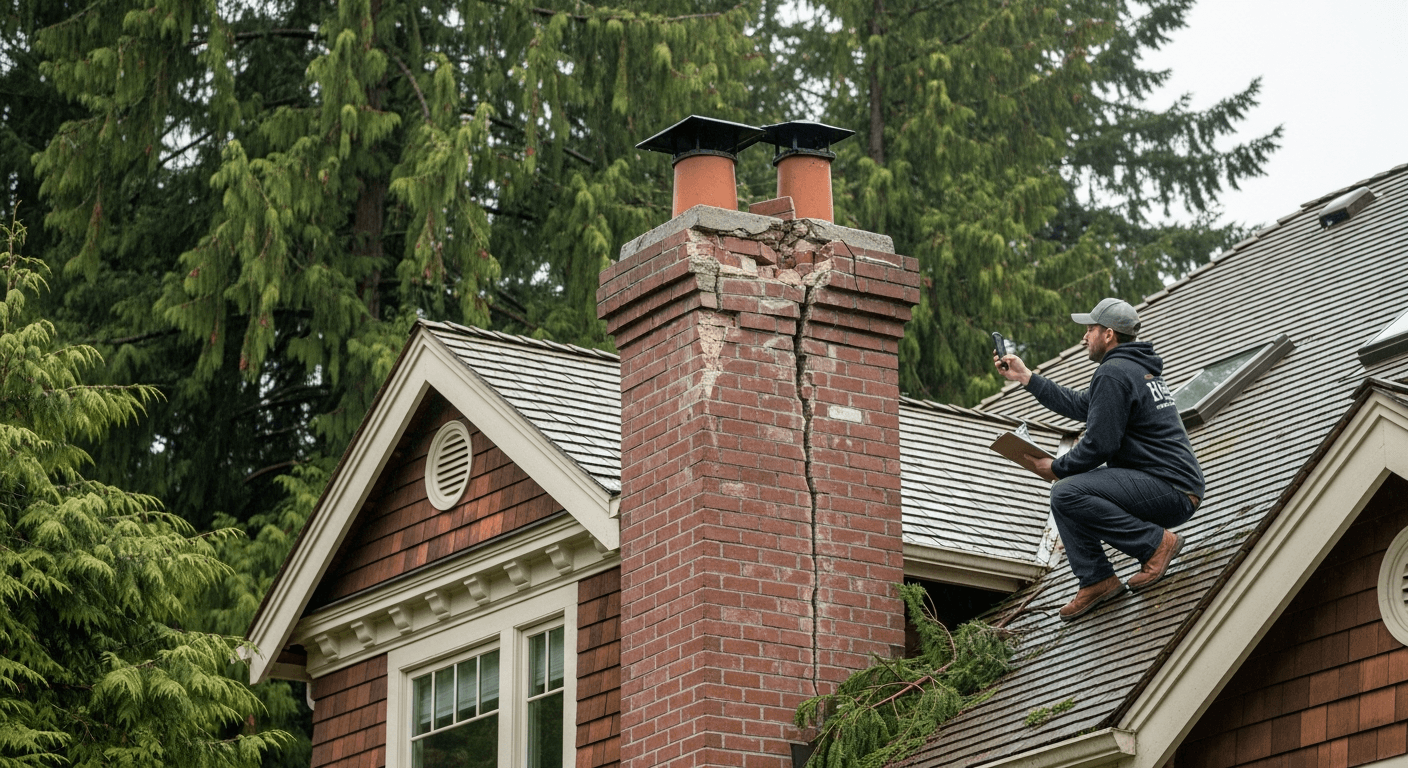
From the ground with binoculars, focus on the flat or slightly sloped concrete cap sitting just above the flue tile at the chimney top. A sound crown sheds water outward toward the chimney edges and away from the flue collar. Red flags visible from ground level include diagonal or transverse cracks across the crown surface, missing edge sections, green or black biological growth on the crown or upper brick courses, and rust-colored or white staining streaking down the chimney face below the crown.
Inside the home, water intrusion from a failing crown often appears first as a musty odor from the firebox when the fireplace or insert runs, white efflorescence (mineral salt deposits) on firebox walls, rust on the damper plate or firebox floor, or peeling paint on the ceiling or wall adjacent to the chimney breast. Interior symptoms typically mean the crown has been failing for at least one full rainy season — damage is already done to the liner or mortar joints.
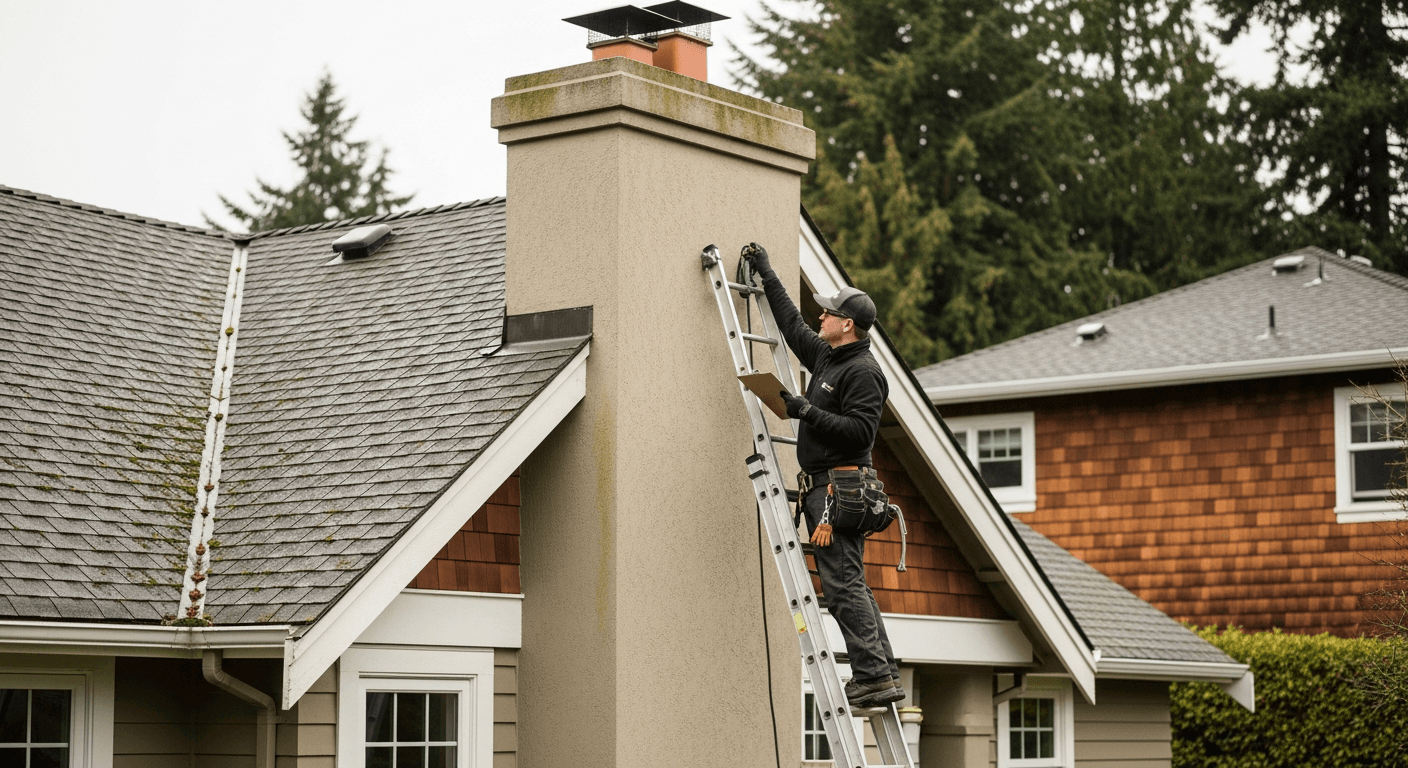
An annual inspection scheduled in August or September — before the Puget Sound Clean Air Agency's wood-burning season resumes and before fall rains arrive — catches crown defects at the sealer-and-patch stage rather than the rebuild stage. A technician on the roof can probe the crown surface, check the seal at the flue collar, and assess moss coverage in fifteen to twenty minutes, often as part of the same visit as your annual sweep.
What Crown Repair and Moss Treatment Actually Costs in Bellevue
Prices vary based on crown condition, chimney height, roof pitch, and whether services are combined in a single visit. The ranges below reflect what Bellevue homeowners pay as of 2025. Bundling moss treatment with a crown sealer or annual sweep consistently saves $75 to $150 compared to scheduling separate visits.
Crown sealer on an intact but porous crown is the lowest-cost intervention and, applied on a four-to-six-year schedule, can indefinitely delay the need for a full rebuild. A full rebuild — in cast-in-place concrete or with a pre-formed cap — is warranted when cracking covers more than roughly 25 percent of the crown surface or when sections have broken away entirely.
Moss treatment means applying a professional-grade biocide formulated for masonry porosity. It does not require pressure washing, which damages mortar joints; treated growth dries and washes away over subsequent rain events. On heavily shaded lots with large conifers or big-leaf maples overhanging the chimney — common across the Eastside's hillside neighborhoods — re-treatment every two years is more cost-effective than waiting for a visible colony to re-establish.
| Service | Typical Bellevue Price Range | Notes |
|---|---|---|
| Crown sealer / waterproof coating | $150 – $350 | Best on intact crowns with hairline cracks only; reapply every 4–6 years |
| Crown crack repair (patching) | $200 – $500 | Appropriate when cracking is moderate and crown is structurally intact |
| Full crown rebuild | $600 – $1,500+ | Required when crown is broken, collapsed, or more than ~25% cracked |
| Moss and algae treatment | $100 – $250 | Biocide application penetrates masonry pores; no pressure washing |
| Moss treatment + crown sealer (combined) | $250 – $550 | Most common Bellevue service combination; saves vs. separate visits |
| Crown repair + chimney cap installation | $400 – $900 | Cap closes flue opening to rain; reduces future crown deterioration |
| Full pre-season service (sweep + inspection + crown + moss) | $450 – $950 | Best per-dollar value; covers all maintenance in one late-summer visit |
A Somerset Homeowner Fixed a Four-Year-Old Problem for $480
A homeowner in Somerset called us in late October after noticing a persistent musty odor from their living room gas fireplace insert — a smell they had dismissed for nearly a year as normal. The home, a well-maintained 1990s colonial with a full masonry chimney, had not had a chimney inspection in four years. The homeowner assumed a gas insert required minimal upkeep.
Our technician found the crown badly deteriorated: two transverse cracks spanning nearly the full width of the crown, a thick moss mat along the north-facing edge, and roughly a half-inch separation where the crown had pulled away from the flue collar — the single most common water-entry point we see on older Eastside masonry chimneys. Moisture had been tracking down behind the liner for at least one full rainy season, and the insert's heat was vaporizing it each time the fireplace ran.
We patched both cracks, resealed the collar joint with a flexible crown-repair compound, applied a biocide moss treatment, and installed a stainless-steel chimney cap over the flue opening. Total: $480, completed in one visit. The homeowner had been told by a roofing contractor who glimpsed the chimney from a ladder that it would cost 'several thousand dollars.' Because the liner and firebox masonry were still intact, the repair stayed firmly in the hundreds. One more season of water infiltration would have meant flue liner replacement — a $2,500 to $4,500 job on a chimney of this type.
When to Schedule, What to Ask For, and How to Keep Costs Down
The optimal window for crown repair and moss treatment in Bellevue is mid-July through mid-September. Dry weather is more reliable, giving crown patching compounds and penetrating sealers the 24-to-48-hour cure window they require before rain exposure. Booking before September also means you beat the pre-burn-season scheduling rush — appointment availability tightens noticeably in October.
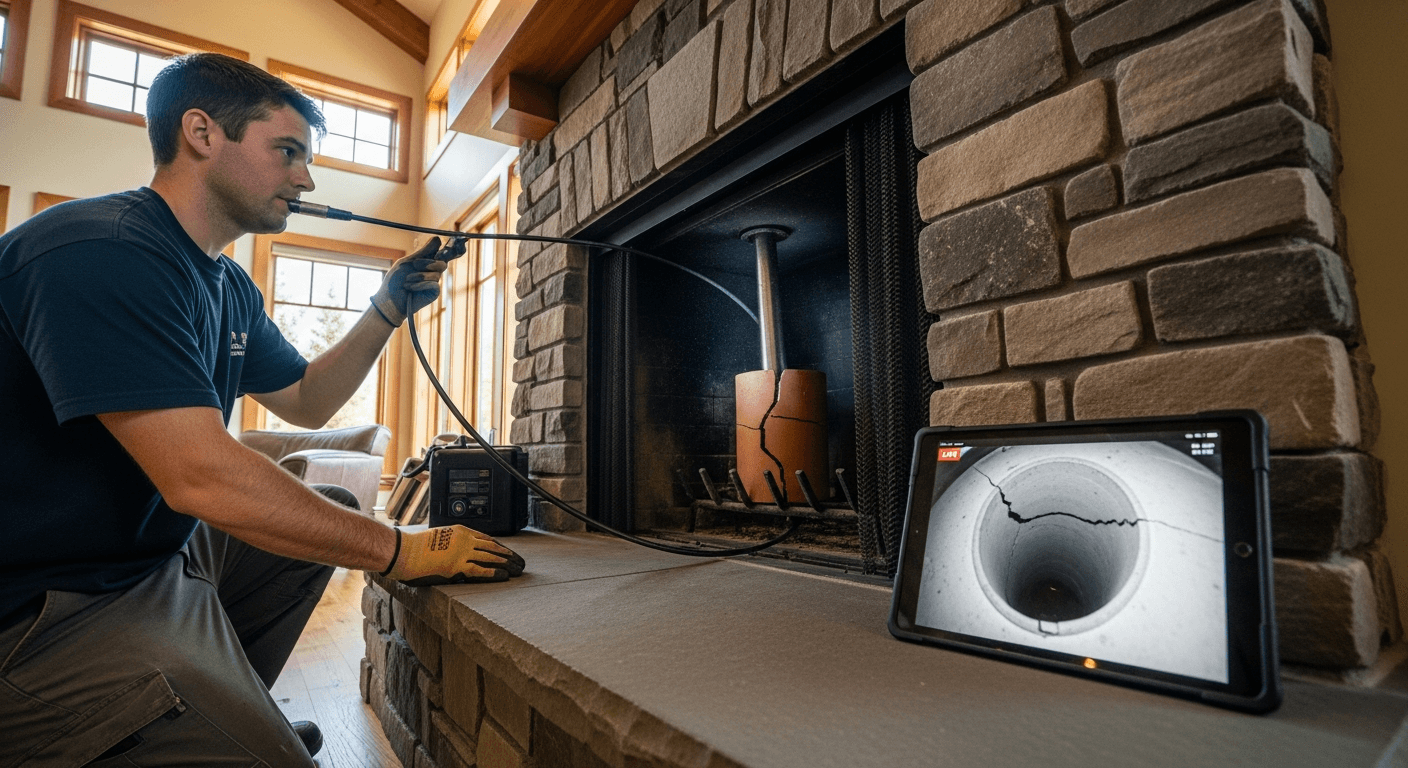
When you call, ask specifically whether the technician goes on the roof or assesses the crown only from a camera at the firebox opening. A meaningful crown evaluation requires a technician on the roof with hands-on access to the crown surface — probing cracks, checking collar seal integrity, and gauging moss depth. Some low-cost providers skip the roof entirely.
If your Bellevue home has large Douglas firs, western red cedars, or big-leaf maples close to or overhanging the chimney, plan for moss re-treatment every two to three years rather than waiting for a visible colony to return. Preventive treatment at $100 to $250 per visit — typically added onto your annual sweep — costs a fraction of a single crown rebuild. Pairing it with an annual sweep simplifies scheduling and usually qualifies for a bundled rate.
Frequently asked questions
How often should a chimney crown be inspected and resealed in Bellevue?
Inspect annually during your routine chimney checkup. Reseal with a penetrating crown sealer every four to six years on an intact crown — or sooner if fine surface cracking appears. Bellevue's combination of sustained rainfall and regular freeze-thaw cycles accelerates concrete deterioration, so the four-year end of that range is the safer bet for most Eastside homes.
Is chimney moss just cosmetic, or does it actually cause damage?
Moss causes real structural damage. It holds moisture against masonry long after rain stops, accelerating freeze-thaw deterioration of mortar joints and the crown surface. On shaded north- or west-facing Bellevue chimneys, an untreated moss colony can cause measurable mortar erosion within three to five seasons.
Will homeowners insurance cover chimney crown repair in Bellevue?
Standard policies cover sudden, accidental damage — a crown fractured by a falling tree limb during a windstorm, for example. They do not cover gradual freeze-thaw cracking or moss deterioration, which insurers classify as deferred maintenance. Keep dated inspection records and photograph any storm events promptly to support covered claims.
Can I treat chimney moss myself with a store-bought product?
Consumer bleach or zinc-sulfate products can knock back surface growth but typically miss the root system embedded in mortar pores, producing faster regrowth. Professional biocide formulations are designed for masonry porosity and penetrate more effectively. More importantly, a DIY treatment won't reveal the crown condition underneath — the cracking and collar separation that are likely allowing water in alongside the moss.
How long does a crown repair take, and when can I use the fireplace again?
Crown crack patching and sealer application typically take one to two hours on the roof. Patching compounds and sealers need 24 to 48 hours to cure before rain exposure or fireplace use. Your technician will confirm the specific product's cure time and clear you before leaving.
Related services