Yes — homeowners insurance will pay for chimney repair in Bellevue, but only when the damage is sudden, caused by a named peril, and properly documented. If a Puget Sound windstorm tears off your chimney cap or a Douglas fir drops onto your masonry stack, you almost certainly have a payable claim; if 40 inches of annual Eastside rainfall have quietly eaten through your crown and flashing over several seasons, that bill is entirely yours. Knowing precisely where that line falls — and how Bellevue's maritime climate routinely blurs it — can mean the difference between a fully reimbursed repair and a claim denial that leaves you absorbing thousands of dollars out of pocket.
What Homeowners Insurance Actually Covers on a Chimney
Standard HO-3 homeowners policies — the type held by most Bellevue homeowners — cover chimneys under dwelling coverage when damage results from a named peril: fire, lightning, windstorm, hail, or a falling object. In practical Eastside terms, that means a chimney fire that chars your stainless liner and smoke chamber, a November windstorm that topples a brick cap, or a fir tree that crushes your masonry stack are all events a well-documented claim will likely cover after your deductible.
What is almost never covered: slow moisture intrusion from a cracked crown, spalling bricks from repeated freeze-thaw cycling between roughly 28°F and 45°F on Bellevue winter nights, deteriorated mortar joints, rusted dampers, or creosote accumulation. Insurers classify all of these as maintenance failures. Adjusters working the Eastside market are experienced with Bellevue's wet-winter damage patterns and know exactly how to distinguish a storm event from years of deferred upkeep.
One critical nuance: if a chimney fire ignites because of heavy creosote buildup, your insurer may pay for the fire damage itself but then open a subrogation inquiry into whether the chimney was reasonably maintained. Receipts from annual sweeps and written inspection reports are your direct evidence that you met the standard of care — without them, coverage can be reduced or contested even for a legitimate fire-damage claim.
The Coverage Gray Zone: When Bellevue's Climate Complicates Claims
Bellevue averages 38 to 42 inches of rainfall annually, and that moisture works relentlessly against masonry. When a homeowner files a claim for a failed chimney crown or damaged flashing, the adjuster's core question is whether the proximate cause was a single identifiable storm event or cumulative water penetration across multiple wet seasons — two very different conclusions that lead to opposite claim outcomes.
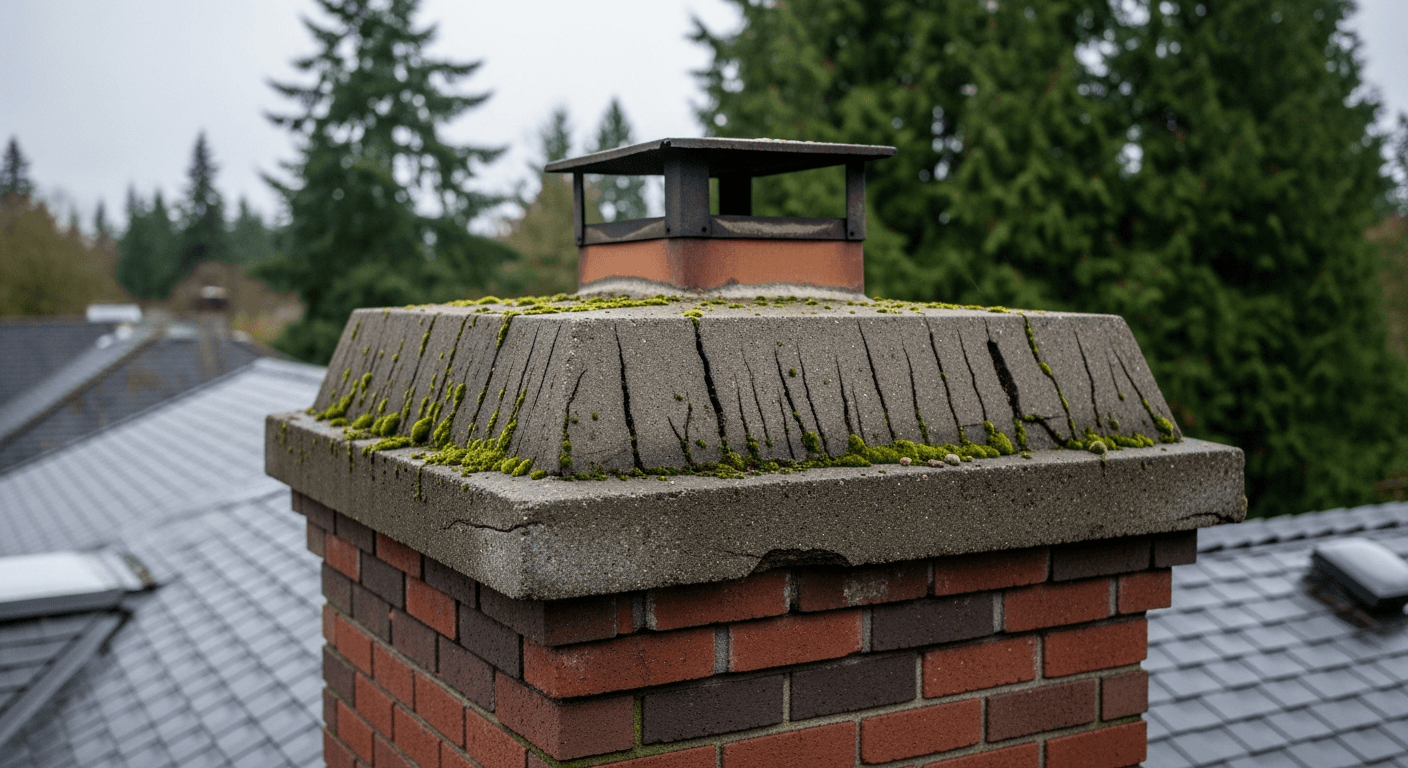
Moss and algae growth on chimney crowns — nearly universal in Bellevue's mild, damp winters — is a specific red flag for adjusters. Dense moss coverage signals prolonged moisture retention, which can reclassify an otherwise payable water-damage claim as a denied maintenance claim. If your roof sustained storm damage in the same event, the chimney portion may still be denied separately if the adjuster determines the chimney was already compromised before the storm arrived.
The most defensible position for any Bellevue homeowner is a recent Level 2 inspection report on file. If a certified inspector documented your chimney as structurally sound six months before a windstorm fractured your crown, that written record directly refutes an insurer's argument that the damage was pre-existing — and it often makes the difference between approval and denial.
A Hypothetical Bellevue Scenario: The Storm Claim That Almost Got Denied
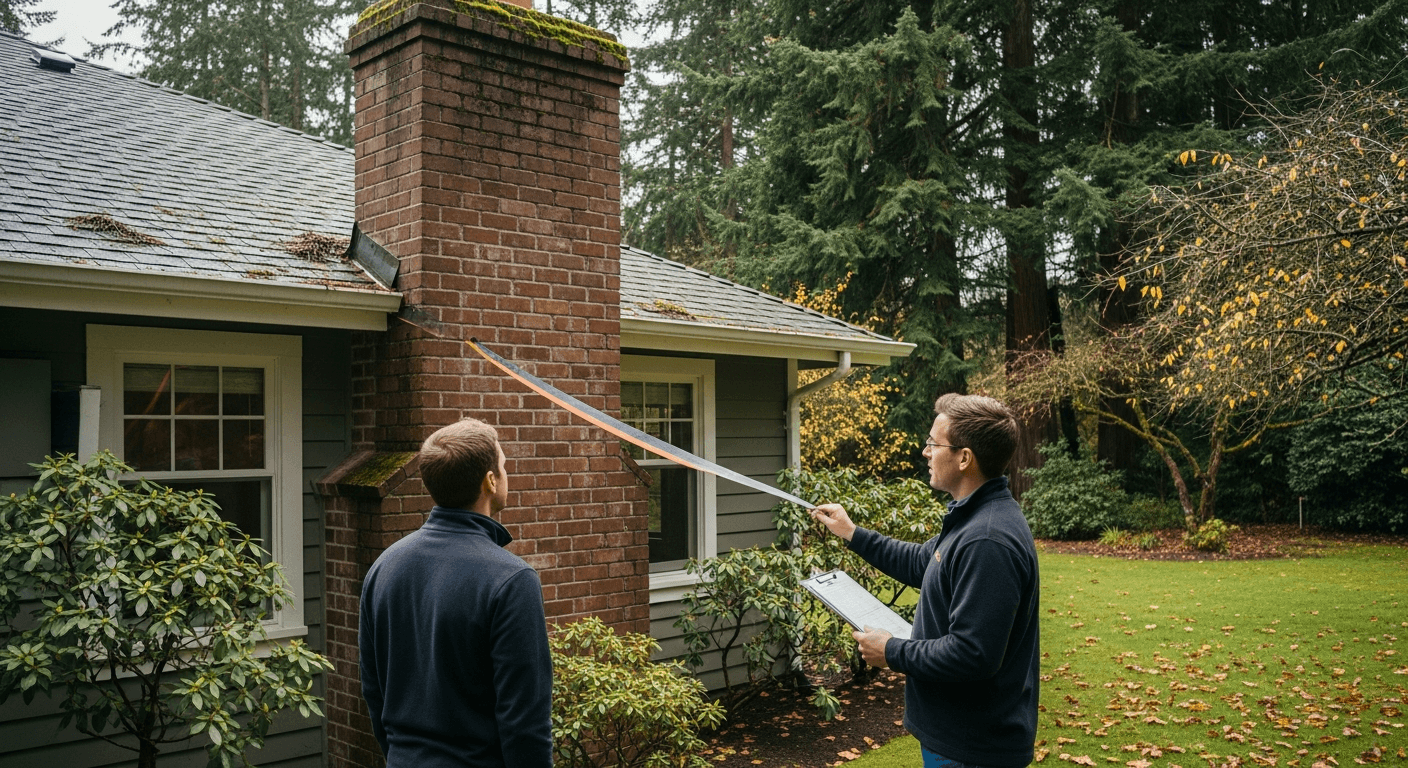
Consider a homeowner in the Bridle Trails neighborhood who contacts a chimney professional after a late-October windstorm knocks a decorative brick chimney cap loose and drives rain into the firebox. The homeowner files a claim the same day, expecting a straightforward approval. When the insurance adjuster arrives, he notes significant mortar joint erosion along the upper four courses of brick and flags the claim for review, contending that the cap may have dislodged partly because of pre-existing structural weakness rather than wind force alone.
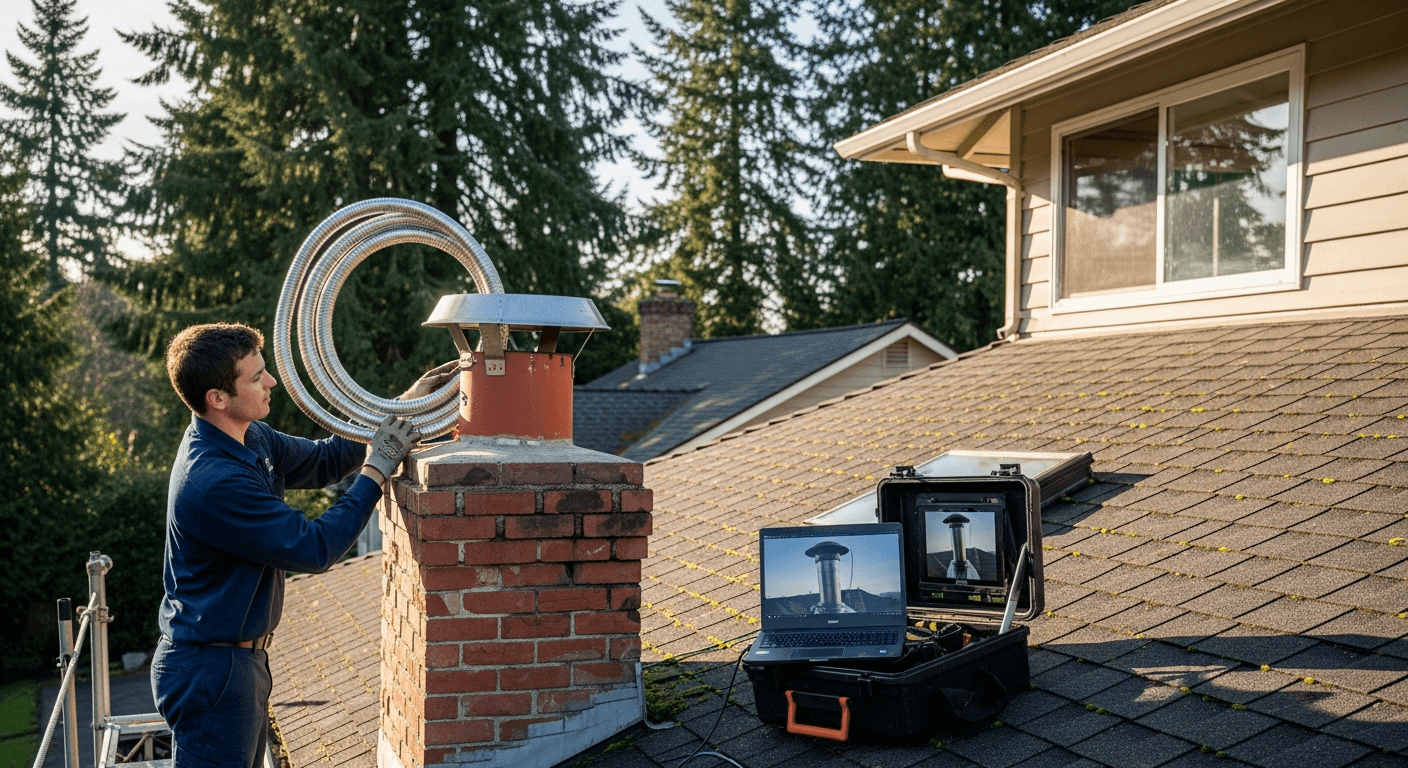
Before the insurer makes a final determination, the homeowner calls for an independent Level 2 inspection. The inspector documents that the mortar erosion is limited to the decorative upper courses, that the structural flue tile and poured crown are intact, and that the cap failure is consistent with wind uplift on a unit that had been properly installed but not re-secured in several years. A written report with time-stamped photographs covering all four elevations of the chimney is delivered.
The homeowner submits the inspection report alongside a sweep receipt from the previous April. The claim is approved for cap replacement and interior water-damage remediation — totaling just over $3,200 after a $1,000 deductible. Without that documentation, the claim was on track for a full denial. This illustrative pattern reflects what Bellevue chimney professionals see most often on the Eastside: valid coverage undermined by insufficient paperwork.
What Chimney Repairs Actually Cost in Bellevue — and What Insurance Typically Reimburses
Before filing a claim, weigh the realistic repair cost against your deductible and the potential for a premium increase. For repairs under roughly $1,500, many Bellevue homeowners find it financially wiser to pay out of pocket rather than generate a claims record. For major damage — liner replacement after a chimney fire, a full crown rebuild, or substantial masonry reconstruction — filing almost always makes economic sense.
The table below reflects current Bellevue-area pricing for common chimney repairs and the general likelihood of coverage under a standard HO-3 policy. Costs vary based on chimney height, roof pitch, and access difficulty; these ranges represent typical single-flue residential jobs on the Eastside.
| Repair Type | Typical Bellevue Cost Range | Insurance Coverage Likelihood | Notes |
|---|---|---|---|
| Chimney cap replacement | $250 – $650 | High (if storm-caused) | Photograph damage and note storm date immediately; keep weather records |
| Flashing repair or replacement | $400 – $900 | Moderate | Covered if tied to a specific storm event; denied if attributed to rust or gradual wear |
| Crown repair (minor crack fill) | $300 – $600 | Low | Adjusters almost always classify small cracks as maintenance; rarely approved |
| Crown rebuild (full replacement) | $800 – $1,800 | Moderate (acute event only) | Requires adjuster confirmation that a single identifiable event caused failure |
| Liner replacement after chimney fire | $2,500 – $5,500 | High | Fire is a named peril; sweep receipts help counter any neglect argument |
| Masonry repointing (tuckpointing) | $800 – $3,500 | Very Low | Virtually always classified as deferred maintenance regardless of trigger |
| Smoke chamber resurfacing | $600 – $1,400 | Moderate (fire damage only) | Covered when damage is directly attributable to a chimney fire event |
| Partial chimney rebuild | $4,000 – $12,000+ | High (if acute event) | Level 2 inspection report is essential; adjuster must agree on cause of failure |
How Often Bellevue Homeowners Should Inspect and Service Their Chimney
In Bellevue's damp maritime climate, inspection and service frequency depends heavily on how the chimney is used and what conditions it has been exposed to. The table below summarizes recommended inspection timelines by situation, based on NFPA 211 guidance and the specific demands of Eastside weather. Following these intervals — and keeping receipts — directly supports any future insurance claim by demonstrating consistent, reasonable maintenance.
A Level 1 inspection is a visual check of accessible areas; a Level 2 includes interior video scanning of the flue and is required after any fire, significant weather event, or real estate transaction. Scheduling inspections in September or early October — before Puget Sound Clean Air Agency curtailment season and the first heavy burn weeks — ensures documentation is current before winter weather creates any new claim scenarios.
| Situation | Recommended Inspection Type | Recommended Frequency | Why It Matters in Bellevue, WA |
|---|---|---|---|
| Active wood-burning fireplace, regular use | Level 1 + sweep | Annually (every September–October) | Bellevue's wet winters accelerate creosote hardening; annual sweeps document maintenance for insurers |
| Gas fireplace or gas insert | Level 1 inspection | Annually | Gas appliances still require flue and crown checks; Bellevue moss growth can obstruct termination caps |
| Fireplace used fewer than 6 times per year | Level 1 inspection | Every 1–2 years minimum | Infrequent use still allows moisture and moss damage; inspection documents pre-storm condition |
| After any chimney fire, however small | Level 2 (video scan) | Immediately — within 48–72 hours | Required by NFPA 211; also the primary insurance document after a fire event in Bellevue |
| After a significant windstorm or falling object | Level 2 (video scan) | Within 48–72 hours of the event | Prompt inspection ties damage to the storm event, not pre-existing wear — critical for claim approval |
| Before purchasing a Bellevue home with a fireplace | Level 2 (video scan) | Once, prior to closing | Identifies hidden liner or crown damage; findings affect negotiation and future insurance coverage |
| Chimney unused for 2 or more years | Level 2 (video scan) | Before resuming use | Bellevue's rainfall can deteriorate crowns and liners significantly during extended disuse |
How to Protect Your Claim Before You Ever Need to File One
The most effective step any Bellevue homeowner can take is building a paper trail before damage occurs. Schedule an annual chimney sweep and inspection every September or early October — before Puget Sound Clean Air Agency curtailment season begins and before you start using your fireplace regularly. Keep every receipt and store written inspection reports digitally in a dedicated folder.
Photograph your chimney exterior at least twice a year: once in early spring after the wet season ends and again in early fall before burn season. These dated photos establish a baseline condition that makes storm damage immediately distinguishable from long-term wear — exactly the distinction your adjuster will focus on.
If any event occurs that could have affected your chimney — a significant windstorm, a chimney fire, even heavy branch impact during a tree removal — call for an inspection within 48 to 72 hours. Claim filing dates are noted relative to event dates, and unexplained delays raise questions about cause. A prompt professional inspection report submitted alongside your initial claim is far more persuasive than a repair estimate submitted weeks later.
Finally, review your policy's exclusions at least once a year. Some Bellevue homeowners on higher-value properties carry endorsements or scheduled masonry riders that expand coverage; others hold older policies with dwelling coverage limits that no longer reflect current Eastside construction costs for brick and mortar. A brief annual conversation with your insurance agent about chimney-specific coverage takes under ten minutes and could matter significantly if you ever need to file.
Frequently asked questions
Will homeowners insurance pay for chimney repair in Bellevue, WA?
Yes, but only for sudden damage caused by a named peril such as wind, fire, lightning, or a falling object. Gradual deterioration, mortar erosion, moss damage, and deferred maintenance are excluded under standard HO-3 policies in Bellevue. Documented annual maintenance significantly strengthens any chimney claim you file.
Does my insurer require annual chimney cleaning to keep coverage valid?
Policy language typically does not specify a cleaning frequency, but NFPA 211 recommends annual inspection and cleaning as needed. In practice, documented annual sweeps demonstrate reasonable care — which becomes critical if an insurer investigates whether a chimney fire in Bellevue resulted from neglect rather than a sudden, unforeseeable event.
How much does a chimney sweep cost in Bellevue?
A standard single-flue chimney sweep in Bellevue runs approximately $180 to $320 depending on chimney height, roof pitch, and creosote level. A sweep combined with a Level 1 inspection typically falls between $220 and $380. Keeping those receipts is as important as the sweep itself when it comes to insurance documentation.
What does a Level 2 chimney inspection cost in Bellevue, WA?
A Level 2 inspection — which includes interior video scanning of the flue — typically costs $350 to $550 in Bellevue. It is required after any chimney fire or significant weather event and when selling a home. Its written report with photographs is also the single most useful document you can submit alongside an insurance claim for chimney damage in Bellevue.
Should I file an insurance claim for chimney repair or pay out of pocket?
If the chimney repair cost is near or below your deductible — commonly $1,000 to $2,500 on Bellevue policies — paying out of pocket is usually smarter to avoid a claims record that could raise your premium. For repairs above $3,000 to $4,000, particularly after a chimney fire or documented storm event in Bellevue, filing a claim almost always makes clear financial sense.
Related services